




More than 5000 Students In Gurugram Formed A Human Chain To Protect Aravali Biodiversity Park
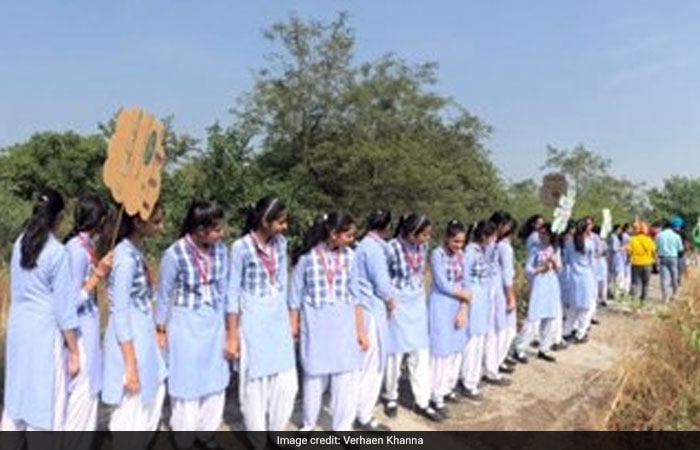
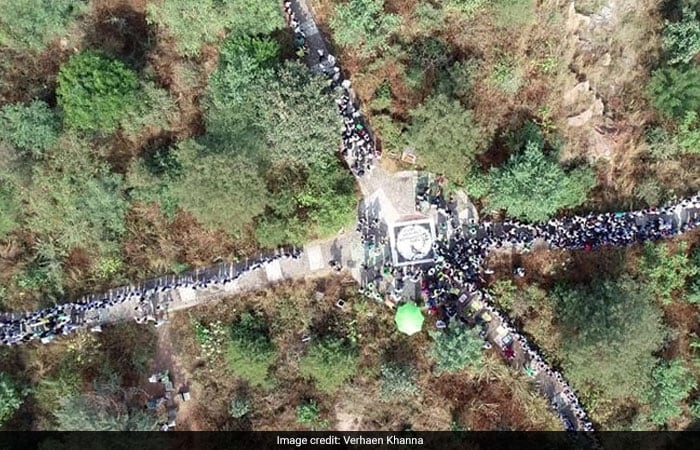
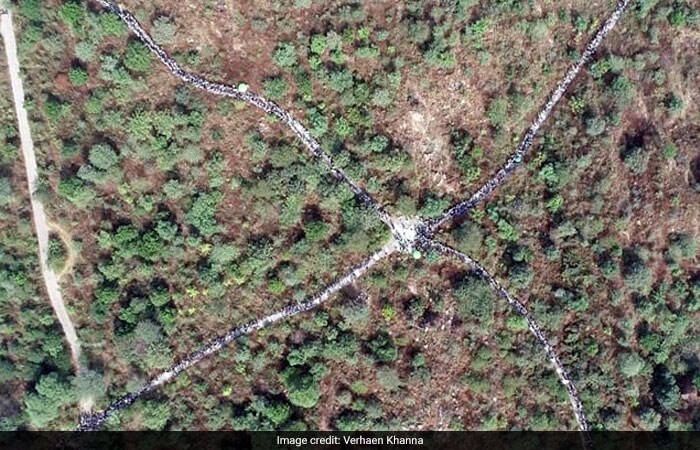
More than 5000 children from 31 schools across the National Capital Region gathered at the Aravali Biodiversity Park form a human chain to save the park on Children's Day on November 14. The human chain, which stretched up to several kilometres, was a sign of protest against the National Highways Authority of India's (NHAI) proposal to build a six-lane highway which is expected to cut through the park. The highway proposed is a part of the Greater Southern Peripheral Road (GSPR) project, which has been regarded as an alternative link between Delhi and Gurugram is expected to run for about 2 km along the width of the park, around 20-25 metres inside its boundaries. Activists and residents are opposing the construction as the construction work will destroy the park amidst severe air pollution.
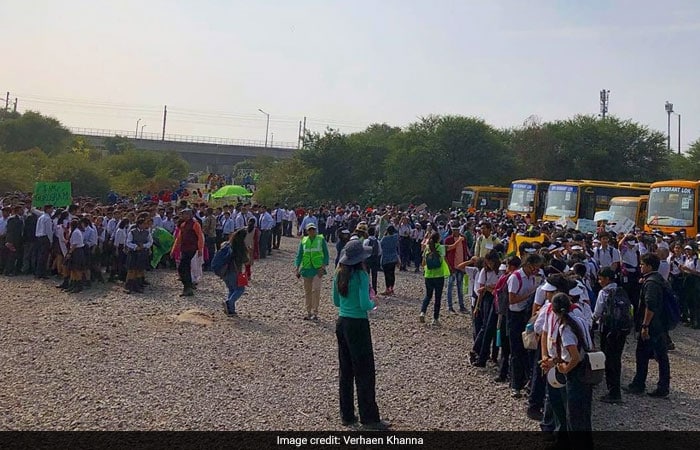
Thousands of kids gathered in the park on Children's Day for the Human Chain event that was shared on Facebook to invite participants for the protest. The students were not confined to the city of Gurugram alone, as schools from across the National Capital Region participated in the peaceful protest.
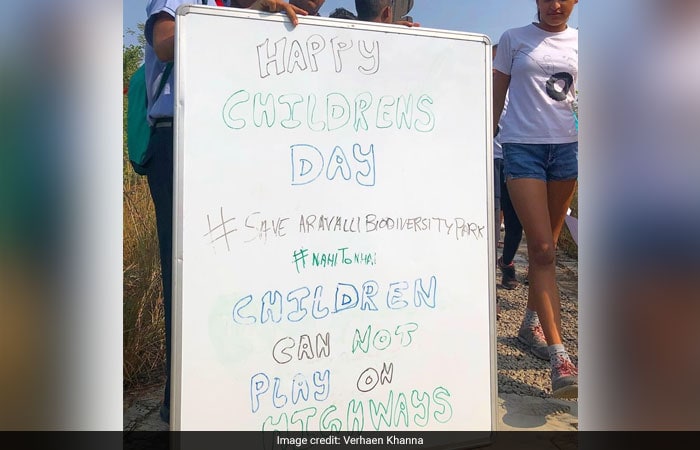
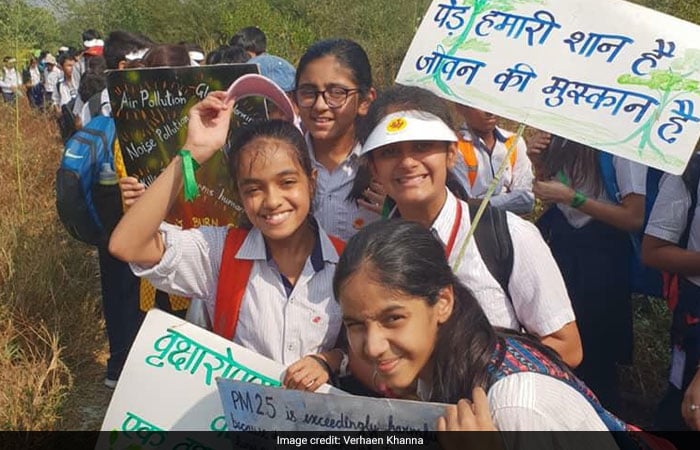
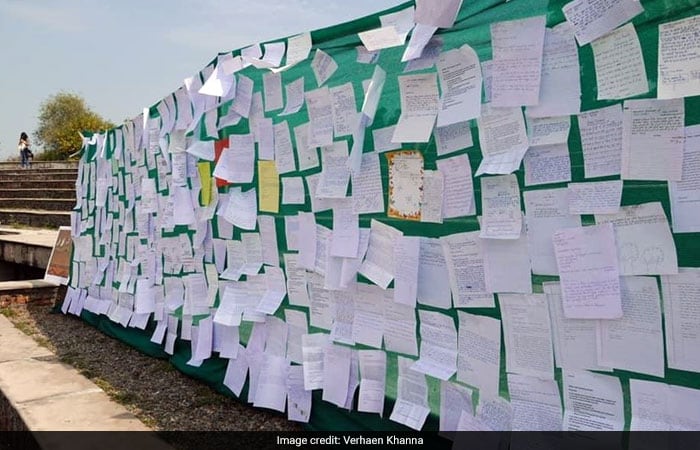
Young students stood in the chain and chanted slogans like ?I want a green jungle, not a concrete jungle!', ?Save our city forest', ?Give us our fundamental right to breathe clean air'. They wore green arm bands and carried posters and placards with messages against pollution and for the protection of Aravali forests.



NDTV in partnership with Luminous has launched an awareness campaign ‘Be A Bijli Donor’ to promote the idea of ‘save power for more power’. The idea is to conserve energy today in order to get more power tomorrow.
We inherently know that saving energy results in low energy bills, but we also need to understand that a unit of energy saved today makes it available for people still living in the dark or facing regular power cuts.
Saving power or conserving energy is about knowing the sources of energy, and areas of wastage and thereby eliminating these through technology and lifestyle changes. For instance, a 100 W (Watt) incandescent (ICL) bulb can be replaced with a 9 W LED bulb offering similar performance in terms of light output, but at far lower consumption of energy.
While a 100 W ICL bulb, used for four hours a day, consumes 146 units of energy per year, a 9 W LED bulb requires only 13.5 units per year. Clearly, switching to LED is a smart choice as it provides the same output while consuming 90 per cent less energy.
The focus of the campaign is to instill the idea of ‘save power for more power’ and in order to do so, the initiative will create awareness about energy efficient products and services, smart ways to reduce power consumption, alternate sources of energy like solar energy and the need to conserve energy. The idea is to address the rising need for energy conservation in India.
As part of the campaign, we will highlight the stories of individuals and organisations who are championing the cause of energy conservation by switching to renewable sources of energy, adopting innovations to reduce energy consumption while enjoying the same output. The initiative will provide a platform for all stakeholders to share their ideas and work towards the common goal of, ‘Save power for more power’.