




- Home/
- Beginner's Guide: Decoding Mobile Wallets
Beginner's Guide: Decoding Mobile Wallets
Written by Simar Singh | Updated: June 30, 2017 20:47 IST
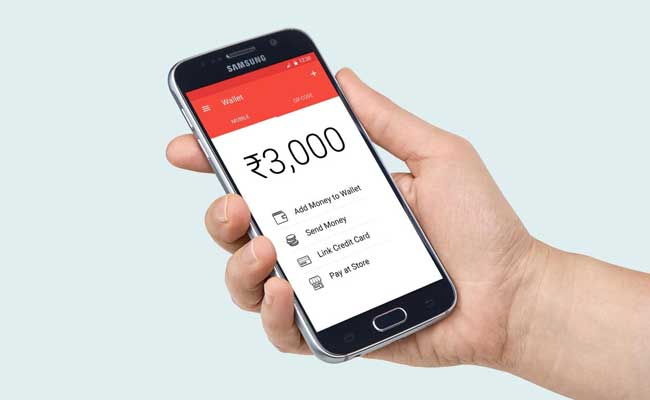
New Delhi: Over the past few years, mobile wallets facilitating cashless transactions, driven by the increasing penetration of smartphones in the India, have been growing in popularity. A testament to this is the number of companies offering mobile wallet services that have mushroomed and existing businesses venturing into this space (read Airtel, Vodafone). So far, the biggest singular impetus to the mobile wallet business came after the central government's decision to demonetise currency notes in November 2016. Some like Paytm saw a 13 per cent jump in users within 40 days of the announcement. But for some mobile wallets can be a bit of an enigma. Here is everything you need to know about mobile wallets.
What are mobile wallets?
Like the name suggests, mobile wallets are essentially virtual wallets in which users can put in some money which can then be used to make online and offline transactions. For instance, one can simply pay for groceries through their cellphones at a grocery store that accepts payments made through mobile wallets as long as there is enough money pre-loaded into the wallet.
Mobile wallets can also be used to recharge DTH plans, mobiles and pay utility bills as well as transfer money to friends and family.
Mobile wallets are also becoming more sophisticated and some have begun to offer more services such as booking rail, bus and movie tickets right from the app.
These wallets can be operated via an app on one's smartphone or through the service provider's website. Generally, mobile wallets allow users to use net banking, debit cards or credit cards to load money, however, some service providers have begun accepting cash.
What are the different types of mobile wallets?
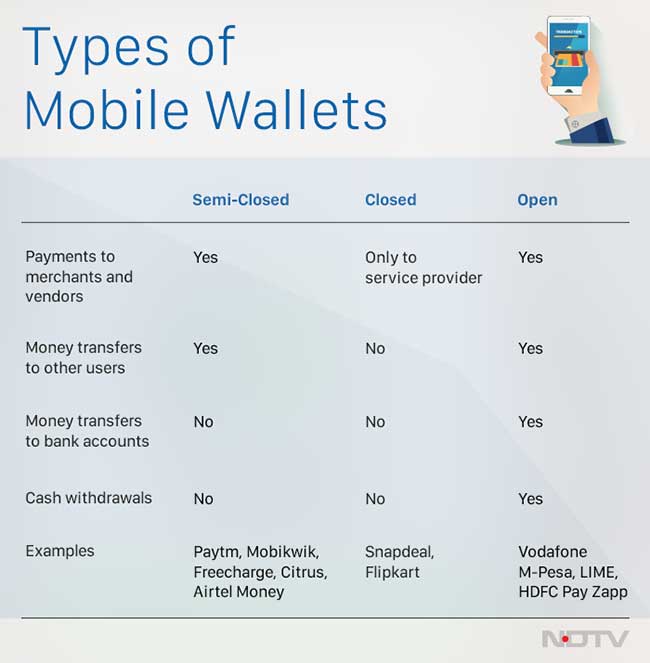
To understand which is the right mobile wallet for you and how these work it is essential to understand the different type of wallets out there. Mobile wallets usually fall into one of 3 categories-Open, Semi-Closed and Closed.

Semi-Closed Wallets: Allow payments to partnering merchants and transfers to other users. These do not allow transfers to other bank accounts or cash withdrawals. (For example, Airtel Money, Paytm, Mobikwik).
This means that once the money is loaded it has to be spent on goods and services offered by merchants which have partnered with the service provider and cannot be withdrawn. Most mobile wallets in India fall into this category.
Open Wallets: Allow payments, transfers to other users, other bank accounts and cash withdrawals (For example, Vodafone M-Pesa).
These wallets can only be offered in partnership with a bank.
Closed Wallets: Money loaded can only be used on goods and services offered by the provider. (For example, Flipkart, Snapdeal). These type of wallets are popular with e-commerce companies for refunds, cancellations and gift cards and allow money spent by users to remain within the company's ecosystem.
What are the benefits of using a mobile wallet?
The primary reasons to use a mobile wallet are that they make the payment process faster and are considered by many to be safer.
Convenience
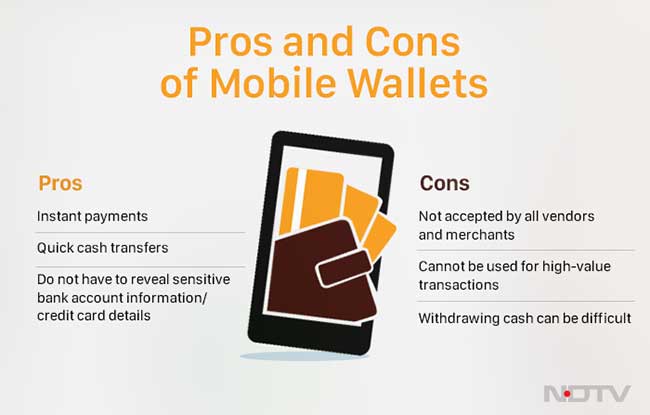
The biggest selling point for mobile wallets is convenience. Using a mobile wallet means that one does not have to deal with cash or punch in debit/credit card numbers, pins and passwords each time they need to pay for something. Additionally, transferring money to friends and family can be far easier with a mobile wallet which usually just requires their mobile number to complete the process.
Safety
The fact that one does not have to give out their bank account or credit/debit card details means that mobile wallets can often be a safer digital payments option. Users can also load small amounts of money which can significantly reduce the potential loss in case the mobile wallet's credentials and details are compromised.
What are the downsides of using a mobile wallet?
To use a mobile wallet one also has to find a vendor or merchant who accepts this form of payment. The downside is that many stores still do not offer such payment options. Additionally, most mobile wallets have limits on how much can be loaded and spent every day which means that they cannot be used for high-value transactions.
Are mobile wallets subject to regulations?
Yes. The Reserve Bank of India has a set of guidelines for mobile wallet companies in place which requires them to obtain authorisations and licences, maintain a minimum paid-up capital of Rs 25 crores at all times, submit yearly audits and limits the validity of any money loaded in a wallet to one year, among other things.
What are mobile wallets?
Like the name suggests, mobile wallets are essentially virtual wallets in which users can put in some money which can then be used to make online and offline transactions. For instance, one can simply pay for groceries through their cellphones at a grocery store that accepts payments made through mobile wallets as long as there is enough money pre-loaded into the wallet.
Mobile wallets can also be used to recharge DTH plans, mobiles and pay utility bills as well as transfer money to friends and family.
Mobile wallets are also becoming more sophisticated and some have begun to offer more services such as booking rail, bus and movie tickets right from the app.
These wallets can be operated via an app on one's smartphone or through the service provider's website. Generally, mobile wallets allow users to use net banking, debit cards or credit cards to load money, however, some service providers have begun accepting cash.
What are the different types of mobile wallets?
To understand which is the right mobile wallet for you and how these work it is essential to understand the different type of wallets out there. Mobile wallets usually fall into one of 3 categories-Open, Semi-Closed and Closed.
Semi-Closed Wallets: Allow payments to partnering merchants and transfers to other users. These do not allow transfers to other bank accounts or cash withdrawals. (For example, Airtel Money, Paytm, Mobikwik).
This means that once the money is loaded it has to be spent on goods and services offered by merchants which have partnered with the service provider and cannot be withdrawn. Most mobile wallets in India fall into this category.
Open Wallets: Allow payments, transfers to other users, other bank accounts and cash withdrawals (For example, Vodafone M-Pesa).
These wallets can only be offered in partnership with a bank.
Closed Wallets: Money loaded can only be used on goods and services offered by the provider. (For example, Flipkart, Snapdeal). These type of wallets are popular with e-commerce companies for refunds, cancellations and gift cards and allow money spent by users to remain within the company's ecosystem.
What are the benefits of using a mobile wallet?
The primary reasons to use a mobile wallet are that they make the payment process faster and are considered by many to be safer.
Convenience
The biggest selling point for mobile wallets is convenience. Using a mobile wallet means that one does not have to deal with cash or punch in debit/credit card numbers, pins and passwords each time they need to pay for something. Additionally, transferring money to friends and family can be far easier with a mobile wallet which usually just requires their mobile number to complete the process.
Safety
The fact that one does not have to give out their bank account or credit/debit card details means that mobile wallets can often be a safer digital payments option. Users can also load small amounts of money which can significantly reduce the potential loss in case the mobile wallet's credentials and details are compromised.
What are the downsides of using a mobile wallet?
To use a mobile wallet one also has to find a vendor or merchant who accepts this form of payment. The downside is that many stores still do not offer such payment options. Additionally, most mobile wallets have limits on how much can be loaded and spent every day which means that they cannot be used for high-value transactions.
Are mobile wallets subject to regulations?
Yes. The Reserve Bank of India has a set of guidelines for mobile wallet companies in place which requires them to obtain authorisations and licences, maintain a minimum paid-up capital of Rs 25 crores at all times, submit yearly audits and limits the validity of any money loaded in a wallet to one year, among other things.
Published: May 22, 2017 19:43 IST
also read
Solar Is The Best Economic Investment, Says Ecologist Who Has Paid Zero Power Bill For Last Three Years
Written by Aastha Ahuja, Edited by Sonia BhaskarMonthly Power Bill Of Just Rs 130, Here's How A Couple In Kochi Did It
Written by Aastha Ahuja, Edited by Sonia BhaskarHimachal Pradesh's The Kalgidhar Society Saves Rs. 3.4 Crore Per Annum By Harnessing The Power Of Solar
Written by Aastha Ahuja, Edited by Sonia Bhaskar



NDTV in partnership with Luminous has launched an awareness campaign ‘Be A Bijli Donor’ to promote the idea of ‘save power for more power’. The idea is to conserve energy today in order to get more power tomorrow.
We inherently know that saving energy results in low energy bills, but we also need to understand that a unit of energy saved today makes it available for people still living in the dark or facing regular power cuts.
Saving power or conserving energy is about knowing the sources of energy, and areas of wastage and thereby eliminating these through technology and lifestyle changes. For instance, a 100 W (Watt) incandescent (ICL) bulb can be replaced with a 9 W LED bulb offering similar performance in terms of light output, but at far lower consumption of energy.
While a 100 W ICL bulb, used for four hours a day, consumes 146 units of energy per year, a 9 W LED bulb requires only 13.5 units per year. Clearly, switching to LED is a smart choice as it provides the same output while consuming 90 per cent less energy.
The focus of the campaign is to instill the idea of ‘save power for more power’ and in order to do so, the initiative will create awareness about energy efficient products and services, smart ways to reduce power consumption, alternate sources of energy like solar energy and the need to conserve energy. The idea is to address the rising need for energy conservation in India.
As part of the campaign, we will highlight the stories of individuals and organisations who are championing the cause of energy conservation by switching to renewable sources of energy, adopting innovations to reduce energy consumption while enjoying the same output.
The initiative will provide a platform for all stakeholders to share their ideas and work towards the common goal of, ‘Save power for more power’.
Comments