




- Home/
- Containing Coronavirus: Chintan, Delhi Based NGO Upcycles Old Clothes Into Masks, Distributes It Among Waste Pickers
Containing Coronavirus: Chintan, Delhi Based NGO Upcycles Old Clothes Into Masks, Distributes It Among Waste Pickers
New Delhi: 
As the fight against the novel coronavirus (COVID-19) deepens, the opinion is shifting in favour of wearing masks all the time. According to the recent government guidelines, individuals not suffering from any medical conditions or having breathing difficulty may use the handmade reusable face cover, particularly when they step out of their house. The Office of the Principal Scientific Advisor to the government of India has even issued a step by step do it yourself (DIY) guide on homemade face masks and their usage. But even before the government decided that everyone should wear masks, Chintan, a non-governmental organisation (NGO) working for the environment, started stitching and distributing masks among waste pickers. The initiative has been undertaken to contain the spread of the disease and the outbreak from entering stage three – community transmission - when a patient not exposed to any infected person or one who has not travelled to any of the affected countries tests positive.
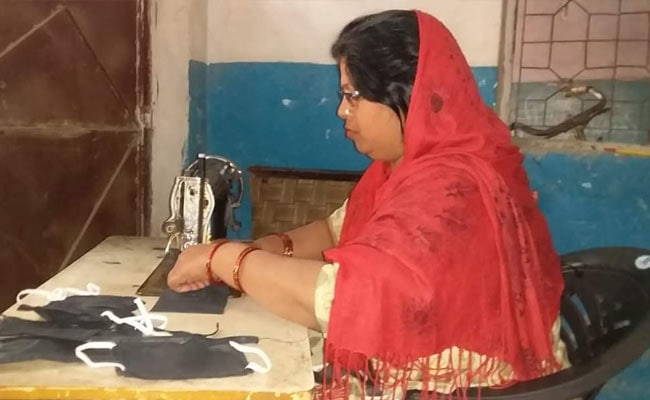
As part of the initiative, Chintan has trained 70 senior trainees (teachers) working in the organisations's informal learning centres to upcycle old clothes into face masks. Talking to NDTV about the idea behind the initiative and how it is being implemented, Chitra Mukherjee, Head of Advocacy and Policy at Chintan said,
We run informal learning centres for children of waste pickers. There we have senior trainees who educate them before they are enrolled in municipal schools for formal training. Now when the centers are closed because of the lockdown and we need masks, our trainees have taken it upon themselves to upcycle old clothes into face masks for waste pickers. We trained our senior trainees working in different communities to make masks in the safety of their own homes and distribute it among waste pickers and their families. These masks are not only for the parents of our students but for the entire waste pickers' community.
Also Read: A Delhi Based NGO Undertakes Awareness, Sanitisation And Thermal Screening To Help Fight Coronavirus
A team of 70 senior trainees makes close to 350 masks, daily. As of now, the team has created 4,680 pieces of masks of which 3,560 have already been distributed in different areas including Vivekananda Camp, Takiya Kale Kha, Sihani, Dallupura, Bhalswa, JJ Bhopura.
Further elaborating on the idea behind stitching masks at home and distributing it among waste pickers for free, Ms Mukherjee said,
In poor communities like those waste pickers live in, it is difficult for them to procure masks and yet they need it the most. They live in cramped social spaces and social distancing is a luxury there. Also, it's difficult for waste pickers' community to buy a mask and keep changing it every three to four hours because of the two reasons - unavailability of masks and lack of affordability.
Also Read: These Hunger Heroes Are Feeding The Poor And Hungry In Delhi Amid The COVID-19 Lockdown
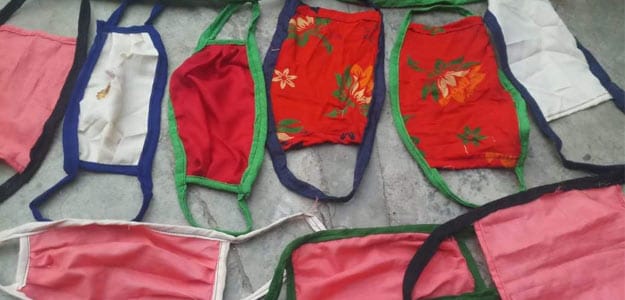
Old cotton clothes upcycled into face masks to protect waste pickers' community from the novel coronavirus
Though the masks are fashioned out of old clothes, the team ensures hygiene and follow all the precautionary measures. Explaining the making of face masks, Anita Sihani, a senior trainee said,
Since we all are in isolation, we are using the material available with us at home. For instance, we take old cotton bedsheets to make masks. Before using the cloth, we wash it thoroughly and while making masks, we ensure hand hygiene. As far as the technique is concerned, we have seen the face masks available in the market and we are replicating the same design.
The whole point of wearing a mask while stepping out of the house nullifies if it's not worn and used properly. Keeping this in mind, while distributing the masks, the Chintan team ensures everyone knows how to use a mask.
We repeatedly tell them to wash and change the mask every three to four hours, said Ms Mukherjee.
Even before the lockdown began and the team decided to make masks, Chintan was creating awareness among waste pickers through children coming to its informal centers. In early March, senior trainees had started training children; they would teach the right way of washing hands, coughing etiquette – coughing into the crook of the elbow and other preventive measures and ask the children to pass on the message in their respective communities. Following this, some people even started using a handkerchief as a face cover.
After seeing the hard work of you all, we have also been optimistic. We will be careful and not afraid, said 30-year-old Islamuddin, from Takiya Kale Kha.
Published: April 08, 2020 13:55 IST
also read
Solar Is The Best Economic Investment, Says Ecologist Who Has Paid Zero Power Bill For Last Three Years
Written by Aastha Ahuja, Edited by Sonia BhaskarMonthly Power Bill Of Just Rs 130, Here's How A Couple In Kochi Did It
Written by Aastha Ahuja, Edited by Sonia BhaskarHimachal Pradesh's The Kalgidhar Society Saves Rs. 3.4 Crore Per Annum By Harnessing The Power Of Solar
Written by Aastha Ahuja, Edited by Sonia Bhaskar



NDTV in partnership with Luminous has launched an awareness campaign ‘Be A Bijli Donor’ to promote the idea of ‘save power for more power’. The idea is to conserve energy today in order to get more power tomorrow.
We inherently know that saving energy results in low energy bills, but we also need to understand that a unit of energy saved today makes it available for people still living in the dark or facing regular power cuts.
Saving power or conserving energy is about knowing the sources of energy, and areas of wastage and thereby eliminating these through technology and lifestyle changes. For instance, a 100 W (Watt) incandescent (ICL) bulb can be replaced with a 9 W LED bulb offering similar performance in terms of light output, but at far lower consumption of energy.
While a 100 W ICL bulb, used for four hours a day, consumes 146 units of energy per year, a 9 W LED bulb requires only 13.5 units per year. Clearly, switching to LED is a smart choice as it provides the same output while consuming 90 per cent less energy.
The focus of the campaign is to instill the idea of ‘save power for more power’ and in order to do so, the initiative will create awareness about energy efficient products and services, smart ways to reduce power consumption, alternate sources of energy like solar energy and the need to conserve energy. The idea is to address the rising need for energy conservation in India.
As part of the campaign, we will highlight the stories of individuals and organisations who are championing the cause of energy conservation by switching to renewable sources of energy, adopting innovations to reduce energy consumption while enjoying the same output.
The initiative will provide a platform for all stakeholders to share their ideas and work towards the common goal of, ‘Save power for more power’.
Comments