




- Home/
- COP28: GEAPP Presents TETD Communique For An Actionable Roadmap Towards Energy Transition
COP28: GEAPP Presents TETD Communique For An Actionable Roadmap Towards Energy Transition
Posted by Team NDTV | Updated: November 30, 2023 19:51 IST
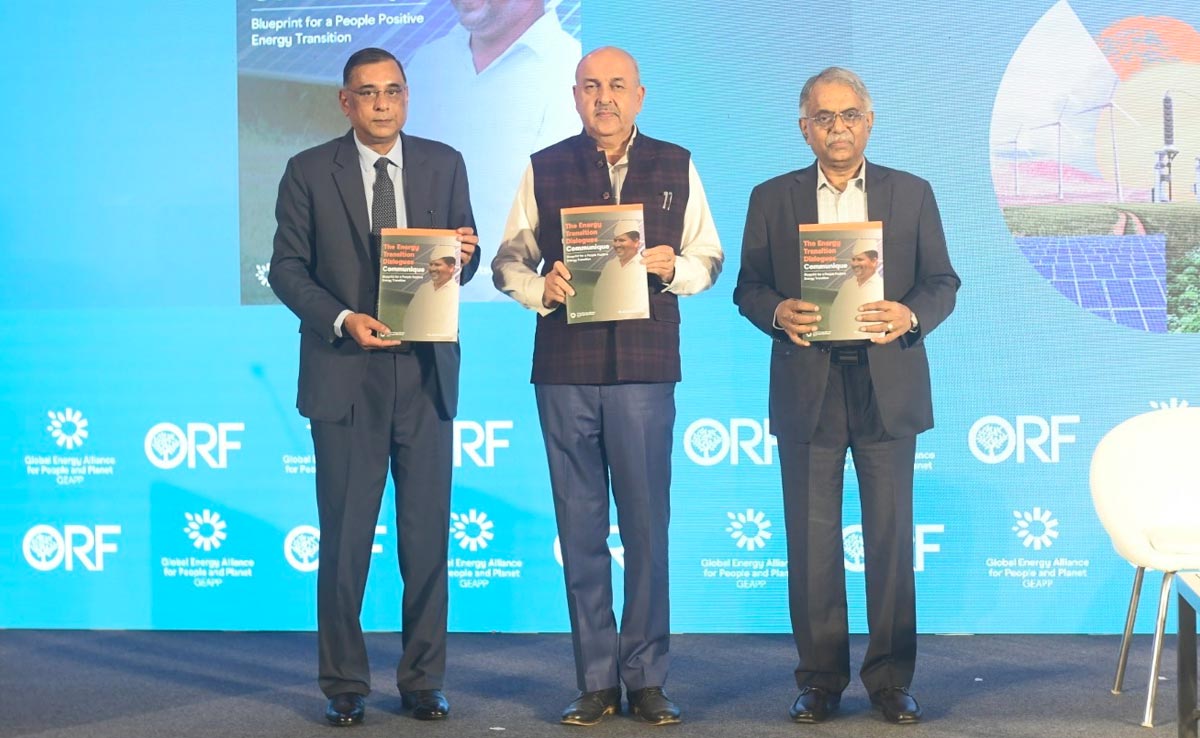
The Energy Transition Dialogues (TETD), a three-day event organised by Global Energy Alliance for People and Planet (GEAPP), in collaboration with Observer Research Foundation (ORF) early November in New Delhi, concluded with a release of the ‘TETD Communiqué - Blueprint for a People-Positive Energy Transition'. This document outlines key principles and recommendations to speed up a sustainable energy transition in India and the world. India has committed to ambitious targets, including a 45% reduction in emissions intensity by 2030 and sourcing 50% of electric power from non-traditional sources.
The aim is to achieve a net-zero economy by 2070. Recommendations by GEAPP and partners are set to drive focus towards the development of plans and structures for India's cleaner and more sustainable economic growth. GEAPP, in collaboration with Sustainable Energy for All (SE4ALL), will host a panel discussion at COP28, which will delve into the following thematic pillars:
- Enhanced adoption of renewable energy & battery energy storage systems
- Scaling up energy efficiency
- Decarbonisation of transport
- Utility modernisation
- Clean energy financing
People-positive energy transition file:///C:/Users/HP-User/Downloads/TETD-India-2023-Communique.pdf
The panel discussion titled 'Advancing People-Positive Energy Transition in India & the World' is scheduled for December 1 from 09:00 - 10:00 AM (UAE time) at the SDG7 Pavilion in the Blue Zone at COP28, Dubai.
GEAPP aims to create a detailed actionable roadmap for energy transition to achieve the net zero goals. The panel discussion will concentrate on shaping this roadmap basis the priority areas highlighted in the TETD Communiqué.
The Dialogues, held in various formats, brought together domestic and international stakeholders to deliberate on and devise solutions to key issues, strengthen existing efforts and create new networks for collaborative actions to accelerate energy transition.
Priority Areas GEAPPI Is Focusing On To Ensure The Communiqué Is A Holistic Blueprint
The Communiqué outlines key priority areas to create a tangible action plan for people-positive energy transition. This involves setting up a fair compensation system for affected regions, putting in place - measures to protect communities, ensuring gender equality, incorporating environmental protections, encouraging economic variety, giving importance to workforce development, and supporting livelihoods in resilient climate-friendly sectors.
Addressing these areas comprehensively ensures a well-rounded approach, covering economic, social, and environmental aspects, and contributes to the success of the energy transition.
Need For Increased Collaborative Efforts Amongst Diverse Actors
The Communiqué emphasizes the need for extensive stakeholder engagement, including communities, trade unions, associations in affected sectors, and various levels of governance.
It suggests establishing regular and structured dialogue platforms at national, regional, state, district, and community levels to foster meaningful engagement. The complexity of the transition requires collaboration on multiple fronts, from economic and industrial diversification to up-skilling and reskilling the workforce.
The involvement of a centralized institution, such as NITI Aayog, is recommended to coordinate actions across ministries and address diverse issues, showcasing the importance of collaborative efforts for a streamlined and effective transition.
Activating Solutions To Make The Energy Transition More People-Positive
As per the Communiqué, it is essential to define a people-positive energy transition in India, considering different regions.
The document recommends actively involving communities, including women, youth, and marginalized sections. This involves adopting high-level principles like "Do no harm/leave no one behind" and creating new job opportunities to foster economic resilience. Setting up anchor institutions nationally and at the state level helps coordinate actions effectively, the document states.
Having a dedicated fund, like the People-Positive Energy Transition Fund, also ensures financial support. Regularly talking to stakeholders and creating awareness will lead to fair and inclusive solutions for the energy transition, the Communiqué added.
What Would Be Required To Make This Roadmap Actionable?
To turn the outlined roadmap in the TETD Communiqué into reality, several steps need to be taken. As per the Communiqué, some of the steps to be incorporated are:
A) Central and state-level groups need to work together and focus on the unique needs of different regions.
B) Research is important to figure out what needs the most attention, like compensation, protecting communities, gender equality, and environmental safeguards.
C) Get everyone involved, including trade unions, through different engagement platforms.
D) Identifying funding sources, such as restructuring existing government schemes and establishing a dedicated fund.
This whole approach, with research, involving everyone, and planning money, will help make the changes laid out in the energy transition plan, the document suggests. GEAPP, through the TETD Communiqué, takes a prominent role at COP28, presenting a blueprint for a people-positive energy transition.
The focus is on driving decisions and structures for India's sustainable economic growth, aligned with ambitious targets. The outlined roadmap emphasizes collaborative efforts, stakeholder engagement, and addressing key priority areas for a well-rounded approach.
Published: November 30, 2023 19:44 IST
also read
Solar Is The Best Economic Investment, Says Ecologist Who Has Paid Zero Power Bill For Last Three Years
Written by Aastha Ahuja, Edited by Sonia BhaskarMonthly Power Bill Of Just Rs 130, Here's How A Couple In Kochi Did It
Written by Aastha Ahuja, Edited by Sonia BhaskarHimachal Pradesh's The Kalgidhar Society Saves Rs. 3.4 Crore Per Annum By Harnessing The Power Of Solar
Written by Aastha Ahuja, Edited by Sonia Bhaskar



NDTV in partnership with Luminous has launched an awareness campaign ‘Be A Bijli Donor’ to promote the idea of ‘save power for more power’. The idea is to conserve energy today in order to get more power tomorrow.
We inherently know that saving energy results in low energy bills, but we also need to understand that a unit of energy saved today makes it available for people still living in the dark or facing regular power cuts.
Saving power or conserving energy is about knowing the sources of energy, and areas of wastage and thereby eliminating these through technology and lifestyle changes. For instance, a 100 W (Watt) incandescent (ICL) bulb can be replaced with a 9 W LED bulb offering similar performance in terms of light output, but at far lower consumption of energy.
While a 100 W ICL bulb, used for four hours a day, consumes 146 units of energy per year, a 9 W LED bulb requires only 13.5 units per year. Clearly, switching to LED is a smart choice as it provides the same output while consuming 90 per cent less energy.
The focus of the campaign is to instill the idea of ‘save power for more power’ and in order to do so, the initiative will create awareness about energy efficient products and services, smart ways to reduce power consumption, alternate sources of energy like solar energy and the need to conserve energy. The idea is to address the rising need for energy conservation in India.
As part of the campaign, we will highlight the stories of individuals and organisations who are championing the cause of energy conservation by switching to renewable sources of energy, adopting innovations to reduce energy consumption while enjoying the same output.
The initiative will provide a platform for all stakeholders to share their ideas and work towards the common goal of, ‘Save power for more power’.