




- Home/
- Digital Payments: Services That Do Not Need Cash Anymore
Digital Payments: Services That Do Not Need Cash Anymore
Written by Simar Singh | Updated: June 30, 2017 20:46 IST

New Delhi : 
While a significant majority of transactions in India continue to be done with cash (almost 86 per cent of them, according to NITI Aayog CEO Amitabh Kant), there is an undeniable momentum in the transition towards digital payments solutions. In fact, a lot of goods and services can now be purchased with just your bank details and an internet connection. The government's Demonetisation move of November 2016, of course, was a huge thrust to this but even as the cash crunch has come to an end, the number of places one can go cashless are just increasing. Here are a few places where one can jump the lines and make payments with just a touch of a button.
1. Railway Tickets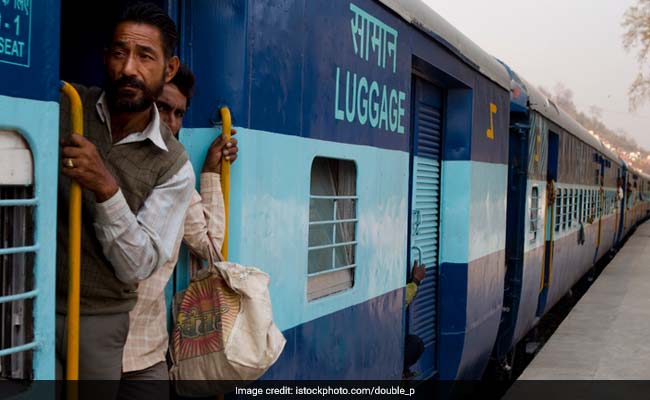
Apart from this, IRCTC has made strides to encourage digital payments. Its own website allows users to use credit cards, debit cards and net banking for payments and it has tied up with popular mobile wallets like Paytm, MobiKwik and FreeCharge.
2. Utility Bills
Perhaps, the simplest way to pay your utility bills-telephone, water, gas (LPG) electricity, etc-is through mobile wallets. Nearly all mobile wallet services available in the market have tie-ups with electricity boards, gas companies and telecom and broadband companies which means that one simply needs to download their app on a smartphone, load some money into the mobile wallet and make their payments.
Those living in Delhi or Bengaluru can also pay their water bills through mobile wallets like MobiKwik and Paytm.
3. Mobile Recharge and Bills
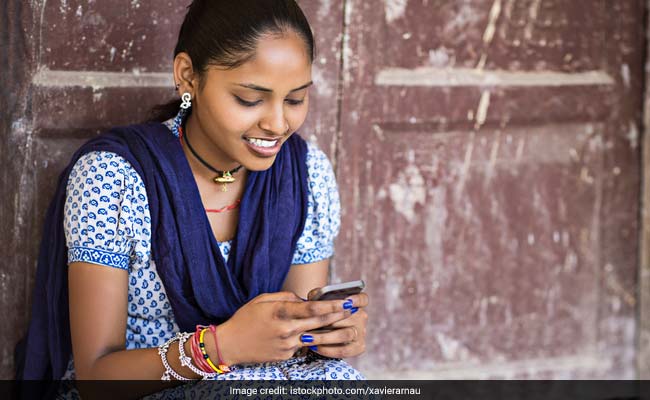
Mobile wallets actually got their start in India as portals through which people could recharge their pre-paid mobiles. Nearly all mobile wallets allow users to recharge their mobiles and data cards as well as pay postpaid bills for all major telecom companies. This can either be done through an app or through the mobile wallet's website.
Additionally, telecom companies have their own websites and apps which allow customers to recharge their balance and settle bills through debit/credit cards, net banking or via any mobile wallet which is pre-loaded with enough money.
4. Toll Plazas
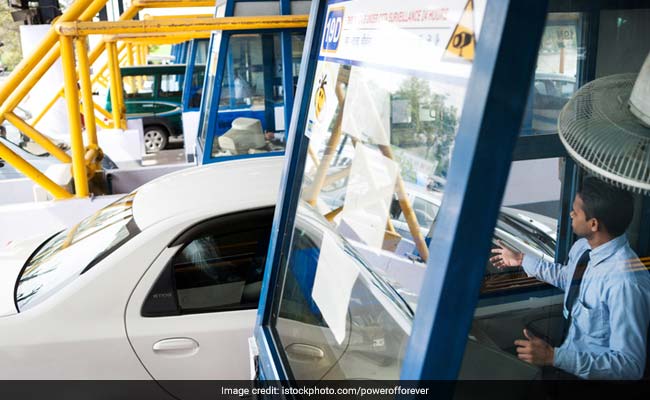
In April 2016, the National Highways Authority of India (NHAI) introduced an option for commuters to at 275 toll plazas on the National Highways around the country. This was enabled through FASTag, a readable tag which can be fixed onto a vehicle's windscreen.
Here is how it works-When a person with a FASTag crosses a toll gate, the toll amount is automatically deducted with the help of radio-frequency identification technology (RFID) which detects the tag. FASTag is essentially a pre-paid instrument which can be loaded with money via online payments through debit/credit cards or net banking.
Additionally, most toll plazas now allow payments to be made through mobile wallets like Paytm and MobiKwik as well. Commuters can simply scan the QR Code displayed at toll booths, allowing money to be deducted straight from their mobile wallets.
5. Kirana Stores
Post Demonetization, many retailers (both big and small) have begun offering their customers the option of making payments via mobile wallets and many also keep credit/debit card machines.
6. Fines/Challans
Traffic police departments all over the country have announced plans to transition towards an e-challan system which will allow people to check their challans online and pay the fine using a digital payment system. Currently, cities like Delhi, Pune, Mumbai and Vijayawada have e-challan systems in place.
In Delhi, people can pay their fines on the Delhi Traffic Police's website through a debit/credit card or net banking while in Mumbai, traffic violators can download the Mumbai Traffic Police's MTPapp to pay their fines.
Traffic violators in Pune, Mumbai and Vijayawada can also pay their fines through mobile wallet Paytm by simply entering their vehicle's licence number.
7. School and College Fees

The University Grants Commission (UGC) recently issued guidelines for all universities colleges in the country to become cashless. The circular asked these higher education institutions to stop insisting on payments made through demand drafts or pay orders and instead opt for online payment methods.
In fact, all technical and higher education institutions in Delhi have already opted for digital payment methods.
A lot of schools now also accept digital payments either through their own sites or through third-party payment gateways. Many mobile wallet companies have also tied up with schools.
8. Taxis
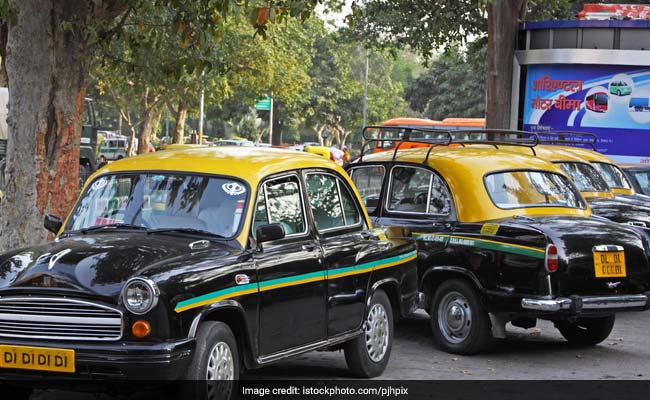
Taxi aggregators already offer different digital payment options to its customers right from debit/credit cards and net banking to their very own pre-paid mobile wallet systems. Many traditional taxis have also switched over to digital payments (particularly after demonetisation) offering customers the choice to make their payments via mobile wallets.
Published: May 29, 2017 12:15 IST
also read
Solar Is The Best Economic Investment, Says Ecologist Who Has Paid Zero Power Bill For Last Three Years
Written by Aastha Ahuja, Edited by Sonia BhaskarMonthly Power Bill Of Just Rs 130, Here's How A Couple In Kochi Did It
Written by Aastha Ahuja, Edited by Sonia BhaskarHimachal Pradesh's The Kalgidhar Society Saves Rs. 3.4 Crore Per Annum By Harnessing The Power Of Solar
Written by Aastha Ahuja, Edited by Sonia Bhaskar



NDTV in partnership with Luminous has launched an awareness campaign ‘Be A Bijli Donor’ to promote the idea of ‘save power for more power’. The idea is to conserve energy today in order to get more power tomorrow.
We inherently know that saving energy results in low energy bills, but we also need to understand that a unit of energy saved today makes it available for people still living in the dark or facing regular power cuts.
Saving power or conserving energy is about knowing the sources of energy, and areas of wastage and thereby eliminating these through technology and lifestyle changes. For instance, a 100 W (Watt) incandescent (ICL) bulb can be replaced with a 9 W LED bulb offering similar performance in terms of light output, but at far lower consumption of energy.
While a 100 W ICL bulb, used for four hours a day, consumes 146 units of energy per year, a 9 W LED bulb requires only 13.5 units per year. Clearly, switching to LED is a smart choice as it provides the same output while consuming 90 per cent less energy.
The focus of the campaign is to instill the idea of ‘save power for more power’ and in order to do so, the initiative will create awareness about energy efficient products and services, smart ways to reduce power consumption, alternate sources of energy like solar energy and the need to conserve energy. The idea is to address the rising need for energy conservation in India.
As part of the campaign, we will highlight the stories of individuals and organisations who are championing the cause of energy conservation by switching to renewable sources of energy, adopting innovations to reduce energy consumption while enjoying the same output.
The initiative will provide a platform for all stakeholders to share their ideas and work towards the common goal of, ‘Save power for more power’.
Comments