




- Home/
- Experts Speak: What Are The Challenges India Will Have To Overcome To Become Cashless?
Experts Speak: What Are The Challenges India Will Have To Overcome To Become Cashless?
Written by Simar Singh | Updated: May 25, 2017 12:09 IST
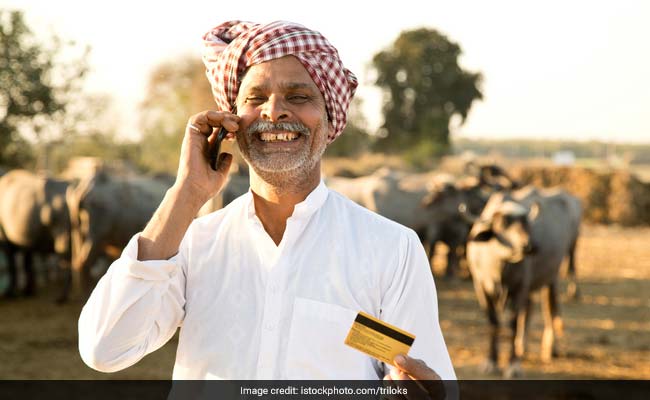
New Delhi: "The age of physical banks is dead," declared Amitabh Kant, CEO of government policy think-tank NITI Aayog speaking at the launch of the NDTV-Mastercard Cashless Bano India campaign. A cashless economy may very well be the future India is moving towards. However, while India harbours ambitions to become a cashless economy bolstered by the increasing permeation of cellular devices and mushrooming digital financial instruments, the challenges to its achievement remain manifold. India's geography and large population along with limited digital and financial literacy, a preference for cash and inadequate infrastructure means that a lot needs to be done to help Indians make the transition to digital payments. A panel of experts at the event discussed these roadblocks and what India could to overcome them.
Connectivity and Infrastructure
Telecom and internet connectivity and related infrastructure are core to promoting financial inclusion via digital payments. However, a significant chunk of the population still does not have access to the internet and digital and financial literacy remains low. In fact, an ASSOCHAM report released in December 2016 estimated that as many as 950 million Indians did not have any kind of internet access.
Speaking at the Cashless Bano India launch event, Sunil Mehta, MD and CEO, Punjab National Bank said that while this was a hurdle and the establishment of this infrastructure would be a long journey, the good news was the government was bullish on this.
"India's geography and population mean that the penetration of this will take time. The government is taking initiative. Optic lines are being laid out across the country," he said.
This was something that was acknowledged by Amitabh Kant as well who detailed the government's plans to address this gap.
"There is a big challenge of infrastructure at the back but this year the government is committed to connecting 150,000 panchayats and next year another 150,000 panchayats. Another thing that we have done to fast track this is converting public areas into Wi-Fi hotspots so that Aadhaar enabled payments can be done," said Mr Kant.
Additionally, the USSD (Unstructured Supplementary Service Data) which enables mobile banking for users who do not have smartphones or mobile data to mobile wallets, credit/debit cards and internet banking remains an option for non-smartphone users. This can be availed across telecom services by dialing *99# which can be used for mobile banking. Powered by the National Payments Corporation of India, this service is widely seen as a great alternative to drive the switch to digital payments.
Promoting Digital Payments
For India to make the dream of a cashless economy a reality there needs to be a widespread adoption of digital payments solutions by both merchants and customers. However, considering the fact that 86 per cent of transactions in the country are done in cash, this is a considerable challenge.
Mr Kant asserted that this was changing and digital payments would become the norm. He added that in the next three to four years India would "technologically leapfrog with most of us using either our iris or our thumb impression (for transactions) simply because it will be very easy".
"We need a radical new India which will realise that the government will not tolerate an informal economy," said Mr Kant.
Reiterating this view, Praveen Khandelwal, General Secretary, The Confederation of All India Traders, who was present at the event, claimed that merchants were actually open to using digital payments, unlike the general perception.
Mr Kant added that since the government was one of the biggest single procurers of goods and services, its shift to digital payments would prove to be a huge impetus to merchants accepting payments via these solutions.
"The government is one of the biggest buyers and therefore, has put all its might across railways, petrol companies, fertilizer companies to push for digitisation to ensure that everything that the government does is done through the digital means. My view is that if the government does it, the rest of the economy will follow. The government is a big procurer and must ensure that every single department, every person who works there and every single agency are pushing for digitisation," he explained.
The panel also agreed the women could be a huge driving force in widening the net of digital payments with their position as key spenders in households and ability to influence their families.
Transaction Costs
Mr Khandelwal pointed out that one of the biggest roadblocks were the transaction costs associated with digital payment instruments like credit and debit cards, something that neither the merchant nor the customer wanted to shoulder. Currently, merchants are required to pay a certain percentage (depending on the financial institution offering the service) on every transaction to the service provider.
"We suggest that transaction costs should be scrapped and they should be instead covered by way of subsidy offered by the government," Mr Khandelwal suggested.
The panel agreed that while this was an impediment, transaction costs were going to fall in the future as the volume of digital payments grew. This, the experts said, would particularly hold true for debit cards, automatically solving the problem.
"The banking sector, across the board, is going to move away from the practice of a blended rate. We are going to have a separate cost for credit and a separate cost for debit. The cost of debit is actually coming down dramatically. There is a movement towards a reasonable price point," said Ari Sarker, Co-President, Asia Pacific, Mastercard.
"My view is that we are moving from a high transaction cost, low volume regime to a low transaction cost, high volume regime. And as the number of transactions will increase, the cost of doing these transactions will radically fall. I have no doubt about this," Amitabh Kant added.
Security and Privacy
Fears of breach of personal and banking data and it being compromised are perhaps one of the biggest challenges to digitisation considering that this can be a very real threat and is intrinsically linked to people's perception about such financial instruments.
"For financial institutions and banks, this is a conversation that is constant at a board level. I don't think you can ever take your eye off the ball as far as cyber security is concerned. And ultimately you cannot fight cybersecurity with regulations. You need to fight technology with technology. We need to use this to track data, for velocity checks, to see whether this transaction matches transaction patterns a customer has. And that is what we are trying to do," Rajeev Anand, Executive Director, Axis Bank said.
However, Dr Arvind Virmani, President, Forum for Strategic Initiatives and Former Chief Economic Advisor was of the opinion that not enough was being done on this front and that the Reserve Bank of India and relevant IT regulators needed to do more on this front.
"Security is an ongoing process. Nothing can be absolutely secure. We need to solve problems on an everyday basis," Sunil Mehta, MD and CEO, Punjab National Bank concluded.
Published: May 25, 2017 12:06 IST
also read
Solar Is The Best Economic Investment, Says Ecologist Who Has Paid Zero Power Bill For Last Three Years
Written by Aastha Ahuja, Edited by Sonia BhaskarMonthly Power Bill Of Just Rs 130, Here's How A Couple In Kochi Did It
Written by Aastha Ahuja, Edited by Sonia BhaskarHimachal Pradesh's The Kalgidhar Society Saves Rs. 3.4 Crore Per Annum By Harnessing The Power Of Solar
Written by Aastha Ahuja, Edited by Sonia Bhaskar



NDTV in partnership with Luminous has launched an awareness campaign ‘Be A Bijli Donor’ to promote the idea of ‘save power for more power’. The idea is to conserve energy today in order to get more power tomorrow.
We inherently know that saving energy results in low energy bills, but we also need to understand that a unit of energy saved today makes it available for people still living in the dark or facing regular power cuts.
Saving power or conserving energy is about knowing the sources of energy, and areas of wastage and thereby eliminating these through technology and lifestyle changes. For instance, a 100 W (Watt) incandescent (ICL) bulb can be replaced with a 9 W LED bulb offering similar performance in terms of light output, but at far lower consumption of energy.
While a 100 W ICL bulb, used for four hours a day, consumes 146 units of energy per year, a 9 W LED bulb requires only 13.5 units per year. Clearly, switching to LED is a smart choice as it provides the same output while consuming 90 per cent less energy.
The focus of the campaign is to instill the idea of ‘save power for more power’ and in order to do so, the initiative will create awareness about energy efficient products and services, smart ways to reduce power consumption, alternate sources of energy like solar energy and the need to conserve energy. The idea is to address the rising need for energy conservation in India.
As part of the campaign, we will highlight the stories of individuals and organisations who are championing the cause of energy conservation by switching to renewable sources of energy, adopting innovations to reduce energy consumption while enjoying the same output.
The initiative will provide a platform for all stakeholders to share their ideas and work towards the common goal of, ‘Save power for more power’.
Comments