




- Home/
- Fighting COVID-19: Meet Ally, A Smart Dustbin That Enables Handsfree Collection Of Hospital Waste
Fighting COVID-19: Meet Ally, A Smart Dustbin That Enables Handsfree Collection Of Hospital Waste
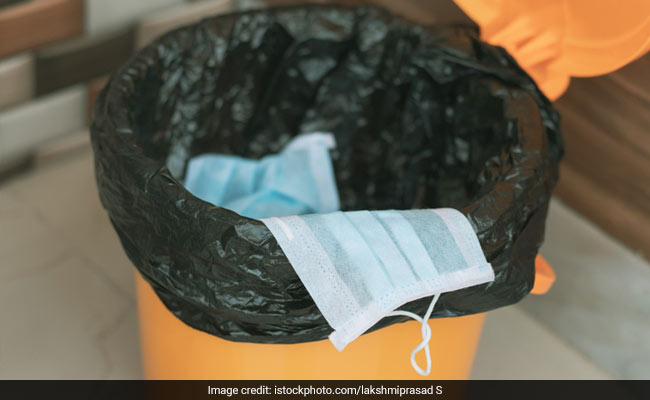
WHO recommends best practices for safe management of health care waste
New Delhi:
Ally, an interactive dustbin which follows voice commands and moves along predefined paths autonomously in a controlled environment to collect waste. It has been developed by the researchers at Punjab's Lovely Professional University (LPU). The smart dustbin can be installed in hospitals and medical centres dealing with the COVID-19 pandemic, and is likely to help in contactless waste collection and disposal, say researchers. This innovation is particularly helpful for the frontline-healthcare workers as it creates A safer environment for them, owing to the highly contagious nature of the COVID-19 virus.
The research team, including B. Tech. third year students Prabin Kumar Das, Vanka Vinaya Kumar, and KM Vaishnavi Gupta, along with Professors Rajesh Singh and Anita Gehlot, have informed that their prototype has successfully conducted its trials within the university.
We have included a sensory system in the dustbin that checks the current level of garbage in the dustbin, and initiates the disposal procedure once it is filled up to a predefined threshold, one of the researchers, Professors Rajesh Singh said.
Ally the dustbin, stands tall at three feet and is 1.5-feet-wide. It performs contact-less waste collection by opening its container's flap automatically, Mr. Singh said. It can move to the disposal centre on its own, dispose the waste and get ready for reuse, he added.
He said that the researchers have used Raspberry Pi, which is a credit-card sized small computer and Atmega 2560, a low-power micro-controller, in the dustbin.
After performing the collection of garbage, the dustbin returns to the predefined home position on it own, Mr Singh says.
Lovi Raj Gupta, Executive Dean of Science and Technology, LPU said,
In the current situation, we believe that a smart dustbin can play a crucial role in collecting waste and leftovers, especially from sensitive areas. Quarantined rooms for instance, where appointing a human worker for waste collection and disposal may expose them to a deadly infection.
Mr. Gupta also says that Ally can be easily activated thanks to voice command.
If the medical staff wants some garbage to be collected, they just need to say, 'Ally, come to bed number 18' and the dustbin responds immediately. Using its indoor mapping algorithm, Ally will follow the voice command and move to the respective place, he claimed.
Ally has been conceptualised and developed under the aegis of the USD one million fund set up by LPU to help combat the outbreak of COVID-19, the researchers said. When it comes to the costing of the smart dustbin, the researchers said,
The prototype costs Rs. 20,000, but the team is now looking for industrial partners for its commercialisation and expects the price to drop by almost 25 per cent.
The final product is expected to be ready for deployment within two months, after getting industrial partners.
According to WHO, there is no evidence that direct, unprotected human contact during the handling of health care waste has led to the transmission of the COVID-19 virus. But it recommends that best practices for safe management of health care waste should be followed. This includes assigning responsibility and sufficient human and material resources to dispose of such contagious waste safely, the researchers said.
Published: April 14, 2020 13:56 IST
also read
Solar Is The Best Economic Investment, Says Ecologist Who Has Paid Zero Power Bill For Last Three Years
Written by Aastha Ahuja, Edited by Sonia BhaskarMonthly Power Bill Of Just Rs 130, Here's How A Couple In Kochi Did It
Written by Aastha Ahuja, Edited by Sonia BhaskarHimachal Pradesh's The Kalgidhar Society Saves Rs. 3.4 Crore Per Annum By Harnessing The Power Of Solar
Written by Aastha Ahuja, Edited by Sonia Bhaskar



NDTV in partnership with Luminous has launched an awareness campaign ‘Be A Bijli Donor’ to promote the idea of ‘save power for more power’. The idea is to conserve energy today in order to get more power tomorrow.
We inherently know that saving energy results in low energy bills, but we also need to understand that a unit of energy saved today makes it available for people still living in the dark or facing regular power cuts.
Saving power or conserving energy is about knowing the sources of energy, and areas of wastage and thereby eliminating these through technology and lifestyle changes. For instance, a 100 W (Watt) incandescent (ICL) bulb can be replaced with a 9 W LED bulb offering similar performance in terms of light output, but at far lower consumption of energy.
While a 100 W ICL bulb, used for four hours a day, consumes 146 units of energy per year, a 9 W LED bulb requires only 13.5 units per year. Clearly, switching to LED is a smart choice as it provides the same output while consuming 90 per cent less energy.
The focus of the campaign is to instill the idea of ‘save power for more power’ and in order to do so, the initiative will create awareness about energy efficient products and services, smart ways to reduce power consumption, alternate sources of energy like solar energy and the need to conserve energy. The idea is to address the rising need for energy conservation in India.
As part of the campaign, we will highlight the stories of individuals and organisations who are championing the cause of energy conservation by switching to renewable sources of energy, adopting innovations to reduce energy consumption while enjoying the same output.
The initiative will provide a platform for all stakeholders to share their ideas and work towards the common goal of, ‘Save power for more power’.
Comments