




- Home/
- Blog: Finding And Decoding Play In the Chores, Chaos And Care
Blog: Finding And Decoding Play In the Chores, Chaos And Care
Written by Richa Shukla | Updated: May 20, 2025 18:01 IST
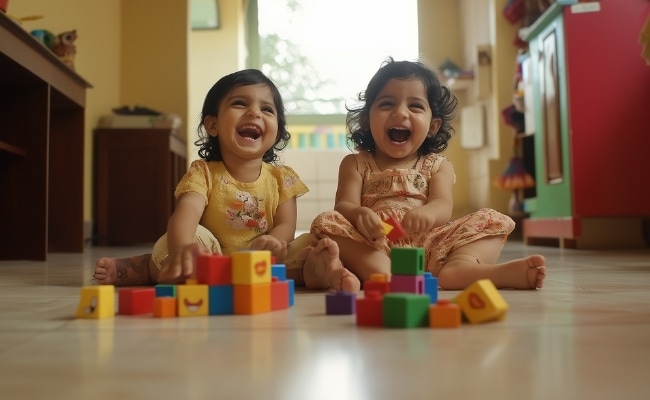
New Delhi: In early childhood spaces, we often hear the phrase “play is a child's right.” But in many low-resource communities, play feels like a luxury, something reserved for children with time, space, and toys. For parents and caregivers facing daily struggles to make ends meet, play is not just rare, it's invisible!
Yet joy is not optional in early childhood. It is essential. Research shows that play is critical for brain development, emotional regulation, and language acquisition. According to Harvard's Center on the Developing Child, early experiences, particularly responsive interactions and playful engagement, shape the architecture of the brain in the earliest years of life. But how do we ask a caregiver burdened by financial insecurity, mental load, and structural barriers to “play more” with their child? We can't! At least not without walking alongside them.

Play As Preparedness, Not Pressure
Play shouldn't be framed yet another obligation, it should be positioned as an act of connection and relief. When caregivers understand that play builds school readiness, communication skills, and even reduces their own stress, the resistance begins to shift.
It's not about asking caregivers to carve out extra time they don't have. It's about weaving play into what they already do and making chores more playful, turning mealtime into storytelling, or embracing five minutes of silliness before bedtime.
In many low-resource settings, parents don't always realize that talking to their baby, singing a lullaby, or playing catch counts as learning. There is a deeply entrenched belief that “real education” begins when a child enters school. We need to change that narrative.
Evidence from the Lancet series on Early Childhood Development highlights that responsive caregiving— including play, talk, and stimulation is one of the most cost-effective ways to improve developmental outcomes for children in low- and middle-income countries. It also contributes to caregivers' sense of efficacy and emotional connection with their children.

The burden to play doesn't rest solely on parents. We must also support educators, frontline workers, and policy actors to internalize the value and characteristics of play. Are we building environments where caregivers feel supported and not judged for the ways they show up in their child's life? Are we providing examples of how to play in constrained circumstances? Are we honoring their realties, the long working hours, crowded homes, limited support?
True equity in early childhood starts when we stop romanticizing play as wooden toys and open fields or, and instead acknowledge that for many families, it can look like a father making silly faces on a bus ride home, or a grandmother narrating her morning routine to a toddler on her lap.
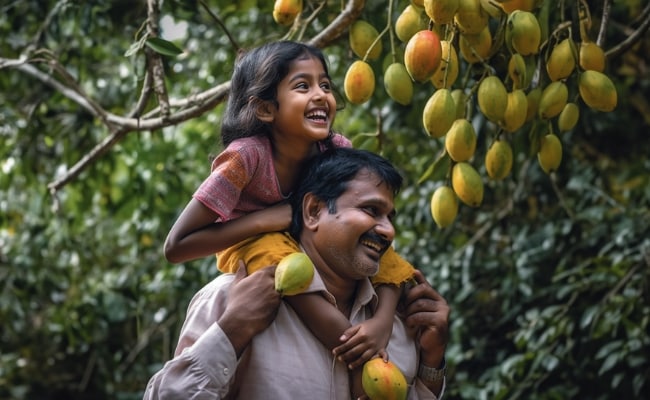
Play is not a privilege or an add-on, rather a powerful way to nurture, to build connection, resilience, and learning. Partnering with families, using participatory approaches and co-designing solutions that honor the everyday realities of families, like time poverty, emotional stress, and resource constraints can be a great way to support families with simple, playful ideas that fit seamlessly into their routines and bring joy back into daily life.
Play is not just for children, it's for adults, it's for the well-being of the family. A few playful minutes with a child can transform a world full of hardship into one filled with joy, laughter, love, and meaningful learning.

About The Author: Richa Shukla is the CEO of Dost Education and a specialist in Early Childhood Development with two decades of experience at the intersection of play, parenting, and multi-media learning. She has designed national and global initiatives and consensus to champion responsive caregiving through digital and community-led models, with a strong focus on inclusion and impact.
Published: May 19, 2025 17:04 IST
also read
Solar Is The Best Economic Investment, Says Ecologist Who Has Paid Zero Power Bill For Last Three Years
Written by Aastha Ahuja, Edited by Sonia BhaskarMonthly Power Bill Of Just Rs 130, Here's How A Couple In Kochi Did It
Written by Aastha Ahuja, Edited by Sonia BhaskarHimachal Pradesh's The Kalgidhar Society Saves Rs. 3.4 Crore Per Annum By Harnessing The Power Of Solar
Written by Aastha Ahuja, Edited by Sonia Bhaskar



NDTV in partnership with Luminous has launched an awareness campaign ‘Be A Bijli Donor’ to promote the idea of ‘save power for more power’. The idea is to conserve energy today in order to get more power tomorrow.
We inherently know that saving energy results in low energy bills, but we also need to understand that a unit of energy saved today makes it available for people still living in the dark or facing regular power cuts.
Saving power or conserving energy is about knowing the sources of energy, and areas of wastage and thereby eliminating these through technology and lifestyle changes. For instance, a 100 W (Watt) incandescent (ICL) bulb can be replaced with a 9 W LED bulb offering similar performance in terms of light output, but at far lower consumption of energy.
While a 100 W ICL bulb, used for four hours a day, consumes 146 units of energy per year, a 9 W LED bulb requires only 13.5 units per year. Clearly, switching to LED is a smart choice as it provides the same output while consuming 90 per cent less energy.
The focus of the campaign is to instill the idea of ‘save power for more power’ and in order to do so, the initiative will create awareness about energy efficient products and services, smart ways to reduce power consumption, alternate sources of energy like solar energy and the need to conserve energy. The idea is to address the rising need for energy conservation in India.
As part of the campaign, we will highlight the stories of individuals and organisations who are championing the cause of energy conservation by switching to renewable sources of energy, adopting innovations to reduce energy consumption while enjoying the same output.
The initiative will provide a platform for all stakeholders to share their ideas and work towards the common goal of, ‘Save power for more power’.