




- Home/
- First Songs: A Language And Literacy Bridge
First Songs: A Language And Literacy Bridge
Written by Brij Kothari and Anusha Menon | Updated: August 19, 2025 15:41 IST
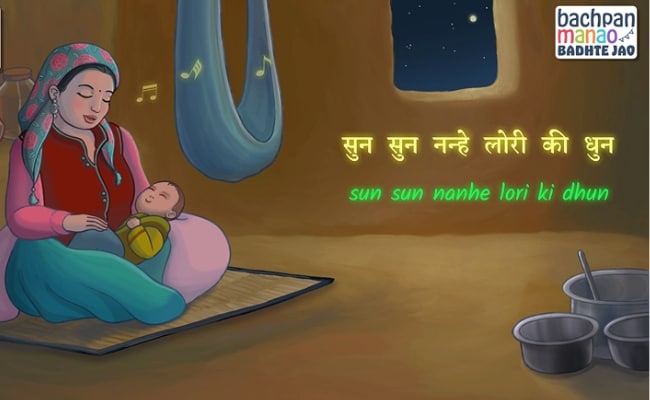
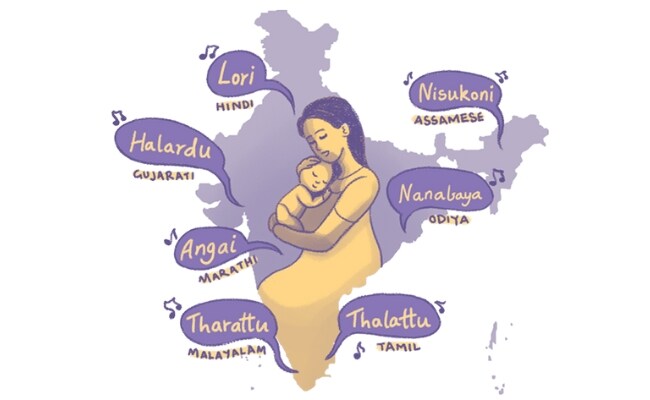
New Delhi: Every night across India, parents and grandparents sing lullabies or first songs to lull infants to sleep. Sung by one generation and remembered by the next, these songs link childhoods across time. Across India's vast linguistic diversity – 22 official languages and 700+ dialects – first songs are a widely distributed cultural treasure that not only serves a soporific purpose at home but could support early education in school. Popular first songs in a child's home language are a ripe and culturally meaningful fruit to help transition children from home to school. Can letters be introduced through first songs with familiar words in a child's home language and not in a school language they do not yet speak?
The core goal of the Ministry of Education's Nipun Bharat programme is to ensure that every child in India achieves Foundational Literacy and Numeracy (FLN) by the end of Class 3. In rural India where only 27.1% of children in Class 3 can read a Class 2 level text (ASER 2024), achieving the FLN goal by 2026-27 as stipulated will be challenging.
A key challenge in early education is that around 25% of children in India are learning to read in school in a language that differs from their home language. For better learning outcomes, the National Education Policy (NEP) 2020 emphasises instruction in the child's home language up to Class 5. Meeting this policy prescription requires teachers to know the child's home language, which is often not the case, or have the necessary resources to help bridge home to school language and literacy.
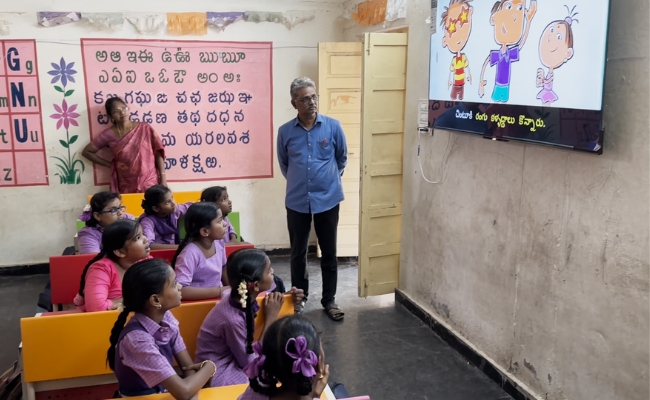
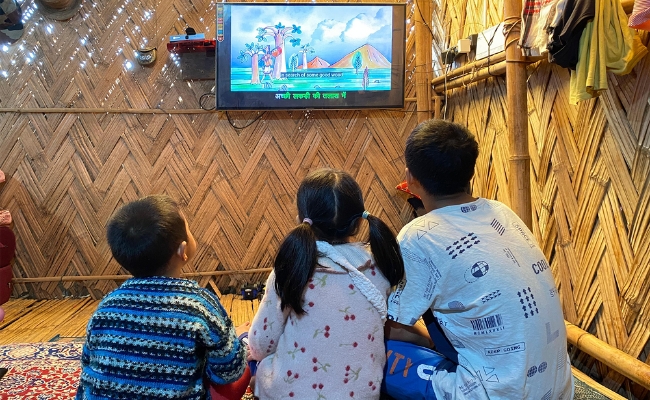
On a related note, the Billion Readers (BIRD) initiative's Same Language Subtitles (SLS) innovation recommends SLS on popular entertainment videos to give a billion Indians automatic reading and language skill improvement. There's strong evidence that adding SLS to songs and TV shows significantly improves reading skills. Based on a large survey in Hindi-speaking states, we found that almost all rural viewers like SLS on TV for its educational value. Impact and eye-tracking studies have also shown that weak readers automatically try to read along with SLS. Regular SLS exposure improves reading skills.
Cambridge University Professor Usha Goswami's research emphasises the crucial role of songs in children's language and literacy acquisition. The parental practice of singing lullabies to infants, especially the inherent rhythms and rhymes, contributes to building a linguistic brain and its capacity for spoken and written communication later.
India is globally the first to champion SLS for reading literacy at scale. This has directly inspired UK's Turn On the Subtitles (TOTS) campaign. While BIRD is scaling up SLS nationally on films, TV, and streaming (OTT) content, it has teamed up with Pratham and EkStep Foundation around first songs. Under the Bachpan Manao tent, we have begun collecting and maintaining a growing video library of parents singing first songs with SLS. This has led further to collaboration between BIRD and Anahad Foundation to add SLS to their existing stock of professionally recorded folk songs.
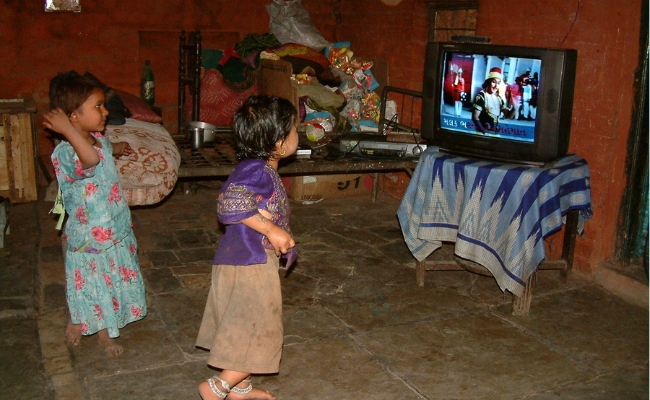
The NEP and Nipun Bharat goals of timely acquisition of foundational literacy skills in a child's first language, by Class 3, may remain good ideas on paper unless we plan for the creation of human and digital resources to support teaching and learning in a large number of first languages. Creating an open national repository of first songs with SLS in all of India's languages and dialects would be of immense value. Children, parents, teachers and all of us need emotionally resonant resources to build language and literacy bridges from home to school. The policy moment for partnerships around first songs in the first language, to introduce first letters in first grade, is now.
About The Authors: Brij Kothari is an Adjunct Professor at IIT-Delhi's School of Public Policy and leads the Billion Readers (BIRD) initiative. Anusha Menon is a designer and leads BIRD's First Songs project.
Watch:
Published: July 30, 2025 13:52 IST
also read
Solar Is The Best Economic Investment, Says Ecologist Who Has Paid Zero Power Bill For Last Three Years
Written by Aastha Ahuja, Edited by Sonia BhaskarMonthly Power Bill Of Just Rs 130, Here's How A Couple In Kochi Did It
Written by Aastha Ahuja, Edited by Sonia BhaskarHimachal Pradesh's The Kalgidhar Society Saves Rs. 3.4 Crore Per Annum By Harnessing The Power Of Solar
Written by Aastha Ahuja, Edited by Sonia Bhaskar



NDTV in partnership with Luminous has launched an awareness campaign ‘Be A Bijli Donor’ to promote the idea of ‘save power for more power’. The idea is to conserve energy today in order to get more power tomorrow.
We inherently know that saving energy results in low energy bills, but we also need to understand that a unit of energy saved today makes it available for people still living in the dark or facing regular power cuts.
Saving power or conserving energy is about knowing the sources of energy, and areas of wastage and thereby eliminating these through technology and lifestyle changes. For instance, a 100 W (Watt) incandescent (ICL) bulb can be replaced with a 9 W LED bulb offering similar performance in terms of light output, but at far lower consumption of energy.
While a 100 W ICL bulb, used for four hours a day, consumes 146 units of energy per year, a 9 W LED bulb requires only 13.5 units per year. Clearly, switching to LED is a smart choice as it provides the same output while consuming 90 per cent less energy.
The focus of the campaign is to instill the idea of ‘save power for more power’ and in order to do so, the initiative will create awareness about energy efficient products and services, smart ways to reduce power consumption, alternate sources of energy like solar energy and the need to conserve energy. The idea is to address the rising need for energy conservation in India.
As part of the campaign, we will highlight the stories of individuals and organisations who are championing the cause of energy conservation by switching to renewable sources of energy, adopting innovations to reduce energy consumption while enjoying the same output.
The initiative will provide a platform for all stakeholders to share their ideas and work towards the common goal of, ‘Save power for more power’.