




- Home/
- Going Cashless: What India Can Learn From These Countries That Have Successfully Adopted Digital Payments
Going Cashless: What India Can Learn From These Countries That Have Successfully Adopted Digital Payments
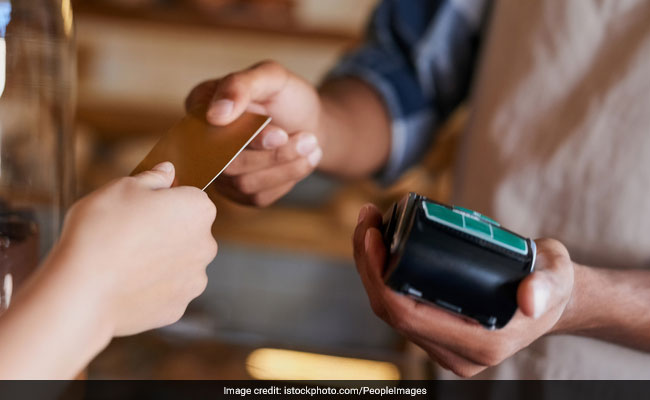
New Delhi: As India tries to move towards a cashless economy, various models and incentives are being implemented to bring more people under the ambit of a functioning cashless economy. India could learn from some of the European countries which have embraced digital payments successfully. Despite several roadblocks, achieving a cashless economy is not impossible, provided the infrastructure to support such an economy is in place. The logistical challenges in setting up the infrastructure in India are huge, these countries can help India understand the path to transition towards a cashless economy.
Sweden: Good Coverage Of Internet And Population With Bank Accounts
Sweden has made remarkable progress in terms of moving towards a cashless economy. A study by Deutsche Bundesbank from Germany revealed that 96 per cent of the Swedish population own a debit card and 89 per cent of consumer payments are made digitally, using credit/debit cards, mobile wallets or payment apps. Since 1991, Sweden has encouraged the use of debit cards for consumer purchase by providing debit cards to account holders and install Point of Sale (PoS) machines in retail outlets. The practice of using digital currency has also been encouraged by the government, as by 1995, 97 per cent of the population had bank accounts with functional debit cards, assisting them in conducting cashless transactions. The KTH Royal Institute of Technology at Sweden estimates that by 2030, Sweden will become a fully functional cashless economy. This achievement has been made possible largely due to a majority of the population having bank accounts. 90.6 per cent internet penetration has also ensured that people can conduct cashless transactions at ease.
While Sweden's population is 0.7 percent of India's, but even then India will need to improve on both these fronts drastically for digital payments to grow - population with active bank accounts and access to internet. Currently, India has 75 per cent of the population with bank accounts, of which 27 per cent have debit cards and 1.8 per cent has credit cards.
Belgium - Cap On Cash Transactions And A Unified Mobile App
Belgium has also moved successfully towards a cashless economy, as 93 percent of the Belgian population opt for cashless transactions in the country. To encourage cashless transactions, the Belgian government has imposed a limit of 3000 euros (or about Rs 2,16,000) in cash transactions. The mobile app Sixdots is also widely used by people in the country. A majority of the Belgian banks support this app, so that people can conduct bank transactions smoothly without resorting to cash. The biggest advantage of this app has been the fact that 4 major Belgian banks, which total for 80 per cent of the Belgian market, have supported the app, so that a majority of the population can sync their bank accounts with the payment app for use.
In India, the current cap at cash transaction right after demonetisation was restricted to Rs 24,000, but has been increased to Rs 3 lakh post that. While government has introduced BHIM app, which on last count had more than 10 million downloads, there are other payment apps too, such as PayTM, Mobikwik, Oxigen Wallet, M-Pesa etc.
Given the absence of internet and PoS infrastructure in rural areas, India can also look at how the countries Somaliland and Kenya adopted cashless measures. Both Kenya and Somaliland are poorer countries in terms of economic growth, when compared to India. But both these countries have equipped the rural poor with bank accounts and improved the digital payment structure. M-Pesa a mobile based money transfer app has brought a digital revolution in Kenya, by enabling cash transactions using mobile phones. More than two-thirds of Kenya's adult population has now began using M-Pesa. This is a stellar example for India to follow, because in places where installation of PoS systems is difficult, mobile wallets can be used for cashless transactions. By using M-Pesa, people can create an account in their mobile phones and deposit money. They can then conduct transactions using the M-Pesa app, utilising the account balance. In public transport systems in Somaliland, the government introduced cashless payments in public transport systemd, schools, and hospitals to lessen the dependency on cash, in 2005. This prompted people to further use cards to conduct transactions. An average consumer makes 34 digital transactions a month in Somaliland, the highest in the world.
NITI Aayog CEO Amitabh Kant had recently said that India is at a threshold of digital revolution and the country will see tremendous development in the field of digital payments, in the next few years. While the geographical density of India is more than any of the above mentioned countries, a step-by-step and strategic approach in implementing cashless initiatives will see better success. Bringing public transport and services under the ambit of cashless payments, encouraging rural population to use mobile wallets and better penetration of internet are some of the steps which ought to be prioritised by the government if India is to go cashless within the next few years.
Also Read: Universities And Colleges Are Going Digital To Eliminate Cash Payments
Published: June 14, 2017 11:17 IST
also read
Solar Is The Best Economic Investment, Says Ecologist Who Has Paid Zero Power Bill For Last Three Years
Written by Aastha Ahuja, Edited by Sonia BhaskarMonthly Power Bill Of Just Rs 130, Here's How A Couple In Kochi Did It
Written by Aastha Ahuja, Edited by Sonia BhaskarHimachal Pradesh's The Kalgidhar Society Saves Rs. 3.4 Crore Per Annum By Harnessing The Power Of Solar
Written by Aastha Ahuja, Edited by Sonia Bhaskar



NDTV in partnership with Luminous has launched an awareness campaign ‘Be A Bijli Donor’ to promote the idea of ‘save power for more power’. The idea is to conserve energy today in order to get more power tomorrow.
We inherently know that saving energy results in low energy bills, but we also need to understand that a unit of energy saved today makes it available for people still living in the dark or facing regular power cuts.
Saving power or conserving energy is about knowing the sources of energy, and areas of wastage and thereby eliminating these through technology and lifestyle changes. For instance, a 100 W (Watt) incandescent (ICL) bulb can be replaced with a 9 W LED bulb offering similar performance in terms of light output, but at far lower consumption of energy.
While a 100 W ICL bulb, used for four hours a day, consumes 146 units of energy per year, a 9 W LED bulb requires only 13.5 units per year. Clearly, switching to LED is a smart choice as it provides the same output while consuming 90 per cent less energy.
The focus of the campaign is to instill the idea of ‘save power for more power’ and in order to do so, the initiative will create awareness about energy efficient products and services, smart ways to reduce power consumption, alternate sources of energy like solar energy and the need to conserve energy. The idea is to address the rising need for energy conservation in India.
As part of the campaign, we will highlight the stories of individuals and organisations who are championing the cause of energy conservation by switching to renewable sources of energy, adopting innovations to reduce energy consumption while enjoying the same output.
The initiative will provide a platform for all stakeholders to share their ideas and work towards the common goal of, ‘Save power for more power’.
Comments