




- Home/
- How Visakhapatnam Is Moving Towards Becoming India's First Cashless City
How Visakhapatnam Is Moving Towards Becoming India's First Cashless City
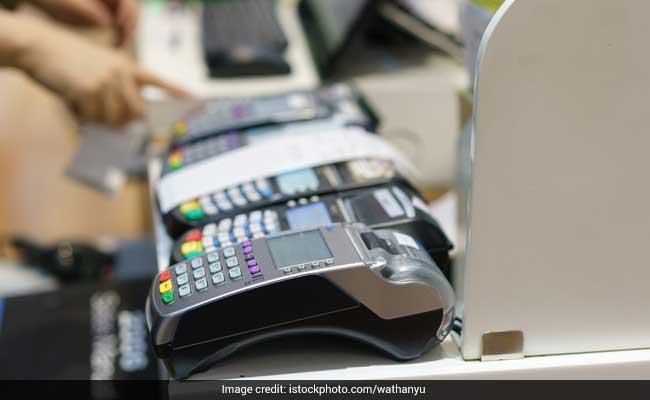
New Delhi: The go cashless drive to get individuals to switch to digital modes of payment is still at a stage where the government feels the need to act as a catalyst and nudge people through incentives schemes to get them to adopt digital methods of payment. That is one end of the spectrum. On the other end is Visakhapatnam in Andhra Pradesh, which has gone a step ahead and is working towards making the entire city a functional cashless model within next year. The model of cashless and digital transactions in Visakhapatnam will soon be implemented all over Andhra Pradesh, transforming the state into a cashless one by 2020.
The vision of a cashless Visakhapatnam was jointly shared by the Government of Andhra Pradesh and a globally renowned financial services company, and together they formed a partnership to launch the pilot project, which aims to transform the city of Visakhapatnam into a hub of cashless transactions. The project was launched on June 9 by State IT and Panchayati Raj Nara Lokesh.
As a part of its transforming Visakhapatnam into a cashless city, the government plans to organise several awareness camps throughout the city. The government plans to bring areas of daily expenditure, such as markets, public transport systems, shopping areas, under the ambit of cashless transactions. Both sellers and consumers will be shown how to go about cashless transactions using Point-of-Sale (PoS) machines. Along with consumers and sellers, various government bodies in the city will also move towards becoming cashless. Municipal offices, government schools and hospitals are some of the primary government institutions which will go cashless in Visakhapatnam. The state government also plans to extend the cashless initiative to private companies and retail businesses, urging them to conduct their businesses using digital payment methods.
The project, which has been named as project 'Digital Sankalp' will see the transformation of Visakhapatnam into a Fintech (financial technology) capital city. The Memorandum of Understanding (MoU) between the various stakeholders covers the development of digitisation of payment services and improving the city's digital payment capacity by providing PoS systems. It also covers areas like nurturing startups which are exploring digital economy models , promote awareness camps and hackathons.
Also Read: The Multiple Benefits of The Insurance Sector Going Cashless
"The plan is ensure that all the sections of the city, from retail merchants to government schools can go entirely cashless by next year. Over the next few months, a number of events will be held across the city to help people understand how PoS systems and payment wallets work so that they can begin using them," said M. Sailaja, Special Officer, Information Technology, Electronics and Communications Department, Government of Andhra Pradesh.
The city will partner with the Road Transport Office (RTO), traders at railway stations, eSeva by Government of Andhra Pradesh to gradually take Visakhapatnam towards a cashless economy. To meet the self-implemented deadline of going cashless by 2018, the city has covered all primary sections of its economy. If all goes well then Visakhapatnam could well be the city that others in the country emulate in the transition from a cash based economy to a cashless one.
Published: June 14, 2017 19:21 IST
also read
Solar Is The Best Economic Investment, Says Ecologist Who Has Paid Zero Power Bill For Last Three Years
Written by Aastha Ahuja, Edited by Sonia BhaskarMonthly Power Bill Of Just Rs 130, Here's How A Couple In Kochi Did It
Written by Aastha Ahuja, Edited by Sonia BhaskarHimachal Pradesh's The Kalgidhar Society Saves Rs. 3.4 Crore Per Annum By Harnessing The Power Of Solar
Written by Aastha Ahuja, Edited by Sonia Bhaskar



NDTV in partnership with Luminous has launched an awareness campaign ‘Be A Bijli Donor’ to promote the idea of ‘save power for more power’. The idea is to conserve energy today in order to get more power tomorrow.
We inherently know that saving energy results in low energy bills, but we also need to understand that a unit of energy saved today makes it available for people still living in the dark or facing regular power cuts.
Saving power or conserving energy is about knowing the sources of energy, and areas of wastage and thereby eliminating these through technology and lifestyle changes. For instance, a 100 W (Watt) incandescent (ICL) bulb can be replaced with a 9 W LED bulb offering similar performance in terms of light output, but at far lower consumption of energy.
While a 100 W ICL bulb, used for four hours a day, consumes 146 units of energy per year, a 9 W LED bulb requires only 13.5 units per year. Clearly, switching to LED is a smart choice as it provides the same output while consuming 90 per cent less energy.
The focus of the campaign is to instill the idea of ‘save power for more power’ and in order to do so, the initiative will create awareness about energy efficient products and services, smart ways to reduce power consumption, alternate sources of energy like solar energy and the need to conserve energy. The idea is to address the rising need for energy conservation in India.
As part of the campaign, we will highlight the stories of individuals and organisations who are championing the cause of energy conservation by switching to renewable sources of energy, adopting innovations to reduce energy consumption while enjoying the same output.
The initiative will provide a platform for all stakeholders to share their ideas and work towards the common goal of, ‘Save power for more power’.
Comments