




- Home/
- "I'm Still An Addict": How Punjab Is Fighting Drug Menace
"I'm Still An Addict": How Punjab Is Fighting Drug Menace
Written by Draksha Sharma | Updated: March 17, 2020 13:09 IST
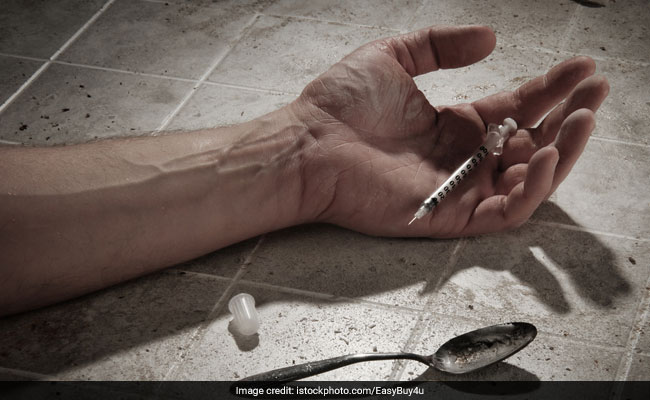
Doctors say, addiction is like a mental illness, needs counselling more than medicines (Representational)
New Delhi:
“I still call myself a drug addict, it is not easy to get rid of this image,” said Mandeep Singh, manager of an NGO in Punjab's Patiala. It has been four years since Mr. Singh, in his thirties, is living a “clean” life, away from the menace of drug abuse which had led to a social boycott by his parents, wife and community. Drug addiction menace has been haunting Punjab for several years now. The number of drug-related cases has sharply increased in recent times. In fact, the drug crisis was one of the major reasons for the defeat of the Shiromani Akali Dal-BJP alliance in the 2017 Assembly polls and ensured the return of Amarinder Singh-led Congress.
Since the victory, the state government has undertaken numerous steps to wipe out the problem from the state. In this mission to curb the drug crisis, various NGOs and private organisations, across the state, have also played a vital role.
Doctors working at these rehabilitation centres told NDTV that drug addiction is more like a mental illness and therefore constant counselling benefits the patients more than medicines.Manager of the ‘Aas di Kiran (ray of hope)' rehabilitation centre, who preferred not to be named, said,
It is important to divert the patient's attention to something else and at the rehabilitation centre our main focus is at that.
How does a rehabilitation centre takes a person out of addiction?
Primarily, there are two stages for completely making the patient sober -- detoxification and counselling. Detoxification in simpler terms means, washing out the narcotics from the body with the help of medication. Dr. Hardeep Singh of Neuropsychiatry & Drug Deaddiction-Rehabilitation Centre, Chandigarh said,
Doctors either prefer buprenorphine, a synthetic medication, or naltrexone that blocks the area around the receptors to the brain hence not allowing the "kick" of the injected drugs to reach to mind.
He further explained that usage of buprenorphine is a contentious issue for the medical fraternity as it is nothing less than a “prescribed opioid”.
The second stage includes carrying out counselling and motivational sessions. The psychiatrist along with psychologists generally conduct group and individual sessions and depending upon the case, they prescribe different kinds of activities. A manager of the ‘Aas Di Kiran' rehabilitation centre, Kapurthala said,
It is important to divert the attention of our patients towards positive, lively and productive activities. That's why we have a gym and a volleyball court at our centre.
Another manager of an NGO in Patiala, Mandeep Singh said that at their centre they firstly mentally prepare the patient to undergo the treatment not only for himself but for his family members also. He said,
I have gone through all of these things, I know exactly how it feels. No one gives you respect. Neither your friends nor your family members… They stopped giving me money and it became very difficult to live that life of dependency.
Mr Singh said in most of the cases patients are forced to come to our rehabilitation centre by their parents, “hence it very important to convince them to take admission at the centre”. He said,
We do not expect the addicts to follow a routine, as and when they join. Since they remain highly under the influence of drugs it becomes difficult for them to perceive any order. For the initial seven to 10 days, we keep them under observation before starting the detoxification and counselling session.
Igniting the willingness inside the person to start the therapy is not the only challenge. The major problem lies in ensuring that the person remains on course and completes the treatment that they are undergoing. Mr. Singh said
After a week or so, they will say - “ab mein control kar sakta hun, ab nasha nahi karunga pakka (I can have control on myself, I will never take drugs again)”... But that's not how these treatments work, the patient can fall prey to drugs again.
Dr Mandeep Singh also shared a similar feeling. He said that all their efforts go into vain once the patient leaves the treatment midway.
Punjab's drug menace issue is not constrained to a typical demographic. It is across class, gender, age and geography.
A crackdown on drugs by the state government has choked the supply of the drugs to some extent. Constitution of a committee to monitor the implementation of the drug de-addiction and rehabilitation programme, further gave a boost to state government's anti-drug drive.
Despite various measures taken, Punjab has a long way to go in eradicating drug abuse.
Published: March 06, 2020 14:15 IST
also read
Solar Is The Best Economic Investment, Says Ecologist Who Has Paid Zero Power Bill For Last Three Years
Written by Aastha Ahuja, Edited by Sonia BhaskarMonthly Power Bill Of Just Rs 130, Here's How A Couple In Kochi Did It
Written by Aastha Ahuja, Edited by Sonia BhaskarHimachal Pradesh's The Kalgidhar Society Saves Rs. 3.4 Crore Per Annum By Harnessing The Power Of Solar
Written by Aastha Ahuja, Edited by Sonia Bhaskar



NDTV in partnership with Luminous has launched an awareness campaign ‘Be A Bijli Donor’ to promote the idea of ‘save power for more power’. The idea is to conserve energy today in order to get more power tomorrow.
We inherently know that saving energy results in low energy bills, but we also need to understand that a unit of energy saved today makes it available for people still living in the dark or facing regular power cuts.
Saving power or conserving energy is about knowing the sources of energy, and areas of wastage and thereby eliminating these through technology and lifestyle changes. For instance, a 100 W (Watt) incandescent (ICL) bulb can be replaced with a 9 W LED bulb offering similar performance in terms of light output, but at far lower consumption of energy.
While a 100 W ICL bulb, used for four hours a day, consumes 146 units of energy per year, a 9 W LED bulb requires only 13.5 units per year. Clearly, switching to LED is a smart choice as it provides the same output while consuming 90 per cent less energy.
The focus of the campaign is to instill the idea of ‘save power for more power’ and in order to do so, the initiative will create awareness about energy efficient products and services, smart ways to reduce power consumption, alternate sources of energy like solar energy and the need to conserve energy. The idea is to address the rising need for energy conservation in India.
As part of the campaign, we will highlight the stories of individuals and organisations who are championing the cause of energy conservation by switching to renewable sources of energy, adopting innovations to reduce energy consumption while enjoying the same output.
The initiative will provide a platform for all stakeholders to share their ideas and work towards the common goal of, ‘Save power for more power’.
Comments