




- Home/
- Inching Towards Digital Payments: Amazon India's Soon To Be Launched E-Wallet
Inching Towards Digital Payments: Amazon India's Soon To Be Launched E-Wallet
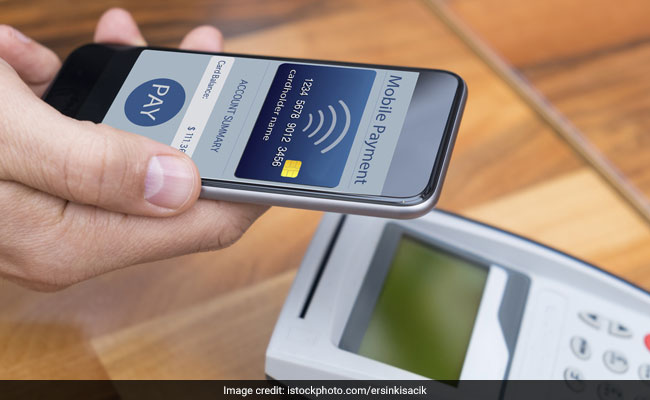
New Delhi: The push for transition towards digital payments since November 2016, saw the increase in usage of payment wallets and apps among consumers and merchants likewise. Mobile wallets like PayTM and Mobikwik saw huge surges in their usage. PayTM announced a 435 per cent increase in its traffic in December 2016, while Mobikwik saw a 200 per cent surge in its usage during the same period. Even before demonetisation, the push towards a digital economy was being encouraged at various levels by the Union Government. Amazon India, realising the opportunity in India's rapidly growing digital payments business had applied for a Prepaid Payment Instrument (PPI) license in March 2016. The Reserve Bank of India (RBI), in March 2017, approved Amazon India's application and paved way for the e-commerce giant to launch an e-wallet in India. Along with Amazon India, 83 other companies were given the PPI license.
In the competitive market of e-wallets, the launch of another one will be interesting in terms of both business and user behaviour, but more importantly, will give people another e-wallet to opt for transactions. Amazon is looking to make their e-wallet a comprehensive payments wallet that would allow transactions across multiple platforms and not just Amazon products.
In December 2016, Amazon India launched Amazon Pay Balance, a digital wallet which allowed users to load money into their Amazon Pay account and buy Amazon India products. Using internet banking or credit/debit cards, users could make the process of online transactions on Amazon India smoother. The demonetisation move had hit the e-commerce sector in India hard, as cash crunch led to a dip in in the availability of cash, and cash-on-delivery is one of the most opted for payment methods for e-commerce deliverables in India. Amazon Pay Balance smoothened the option of paying for products bought on the site. The product price is deducted directly from the Amazon Pay Balance account and the customer need not have provide any other details such as CVV or debit/credit card number.
For its planned digital wallet, Amazon India plans to have a similar interface, allowing the users to conduct transactions across multiple platforms using the wallet. A payment wallet of its own will be immensely beneficial for Amazon India, as buyers will no longer be required to share card details when using the app, something many users are wary of. In case the customer wants a refund, the amount will be transferred directly to the customer's wallet.
Also Read: From Electricity Bills To Shopping, Telangana's T Wallet Is A Truly Holistic Payment Wallet
For Amazon India, stepping into the digital wallets business will not be without competition. The company's biggest competitors Flipkart and Snapdeal already have made deals with payment wallets like PhonePe and Freecharge respectively, which provides the customer the option to receive refunds in the wallets. Amazon India's payment wallet is also looking at ensuring that the user can conduct transactions for multiple purposes, a function similar to PayTM.
"We are pleased to receive our PPI licence from the RBI. Our focus is on providing customers a convenient and trusted cashless payments experience. We look forward to seeing a continuation of the low-limit wallet dispensation with simplified KYC (know your customer) norms and authentication. This will allow us to help customers adopt digital payments at a scale and thereby contribute towards making India a less-cash economy," said Sriram Jagannathan, Vice President, Payments, Amazon India.
Amazon India will also find it challenging to draw users to use its e-wallet, as the RBI has made it mandatory for all operational e-wallets to be Know your customer (KYC) compliant by June 30. This means that users have to submit certain details like PAN or Aadhar number to use the app. Since Amazon India will be launching its app in the latter half of 2017, whether people own up to it by complying to all KYC norms will remain to be seen.
Published: June 19, 2017 19:33 IST
also read
Solar Is The Best Economic Investment, Says Ecologist Who Has Paid Zero Power Bill For Last Three Years
Written by Aastha Ahuja, Edited by Sonia BhaskarMonthly Power Bill Of Just Rs 130, Here's How A Couple In Kochi Did It
Written by Aastha Ahuja, Edited by Sonia BhaskarHimachal Pradesh's The Kalgidhar Society Saves Rs. 3.4 Crore Per Annum By Harnessing The Power Of Solar
Written by Aastha Ahuja, Edited by Sonia Bhaskar



NDTV in partnership with Luminous has launched an awareness campaign ‘Be A Bijli Donor’ to promote the idea of ‘save power for more power’. The idea is to conserve energy today in order to get more power tomorrow.
We inherently know that saving energy results in low energy bills, but we also need to understand that a unit of energy saved today makes it available for people still living in the dark or facing regular power cuts.
Saving power or conserving energy is about knowing the sources of energy, and areas of wastage and thereby eliminating these through technology and lifestyle changes. For instance, a 100 W (Watt) incandescent (ICL) bulb can be replaced with a 9 W LED bulb offering similar performance in terms of light output, but at far lower consumption of energy.
While a 100 W ICL bulb, used for four hours a day, consumes 146 units of energy per year, a 9 W LED bulb requires only 13.5 units per year. Clearly, switching to LED is a smart choice as it provides the same output while consuming 90 per cent less energy.
The focus of the campaign is to instill the idea of ‘save power for more power’ and in order to do so, the initiative will create awareness about energy efficient products and services, smart ways to reduce power consumption, alternate sources of energy like solar energy and the need to conserve energy. The idea is to address the rising need for energy conservation in India.
As part of the campaign, we will highlight the stories of individuals and organisations who are championing the cause of energy conservation by switching to renewable sources of energy, adopting innovations to reduce energy consumption while enjoying the same output.
The initiative will provide a platform for all stakeholders to share their ideas and work towards the common goal of, ‘Save power for more power’.
Comments