




- Home/
- Jabir Karat's Green Worms Leads Kerala's Quiet Revolution In Waste And Sanitation
Jabir Karat's Green Worms Leads Kerala's Quiet Revolution In Waste And Sanitation
| Updated: January 28, 2026 13:55 IST
New Delhi:
Across Kerala, two very different initiatives are creating real change on the ground. One is improving how communities manage waste. The other is using technology to make sanitation work safer. Together, Green Worms and Genrobotics show how practical solutions, backed by compassion, can improve lives and livelihoods. Both stories focus on people who are often ignored. Waste workers. Sanitation workers. Communities that deal with the consequences of poor systems every day. What connects them is a shared belief that dignity and safety should never be optional.
Green Worms: Building A Better Waste System From the Ground Up
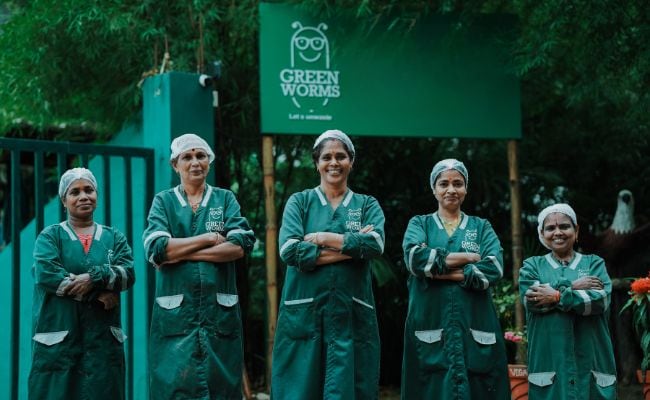
Green Worms Waste Management began in 2014 in a small village near Kozhikode, Kerala. At the time, there was no formal waste collection system. People burned plastic waste or dumped it into nearby water bodies. There was little awareness and no structured approach. Green Worms started by collecting just 300 kilograms of waste per day. From the beginning, the organisation followed a strict rule. No waste would be burned. Nothing would be sent to landfills or open dump sites. Today, Green Worms manages over 300 metric tonnes of waste every day, covering more than 2.2 million households across Kerala. The organisation also operates in the Andaman Islands, Lakshadweep and parts of Tamil Nadu.
Who Is Jabir Karat?
Jabir Karat is the Founder and CEO of Green Worms. He leads a waste management model that focuses on sustainability as well as social impact. The organisation works with waste that is usually ignored by traditional rag pickers and kabadiwalas. Jabir is known for introducing innovative waste recovery methods. These include extracting nutrients from expired medicines to make fertilisers and using certain expired food items as animal fodder. An Acumen Fellow and TEDx speaker, Jabir's work has been featured in several publications. His focus remains on building systems that work for both people and the environment.
Dignifying Waste Work
Green Worms operates on three clear principles. First, reduce waste at the household level. Second, recover as much value as possible from waste, including low-value materials. Third, ensure dignity and fair treatment for waste workers. Many workers are women from marginalised communities. Earlier, most depended on short-term government employment schemes with limited income. Today, Green Worms employs around 850 people, with nearly 600 from local communities. Waste collection, once seen as low-status work, is now a respected job in many rural areas. All collected waste is recycled or converted into alternative fuel.
Genrobotics: Making Sanitation Work Safe
In 2015, a tragic incident in Kozhikode claimed the lives of two sanitation workers and a rescuer. The incident raised serious questions about worker safety in sanitation systems. Genrobotics was founded to address this gap. Established in 2017, the company focuses on removing the need for human entry into manholes through robotics. Its key innovation is the Bandicoot Robot, designed to clean manholes safely using robotic arms, gas sensors and cameras.
Who Is Arun George?
Arun George is the Co-Founder and Director of Genrobotic Innovations. He has been associated with the organisation for over 11 years. Before Genrobotics, he worked with EMAX Power Controls and IT Equipments Pvt. Ltd. His engineering background and on-ground engagement helped shape solutions that are both practical and humane.
From Risky Work To Skilled Roles
Bandicoot robots are operated by trained sanitation workers. Workers who once entered manholes now work as certified robotic operators. So far, over 3,000 sanitation workers have been trained across India. Bandicoot robots are active in more than 120 cities across 24 states. The technology has been recognised by the Supreme Court of India and the National Human Rights Commission.
One Clear Lesson
Green Worms and Genrobotics show that lasting change does not always come from large policies alone. It comes from systems that respect people and solve real problems. These two stories from Kerala prove that when innovation includes communities, progress becomes both meaningful and sustainable.
Published: January 28, 2026 12:50 IST
also read
Solar Is The Best Economic Investment, Says Ecologist Who Has Paid Zero Power Bill For Last Three Years
Written by Aastha Ahuja, Edited by Sonia BhaskarMonthly Power Bill Of Just Rs 130, Here's How A Couple In Kochi Did It
Written by Aastha Ahuja, Edited by Sonia BhaskarHimachal Pradesh's The Kalgidhar Society Saves Rs. 3.4 Crore Per Annum By Harnessing The Power Of Solar
Written by Aastha Ahuja, Edited by Sonia Bhaskar



NDTV in partnership with Luminous has launched an awareness campaign ‘Be A Bijli Donor’ to promote the idea of ‘save power for more power’. The idea is to conserve energy today in order to get more power tomorrow.
We inherently know that saving energy results in low energy bills, but we also need to understand that a unit of energy saved today makes it available for people still living in the dark or facing regular power cuts.
Saving power or conserving energy is about knowing the sources of energy, and areas of wastage and thereby eliminating these through technology and lifestyle changes. For instance, a 100 W (Watt) incandescent (ICL) bulb can be replaced with a 9 W LED bulb offering similar performance in terms of light output, but at far lower consumption of energy.
While a 100 W ICL bulb, used for four hours a day, consumes 146 units of energy per year, a 9 W LED bulb requires only 13.5 units per year. Clearly, switching to LED is a smart choice as it provides the same output while consuming 90 per cent less energy.
The focus of the campaign is to instill the idea of ‘save power for more power’ and in order to do so, the initiative will create awareness about energy efficient products and services, smart ways to reduce power consumption, alternate sources of energy like solar energy and the need to conserve energy. The idea is to address the rising need for energy conservation in India.
As part of the campaign, we will highlight the stories of individuals and organisations who are championing the cause of energy conservation by switching to renewable sources of energy, adopting innovations to reduce energy consumption while enjoying the same output.
The initiative will provide a platform for all stakeholders to share their ideas and work towards the common goal of, ‘Save power for more power’.