




- Home/
- Know What You Pay For Investing in a Mutual Fund
Know What You Pay For Investing in a Mutual Fund
| Updated: March 17, 2016 14:24 IST
Highlights
- As an investor, it is very important to know what are the charges involved in investing in mutual funds. When your money is handled by a team of experts - stocks are bought and sold on your behalf, periodical communication is sent on investments, charges are given to the intermediaries etc and all these expenses come with a cost. There are no free lunches. So the question is how much a mutual fund can charge? Is it one time in nature or regular?
As an investor, it is very important to know what are the charges involved in investing in mutual funds. When your money is handled by a team of experts - stocks are bought and sold on your behalf, periodical communication is sent on investments, charges are given to the intermediaries etc and all these expenses come with a cost. There are no free lunches. So the question is how much a mutual fund can charge? Is it one time in nature or regular?
There are broadly two types of charges:
1. One time charges:
Entry Load: The charges that are levied when the units are being purchased. At present Mutual Funds cannot charge entry load.
Exit Load: The mutual fund would buy back the units at rate lower than the NAV. There are no fixed exit loads which are charged. It varies based on the scheme. The current practice is the funds could charge any way from 0.50% to 3.00% depending on the holding period. If the investors continue to hold the investment beyond the specified period, no exit load is charged.
For eg: An equity fund currently at an NAV of Rs. 72/- per unit charges exit load of 1% if the investor exits within 1 year of investment. If an investor wants to sell his mutual fund units, which were bought 7 months back the redemption NAV for such investor would be Rs.71.28/- 
Illustration disclaimer: The above example is only for illustration purposes & shall not be construed as indicative yields/returns of any of the Schemes of Canara Robeco Mutual Fund.
If the investor has sold 1000units, the total exit load applicable would be Rs.720/-. A Mutual Fund cannot use these charges for paying commission or meeting any of their expenses. This Rs. 720/ should be invested back to the fund, which would benefit the investors who remain invested for long term.
As per this illustration, if the investor redeems after 1 year, there is no exit load.
Transaction Charges: These charges are one time charges applicable when the money is invested. This is applicable for the investments of over Rs. 10,000/-. This would be paid to the distributor/intermediary who is selling the fund.
Illustration disclaimer: The above example is only for illustration purposes & shall not be construed as indicative yields/returns of any of the Schemes of Canara Robeco Mutual Fund.
The transaction charges of Rs. 100/- is charged for the SIP commitment of Rs. 10,000/- or above (not monthly SIP amount). The SIP transaction charges are deducted over 4 installments starting from 2nd installment to 5thinstallment.
2. Recurring Charges (Ongoing expenses/Fund Running Expenses):
The expenses are charged on Daily Net Assets of the specific mutual fund. The guideline rates are given by the regulator and Mutual Funds cannot charge more than the stipulated structure. The expenses are deducted every day from the Net Assets of the fund and NAV declared is after adjusting the expenses.
Illustration disclaimer: The above example is only for illustration purposes & shall not be construed as indicative yields/returns of any of the Schemes of Canara Robeco Mutual Fund.
Does the expense ratio vary between funds?
There are two categories of diversified equity funds offered by different mutual fund companies. Fund A has a total size of Rs. 1000crs and Fund B has a total size of Rs. 100/- crs. Does it make the difference in-terms of the total expenses charged by the fund?
Illustration disclaimer: The above example is only for illustration purposes & shall not be construed as indicative yields/returns of any of the Schemes of Canara Robeco Mutual Fund.
Even though the expense ratio structure is stipulated by the regulator, it varies based on the size of the net assets of the fund. Higher the net assets, lower expense ratio and lower the net assets higher the expense ratio. This, in turn impacts the returns generated by the respective mutual fund. In case of funds like Liquid funds, the difference in expense ratio would be one factor.
Even though the expense ratio structure is stipulated by the regulator, it varies based on the size of the net assets of the fund. Higher the net assets, lower expense ratio and lower the net assets higher the expense ratio.This, in turn impacts the returns generated by the respective mutual fund. In case of funds like Liquid funds, the difference in expense ratio would be one factor.
Illustration disclaimer: The above example is only for illustration purposes & shall not be construed as indicative yields/returns of any of the Schemes of Canara Robeco Mutual Fund.
Mutual Funds are subject to market risks, read the scheme document carefully.
Disclaimer: All information in this article has been provided by Canara Robeco and NDTV Profit is not responsible for the accuracy and completeness of the same.
There are broadly two types of charges:
1. One time charges:
Entry Load: The charges that are levied when the units are being purchased. At present Mutual Funds cannot charge entry load.
Exit Load: The mutual fund would buy back the units at rate lower than the NAV. There are no fixed exit loads which are charged. It varies based on the scheme. The current practice is the funds could charge any way from 0.50% to 3.00% depending on the holding period. If the investors continue to hold the investment beyond the specified period, no exit load is charged.
For eg: An equity fund currently at an NAV of Rs. 72/- per unit charges exit load of 1% if the investor exits within 1 year of investment. If an investor wants to sell his mutual fund units, which were bought 7 months back the redemption NAV for such investor would be Rs.71.28/-
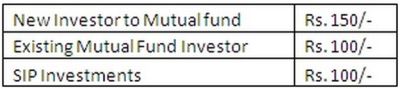
Illustration disclaimer: The above example is only for illustration purposes & shall not be construed as indicative yields/returns of any of the Schemes of Canara Robeco Mutual Fund.
If the investor has sold 1000units, the total exit load applicable would be Rs.720/-. A Mutual Fund cannot use these charges for paying commission or meeting any of their expenses. This Rs. 720/ should be invested back to the fund, which would benefit the investors who remain invested for long term.
As per this illustration, if the investor redeems after 1 year, there is no exit load.
Transaction Charges: These charges are one time charges applicable when the money is invested. This is applicable for the investments of over Rs. 10,000/-. This would be paid to the distributor/intermediary who is selling the fund.
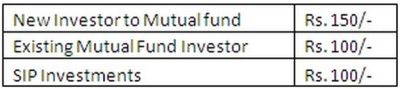
Illustration disclaimer: The above example is only for illustration purposes & shall not be construed as indicative yields/returns of any of the Schemes of Canara Robeco Mutual Fund.
The transaction charges of Rs. 100/- is charged for the SIP commitment of Rs. 10,000/- or above (not monthly SIP amount). The SIP transaction charges are deducted over 4 installments starting from 2nd installment to 5thinstallment.
2. Recurring Charges (Ongoing expenses/Fund Running Expenses):
The expenses are charged on Daily Net Assets of the specific mutual fund. The guideline rates are given by the regulator and Mutual Funds cannot charge more than the stipulated structure. The expenses are deducted every day from the Net Assets of the fund and NAV declared is after adjusting the expenses.
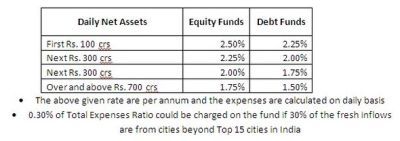
Illustration disclaimer: The above example is only for illustration purposes & shall not be construed as indicative yields/returns of any of the Schemes of Canara Robeco Mutual Fund.
Does the expense ratio vary between funds?
There are two categories of diversified equity funds offered by different mutual fund companies. Fund A has a total size of Rs. 1000crs and Fund B has a total size of Rs. 100/- crs. Does it make the difference in-terms of the total expenses charged by the fund?
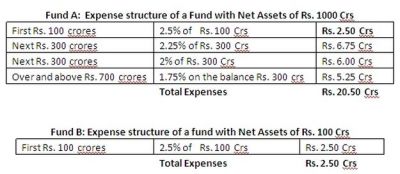
Even though the expense ratio structure is stipulated by the regulator, it varies based on the size of the net assets of the fund. Higher the net assets, lower expense ratio and lower the net assets higher the expense ratio. This, in turn impacts the returns generated by the respective mutual fund. In case of funds like Liquid funds, the difference in expense ratio would be one factor.
Even though the expense ratio structure is stipulated by the regulator, it varies based on the size of the net assets of the fund. Higher the net assets, lower expense ratio and lower the net assets higher the expense ratio.This, in turn impacts the returns generated by the respective mutual fund. In case of funds like Liquid funds, the difference in expense ratio would be one factor.

Illustration disclaimer: The above example is only for illustration purposes & shall not be construed as indicative yields/returns of any of the Schemes of Canara Robeco Mutual Fund.
Mutual Funds are subject to market risks, read the scheme document carefully.
Disclaimer: All information in this article has been provided by Canara Robeco and NDTV Profit is not responsible for the accuracy and completeness of the same.
Published: February 26, 2016 20:35 IST
also read
Solar Is The Best Economic Investment, Says Ecologist Who Has Paid Zero Power Bill For Last Three Years
Written by Aastha Ahuja, Edited by Sonia BhaskarMonthly Power Bill Of Just Rs 130, Here's How A Couple In Kochi Did It
Written by Aastha Ahuja, Edited by Sonia BhaskarHimachal Pradesh's The Kalgidhar Society Saves Rs. 3.4 Crore Per Annum By Harnessing The Power Of Solar
Written by Aastha Ahuja, Edited by Sonia Bhaskar



NDTV in partnership with Luminous has launched an awareness campaign ‘Be A Bijli Donor’ to promote the idea of ‘save power for more power’. The idea is to conserve energy today in order to get more power tomorrow.
We inherently know that saving energy results in low energy bills, but we also need to understand that a unit of energy saved today makes it available for people still living in the dark or facing regular power cuts.
Saving power or conserving energy is about knowing the sources of energy, and areas of wastage and thereby eliminating these through technology and lifestyle changes. For instance, a 100 W (Watt) incandescent (ICL) bulb can be replaced with a 9 W LED bulb offering similar performance in terms of light output, but at far lower consumption of energy.
While a 100 W ICL bulb, used for four hours a day, consumes 146 units of energy per year, a 9 W LED bulb requires only 13.5 units per year. Clearly, switching to LED is a smart choice as it provides the same output while consuming 90 per cent less energy.
The focus of the campaign is to instill the idea of ‘save power for more power’ and in order to do so, the initiative will create awareness about energy efficient products and services, smart ways to reduce power consumption, alternate sources of energy like solar energy and the need to conserve energy. The idea is to address the rising need for energy conservation in India.
As part of the campaign, we will highlight the stories of individuals and organisations who are championing the cause of energy conservation by switching to renewable sources of energy, adopting innovations to reduce energy consumption while enjoying the same output.
The initiative will provide a platform for all stakeholders to share their ideas and work towards the common goal of, ‘Save power for more power’.
Comments