




- Home/
- Fear And Pain Of Nithari Case Is Still Present In The Minds Of The People Here: Rubina Begum
Fear And Pain Of Nithari Case Is Still Present In The Minds Of The People Here: Rubina Begum
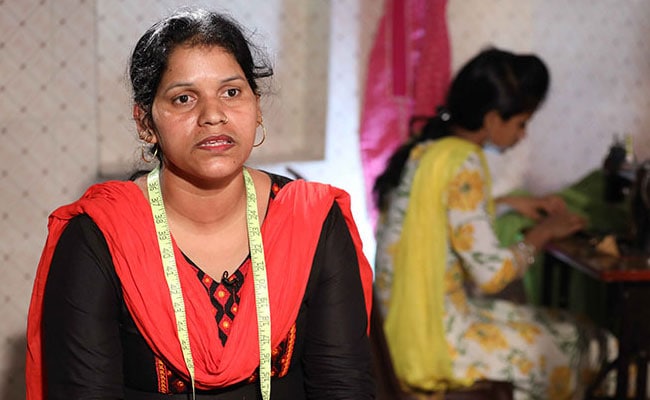
Nithari: The infamous serial murder case of 2006 where 19 women and children were killed still haunts the residents of the small village Nithari, located in Uttar Pradesh. Out of those facing the consequences of that fateful incident are women and children who are forced to remain indoors, forbidden to step out or stay out of home for too long, especially after sun down. This sheltered life means that they are not encouraged to pursue education or seek jobs both of which require venturing out into the big bad world.
Rubina Begum, recounts how life has come to a standstill since the gruesome murders shocked the world 11 years ago.
The Usha initiative teaches stitching and Dari (carpet) making to women of multiple villages across the country. It has helped women, who had very little opportunities in life, become independent and self-sufficient. Through the silai school, Rubina learnt stitching and developed an interest in it.
Rubina Begum, recounts how life has come to a standstill since the gruesome murders shocked the world 11 years ago.
Living in confinement was not the way to put the horrible incident behind or get over one's fears, life had to move on, felt Rubina. That opportunity came her way when Usha Silai School, opened in Nithari in collaboration with the Joint Women Programme after the 2006 murder cases.The fear and pain of Nithari case is still present in the minds of the people here. Our families didn't allow us to go out because they are afraid that this might get repeated.
The Usha initiative teaches stitching and Dari (carpet) making to women of multiple villages across the country. It has helped women, who had very little opportunities in life, become independent and self-sufficient. Through the silai school, Rubina learnt stitching and developed an interest in it.
After her 7-day training session, Rubina received a signage, a course booklet and a sewing machine. This helped her to open her own Silai School. Apart from training others, she began stitching salwar suits for her neighbours at Rs 150 - Rs 200. Now, she has expanded her business and people from nearby village specially come to Nithari to have their clothes stitched by her.We (women) were unemployed before coming to Usha Silai School but now we are standing on our own feet. I am content from within knowing that I am doing something worthy.
It's been a year since Rubina joined the Silai School and today, she feels proud to be the first earning woman in her family.Slowly slowly people started recognising me at the School and also in nearby places. Now I am able to earn more money which is also helping my family.
One of the major hurdles Rubina crossed was overcoming her fear of living in Nithari and opening up to communicate with other villagers. Once she got to know her neighbours, she was able to encourage women to learn sewing. This opening up to the world helped restore normalcy in Rubina's life.My husband does repairing work but his salary is too meagre to fulfil all the needs of our house. That's when I decided to contribute a bit by stitching. Even without going out, I can easily earn approximately Rs 200 by stitching one salwar suit.
Also Read: Proud That I Can Teach A Skill To Poor Village Women And Help Them Become Self-Reliant: Rintu GogoiTheir life had changed a lot (post the murder case). Now they are able to move out of their houses, learn sewing and earn money. This has helped them to improve their financial conditions
Published: June 29, 2017 09:28 IST
also read
Solar Is The Best Economic Investment, Says Ecologist Who Has Paid Zero Power Bill For Last Three Years
Written by Aastha Ahuja, Edited by Sonia BhaskarMonthly Power Bill Of Just Rs 130, Here's How A Couple In Kochi Did It
Written by Aastha Ahuja, Edited by Sonia BhaskarHimachal Pradesh's The Kalgidhar Society Saves Rs. 3.4 Crore Per Annum By Harnessing The Power Of Solar
Written by Aastha Ahuja, Edited by Sonia Bhaskar



NDTV in partnership with Luminous has launched an awareness campaign ‘Be A Bijli Donor’ to promote the idea of ‘save power for more power’. The idea is to conserve energy today in order to get more power tomorrow.
We inherently know that saving energy results in low energy bills, but we also need to understand that a unit of energy saved today makes it available for people still living in the dark or facing regular power cuts.
Saving power or conserving energy is about knowing the sources of energy, and areas of wastage and thereby eliminating these through technology and lifestyle changes. For instance, a 100 W (Watt) incandescent (ICL) bulb can be replaced with a 9 W LED bulb offering similar performance in terms of light output, but at far lower consumption of energy.
While a 100 W ICL bulb, used for four hours a day, consumes 146 units of energy per year, a 9 W LED bulb requires only 13.5 units per year. Clearly, switching to LED is a smart choice as it provides the same output while consuming 90 per cent less energy.
The focus of the campaign is to instill the idea of ‘save power for more power’ and in order to do so, the initiative will create awareness about energy efficient products and services, smart ways to reduce power consumption, alternate sources of energy like solar energy and the need to conserve energy. The idea is to address the rising need for energy conservation in India.
As part of the campaign, we will highlight the stories of individuals and organisations who are championing the cause of energy conservation by switching to renewable sources of energy, adopting innovations to reduce energy consumption while enjoying the same output.
The initiative will provide a platform for all stakeholders to share their ideas and work towards the common goal of, ‘Save power for more power’.
Comments