




- Home/
- Silai School Initiative Takes Its Mission Of Changing Lives To West Bengal
Silai School Initiative Takes Its Mission Of Changing Lives To West Bengal
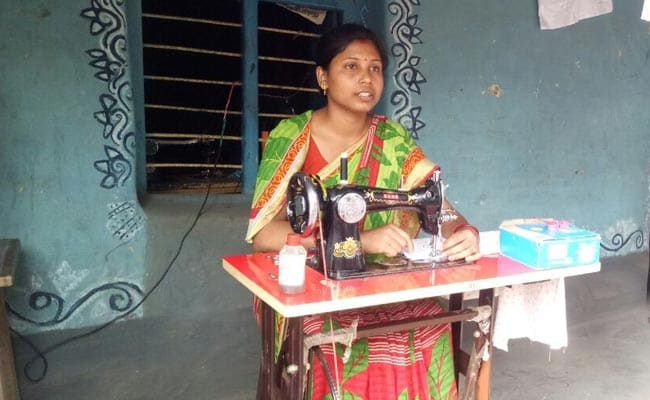
Delhi: India's fourth most populous state, West Bengal, is home to 91 million people, a fifth of which are poor.
Though the state has recorded poverty reduction since 2005, high poverty pockets still persist, and the pace of growth and poverty reduction has still been slower compared to many other states. With agriculture being one of the primary sources of livelihood, the main struggle was to create alternative employment for nearly one crore of landless labourers. Once again, it was USHA Silai School that came in as a ray of hope for the underprivileged men and women in the eastern state of India.
People from rural parts of the state came forward in huge numbers to be a part of the silai school initiative. There were two fundamental reasons - get financial independence and this was a job where skills were imparted, and no education qualification was required.
Apart from training the underprivileged women, the silai school also creates a platform for the women to carry forward this initiative by opening their own sewing schools. Such chain of change is vital in today's time where opportunities remain in the hands of selected groups.
"I think every single person of our 7-member unit will have a better future ahead" said Rinku Dhaka, a trainee who worked alongside 32 selected women that were responsible for the designing and stitching of the 'Silai' label garments. She now owns and run a sewing school through which she earns Rs. 5000 monthly.
Going one step forward this year, the USHA Silai School gave an opportunity to rural women across the country to collaborate with India's finest fashion designers and create their own silai label. The label was launched this year at Lakme Fashion Week in Mumbai where the rural women displayed their creations. The label was hailed and applauded by prestigious designers.
"We are sitting on a whole treasure of crafts in India" said Indian fashion designer and NIFT Delhi graduate Anavila Misra while) sharing her viewpoint on rural skill development.
According to her, integrating skills, focusing on honing them and creating luxury is at the heart of many high-street international clothing brands. She is among those who believe in the 'backward integration' model that aims at discovering rural talents and honing them in order to provide the artisans not just with employment but enable them to establish their personal identity. By this logic, the brand becomes more meaningful and has more to offer to a diverse customer base.
"I have seen the photos of the collaborative designs which went on the ramp" she said talking about USHA Silai School's fashion display at the Lakme Fashion Week.
"The collection looked beautiful and it was a great idea to bring the faces behind the garments on the ramp" she said. "I think more brands should look into creating such collaborations and ways of creating a sustainable fashion environment."
The 'Silai' label has now hit stores in prominent cities across India and the success can be tangibly measured.
"If stores like OGAAN can welcome the brand and consider it for being sold by them then the customers might also consider purchasing the garments" said Chhaya Shriram, Executive Director at USHA International Ltd.
With a launch that attracted a lot of attention and followed the rousing applause the collaboration received at the Lakme Fashion Week, the initiative is indeed on its way to reach every rural household in India and improving more lives in the not-so-far future.
Also Read: Life After Silai School: Women In Nagaland Are Now Sewing Their Own Destinies
Though the state has recorded poverty reduction since 2005, high poverty pockets still persist, and the pace of growth and poverty reduction has still been slower compared to many other states. With agriculture being one of the primary sources of livelihood, the main struggle was to create alternative employment for nearly one crore of landless labourers. Once again, it was USHA Silai School that came in as a ray of hope for the underprivileged men and women in the eastern state of India.
People from rural parts of the state came forward in huge numbers to be a part of the silai school initiative. There were two fundamental reasons - get financial independence and this was a job where skills were imparted, and no education qualification was required.
Echoing her sentiments were many others who, too, signed up for the programme only to break away from the shackles of poverty and make their dream of becoming financially independent come true.The sewing school made me financially independent, exclaims Lakshmi Handsa, a resident of Gopalpur village in Jhargram district, on asking why tailoring was important to her.
"Learning the skill increased my client base which helped me earn more" she said. "I am now able to pay for my children's education."I started learning sewing with an aim of earning some money, said Sujata, a Silai School trainee at the Raghunathpur village in the same district as that of Lakshmi's.
Apart from training the underprivileged women, the silai school also creates a platform for the women to carry forward this initiative by opening their own sewing schools. Such chain of change is vital in today's time where opportunities remain in the hands of selected groups.
Just like in West Bengal, the initiative has built a strong chain of assistance where USHA International offers a training of 7 days that covers topics related to sewing and tailoring. Once a trainee completes the course, they are awarded with a certificate, a signage and a black sewing machine to help kick-start their sewing career.If a few other girls of my village learn from me and start earning then what can be better than that? said Sujata. Today, I am not only confident about my own stitching skills and cutting techniques, but I also have an opportunity to teach my children the same.
"I think every single person of our 7-member unit will have a better future ahead" said Rinku Dhaka, a trainee who worked alongside 32 selected women that were responsible for the designing and stitching of the 'Silai' label garments. She now owns and run a sewing school through which she earns Rs. 5000 monthly.
Such feeling of gratitude and hopefulness is heard in all places where the initiative leaves its mark.If we get to learn better cutting techniques and other methods of stitching then we will never have to look back. Our future is secure, she said.
Going one step forward this year, the USHA Silai School gave an opportunity to rural women across the country to collaborate with India's finest fashion designers and create their own silai label. The label was launched this year at Lakme Fashion Week in Mumbai where the rural women displayed their creations. The label was hailed and applauded by prestigious designers.
"We are sitting on a whole treasure of crafts in India" said Indian fashion designer and NIFT Delhi graduate Anavila Misra while) sharing her viewpoint on rural skill development.
According to her, integrating skills, focusing on honing them and creating luxury is at the heart of many high-street international clothing brands. She is among those who believe in the 'backward integration' model that aims at discovering rural talents and honing them in order to provide the artisans not just with employment but enable them to establish their personal identity. By this logic, the brand becomes more meaningful and has more to offer to a diverse customer base.
"I have seen the photos of the collaborative designs which went on the ramp" she said talking about USHA Silai School's fashion display at the Lakme Fashion Week.
"The collection looked beautiful and it was a great idea to bring the faces behind the garments on the ramp" she said. "I think more brands should look into creating such collaborations and ways of creating a sustainable fashion environment."
The 'Silai' label has now hit stores in prominent cities across India and the success can be tangibly measured.
"If stores like OGAAN can welcome the brand and consider it for being sold by them then the customers might also consider purchasing the garments" said Chhaya Shriram, Executive Director at USHA International Ltd.
With a launch that attracted a lot of attention and followed the rousing applause the collaboration received at the Lakme Fashion Week, the initiative is indeed on its way to reach every rural household in India and improving more lives in the not-so-far future.
Also Read: Life After Silai School: Women In Nagaland Are Now Sewing Their Own Destinies
Published: May 29, 2018 09:46 IST
also read
Solar Is The Best Economic Investment, Says Ecologist Who Has Paid Zero Power Bill For Last Three Years
Written by Aastha Ahuja, Edited by Sonia BhaskarMonthly Power Bill Of Just Rs 130, Here's How A Couple In Kochi Did It
Written by Aastha Ahuja, Edited by Sonia BhaskarHimachal Pradesh's The Kalgidhar Society Saves Rs. 3.4 Crore Per Annum By Harnessing The Power Of Solar
Written by Aastha Ahuja, Edited by Sonia Bhaskar



NDTV in partnership with Luminous has launched an awareness campaign ‘Be A Bijli Donor’ to promote the idea of ‘save power for more power’. The idea is to conserve energy today in order to get more power tomorrow.
We inherently know that saving energy results in low energy bills, but we also need to understand that a unit of energy saved today makes it available for people still living in the dark or facing regular power cuts.
Saving power or conserving energy is about knowing the sources of energy, and areas of wastage and thereby eliminating these through technology and lifestyle changes. For instance, a 100 W (Watt) incandescent (ICL) bulb can be replaced with a 9 W LED bulb offering similar performance in terms of light output, but at far lower consumption of energy.
While a 100 W ICL bulb, used for four hours a day, consumes 146 units of energy per year, a 9 W LED bulb requires only 13.5 units per year. Clearly, switching to LED is a smart choice as it provides the same output while consuming 90 per cent less energy.
The focus of the campaign is to instill the idea of ‘save power for more power’ and in order to do so, the initiative will create awareness about energy efficient products and services, smart ways to reduce power consumption, alternate sources of energy like solar energy and the need to conserve energy. The idea is to address the rising need for energy conservation in India.
As part of the campaign, we will highlight the stories of individuals and organisations who are championing the cause of energy conservation by switching to renewable sources of energy, adopting innovations to reduce energy consumption while enjoying the same output.
The initiative will provide a platform for all stakeholders to share their ideas and work towards the common goal of, ‘Save power for more power’.
Comments