




- Home/
- How Fast Fashion Is Affecting Our Climate?
How Fast Fashion Is Affecting Our Climate?
Written by Anisha Bhatia | Updated: July 14, 2022 16:45 IST
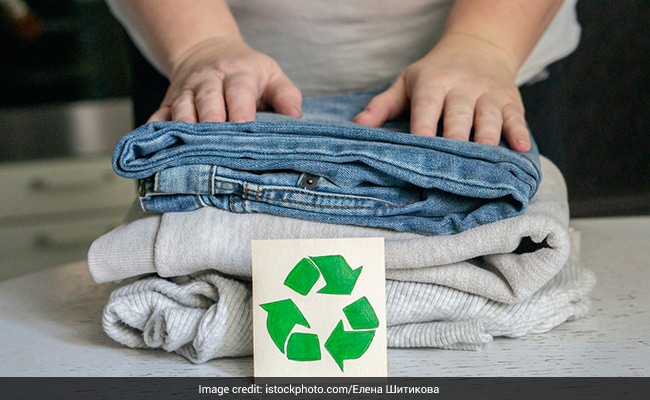
The term ‘Fast fashion' has become very prominent in our day-to-day conversations. There are thousands of brands out there who today are make affordable and fashionable clothing to satisfy the needs of the consumers. While affordable prices are extremely attractive, especially to younger shoppers, the environmental and social impacts of the industry are often overlooked. Here's a look at how fast fashion is affecting the health of our environment:
1. According to the Indian Textile Journal, it is estimated that more than 1 million tons of textiles are thrown away every year, with most of this coming from household sources. This amounts to 0.79 kg of textile waste per capita.
2. Clean Clothes Org states that the garment industry is one of the largest carbon polluters on planet Earth, and one of the greatest producers of waste. It adds that three out of five of the 100 billion garments made in 2018 ended up in landfill within a year.
3. United Nations Environment Programme states that on average consumer buys 60 percent more pieces of clothing than 15 years ago.
4. UNEP further states that the fashion industry is valued at around $2.4 trillion and employs over 75 million people worldwide. It loses about $500 billions of value every year due to the lack of recycling and clothes that are thrown into landfill before ever being sold
5. UNEP states that it takes 3,781 liters of water to make a pair of jeans, from the production of the cotton to the delivery of the final product to the store. That is equivalent to the emission of around 33.4 kilograms of carbon. That is for just one pair of jeans, imagine the environmental cost for everything in our wardrobes.
6. According to the findings from UNEP and the Ellen MacArthur Foundation that works to accelerate the transition to a circular economy, every year the fashion industry uses 93 billion cubic meters of water — enough to meet the consumption needs of five million people. The report further adds that around 20 % of wastewater worldwide is generated from fabric dyeing and treatment
7. The UNEP and the Ellen MacArthur Foundation further states that of the total fibre input used for clothing, 87 percent is incinerated or disposed of in a landfill
8. The fashion industry is responsible for 10% of annual global carbon emissions, more than all international flights and maritime shipping combined. The fashion industry's greenhouse gas emissions will surge more than 50 % by 2030, According to the UNEP and the Ellen MacArthur Foundation findings.
9. The statistics by UNEP also states that every year a half a million tons of plastic microfibers are dumped into the ocean, the equivalent of 50 billion plastic bottles. Not just that - the danger is that microfibers cannot be extracted from the water and they can spread throughout the food chain.
Published: July 12, 2022 14:31 IST
also read
Solar Is The Best Economic Investment, Says Ecologist Who Has Paid Zero Power Bill For Last Three Years
Written by Aastha Ahuja, Edited by Sonia BhaskarMonthly Power Bill Of Just Rs 130, Here's How A Couple In Kochi Did It
Written by Aastha Ahuja, Edited by Sonia BhaskarHimachal Pradesh's The Kalgidhar Society Saves Rs. 3.4 Crore Per Annum By Harnessing The Power Of Solar
Written by Aastha Ahuja, Edited by Sonia Bhaskar



NDTV in partnership with Luminous has launched an awareness campaign ‘Be A Bijli Donor’ to promote the idea of ‘save power for more power’. The idea is to conserve energy today in order to get more power tomorrow.
We inherently know that saving energy results in low energy bills, but we also need to understand that a unit of energy saved today makes it available for people still living in the dark or facing regular power cuts.
Saving power or conserving energy is about knowing the sources of energy, and areas of wastage and thereby eliminating these through technology and lifestyle changes. For instance, a 100 W (Watt) incandescent (ICL) bulb can be replaced with a 9 W LED bulb offering similar performance in terms of light output, but at far lower consumption of energy.
While a 100 W ICL bulb, used for four hours a day, consumes 146 units of energy per year, a 9 W LED bulb requires only 13.5 units per year. Clearly, switching to LED is a smart choice as it provides the same output while consuming 90 per cent less energy.
The focus of the campaign is to instill the idea of ‘save power for more power’ and in order to do so, the initiative will create awareness about energy efficient products and services, smart ways to reduce power consumption, alternate sources of energy like solar energy and the need to conserve energy. The idea is to address the rising need for energy conservation in India.
As part of the campaign, we will highlight the stories of individuals and organisations who are championing the cause of energy conservation by switching to renewable sources of energy, adopting innovations to reduce energy consumption while enjoying the same output.
The initiative will provide a platform for all stakeholders to share their ideas and work towards the common goal of, ‘Save power for more power’.