




- Home/
- Sponsored: Support Those Who Put Food On Your Table Everyday
Sponsored: Support Those Who Put Food On Your Table Everyday
Written by Team Rang De | Updated: July 05, 2021 15:01 IST
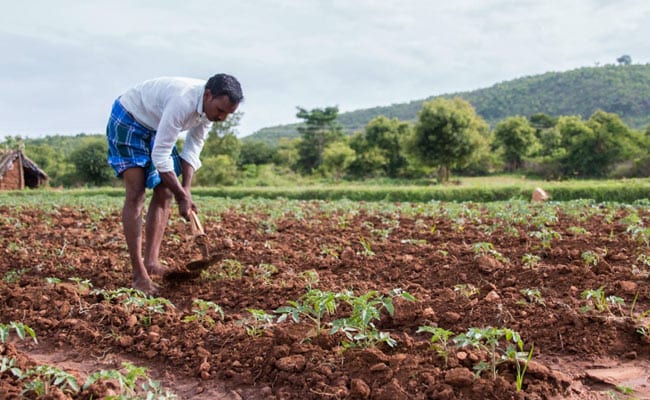
March 2020, even though the virus had entered the country, citizens had not foreseen the devastation this virus would cause world over and in our country. When the numbers started to rise in India, many countries were already in lockdown for months, and India followed suit. There was a nationwide complete lockdown for three months and restrictions started easing only by mid-June.
1.38 billion people of this country were suddenly faced with an uncertain future. But the most affected were the rural communities, especially small and marginal farmers. They were left with unsold harvested Rabi crops, with no buyers, no access to market and no money to put it in a safe storage and no money in hand to buy the inputs for the Kharif season. While the Government did release some relief funds and measures, most of these small and marginal farmers did not have means to access the funds, many of them are tenant farmers and do not own land and therefore do not have Kisan Credit Cards, issued by the government to access funds allocated by the government.
These farmers were in dire need of funds to sustain their lives and livelihoods. That's when ‘Rang De India' was launched, to raise interest free loans for small and marginal farmers.
As a part of the campaign Rang De, an RBI regulated NBFC P2P and NDTV came together to telecast a 2 hour long telethon, with participation from farmer communities, corporates, and celebrities. The telethon was watched by millions across the country and received an overwhelming response.
5000 citizens came together to stand in solidarity for one cause, to support these farmers, who put food on our table. Citizens came together to make social investments via Rang De, to be facilitated as loans to our farmers across the country.
5700 small and marginal farmers across the country received these loans, most of them first time borrowers on a formal platform. Rang De works with impact partner organizations, mostly NGO's to reach out to the communities. 19 organizations across 14 states were part of this campaign and over 24 thousand lives were impacted. Majority of the funds have already been repaid to social investors.
This was possible because of the power of social investing and the coming together of social investors for this noble cause.
While we thought that we were on revival mode and the country would slowly pick up all economic and agricultural activities, the second wave of the pandemic hit us hard. Last year the impact was on livelihoods due to the lockdown and not so much on lives. But as we speak, the lives of rural communities are at high risk, they need funds to tide over this crisis.
Yet again, we are launching an interest free loan campaign and your support alone can make this a success. The funds will be used by these farmers for their immediate farming needs and also to sustain themselves and their families.
We continue to support our farmers and we need you to join in to revive the lives and livelihoods of small and marginal farmers across the country.
You can join in as a social investor and support a farmer in rural India - Invest Now
Published: June 14, 2021 15:32 IST
also read
Solar Is The Best Economic Investment, Says Ecologist Who Has Paid Zero Power Bill For Last Three Years
Written by Aastha Ahuja, Edited by Sonia BhaskarMonthly Power Bill Of Just Rs 130, Here's How A Couple In Kochi Did It
Written by Aastha Ahuja, Edited by Sonia BhaskarHimachal Pradesh's The Kalgidhar Society Saves Rs. 3.4 Crore Per Annum By Harnessing The Power Of Solar
Written by Aastha Ahuja, Edited by Sonia Bhaskar



NDTV in partnership with Luminous has launched an awareness campaign ‘Be A Bijli Donor’ to promote the idea of ‘save power for more power’. The idea is to conserve energy today in order to get more power tomorrow.
We inherently know that saving energy results in low energy bills, but we also need to understand that a unit of energy saved today makes it available for people still living in the dark or facing regular power cuts.
Saving power or conserving energy is about knowing the sources of energy, and areas of wastage and thereby eliminating these through technology and lifestyle changes. For instance, a 100 W (Watt) incandescent (ICL) bulb can be replaced with a 9 W LED bulb offering similar performance in terms of light output, but at far lower consumption of energy.
While a 100 W ICL bulb, used for four hours a day, consumes 146 units of energy per year, a 9 W LED bulb requires only 13.5 units per year. Clearly, switching to LED is a smart choice as it provides the same output while consuming 90 per cent less energy.
The focus of the campaign is to instill the idea of ‘save power for more power’ and in order to do so, the initiative will create awareness about energy efficient products and services, smart ways to reduce power consumption, alternate sources of energy like solar energy and the need to conserve energy. The idea is to address the rising need for energy conservation in India.
As part of the campaign, we will highlight the stories of individuals and organisations who are championing the cause of energy conservation by switching to renewable sources of energy, adopting innovations to reduce energy consumption while enjoying the same output.
The initiative will provide a platform for all stakeholders to share their ideas and work towards the common goal of, ‘Save power for more power’.
Comments