




- Home/
- Take A Pyramid Approach To End Child Marriages In India: Nobel Peace Laureate Leymah Gbowee
Take A Pyramid Approach To End Child Marriages In India: Nobel Peace Laureate Leymah Gbowee
Written by Aastha Ahuja | Updated: November 02, 2022 18:02 IST
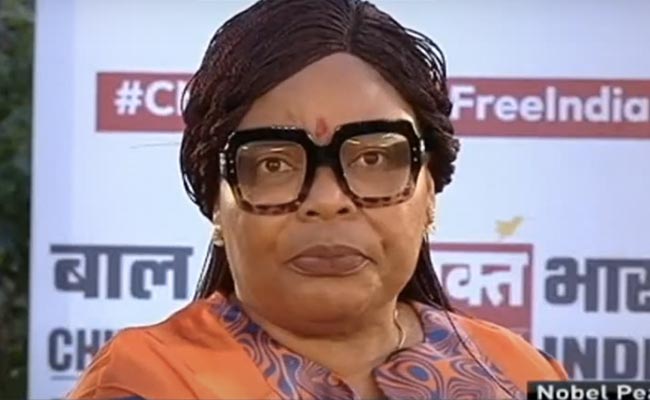
India is home to the largest number of child brides in the world with girls as young as 8-year-old are married off to men much older than them. According to the National Family Health Survey-5 (2019-21), the overall rate of child marriages has dropped from 26.8 per cent (2015-16) to 23.3 per cent. However, it is still high despite laws, programmes and schemes in place to address the issue. To eradicate this social evil, Kailash Satyarthi Children's Foundation and NDTV have initiated Justice For Every Child – Child Marriage Free India. The aim of the campaign is to reduce child marriages by 10 per cent from the current level of 23.3 per cent by end of the campaign in 2025.
Over 20,000 women joined the campaign launched on October 17. Speaking at the launch event, Nobel Peace Laureate Leymah Gbowee shared the steps required to end child marriage in India. Ms Gbowee who has been a torchbearer of peace said, “When I think about ending child marriage, the first thing that comes to my mind is a pyramid. The fight against child marriage must take a pyramid approach – the bottom, the middle and the top. The bottom being those 20,000 women who have signed up to end child marriage but that is just not enough. At the middle level, we need all of the community leaders, religious leaders, media, and all those. At the top level, it is the political will - politicians, those in parliaments and at the Supreme Court level. It is the political will for prosecution because laws in themselves will not end child marriage.”
Ms Gbowee has led a women's non-violent peace moment and actually helped to bring to an end an awful civil war. When asked about the role of women in putting an end to the evil practise of child marriage in India, she said, “Going together, not putting themselves together into small cooperatives to say we are the anti-child marriage police in our community. Because one thing you have to acknowledge is that before any child marriage happens in any community, the women are aware. I want to use this knowledge to end child marriage; coming together as a group to say, we will not allow this practice to happen in our community is very key.”
Published: November 02, 2022 17:28 IST
also read
Solar Is The Best Economic Investment, Says Ecologist Who Has Paid Zero Power Bill For Last Three Years
Written by Aastha Ahuja, Edited by Sonia BhaskarMonthly Power Bill Of Just Rs 130, Here's How A Couple In Kochi Did It
Written by Aastha Ahuja, Edited by Sonia BhaskarHimachal Pradesh's The Kalgidhar Society Saves Rs. 3.4 Crore Per Annum By Harnessing The Power Of Solar
Written by Aastha Ahuja, Edited by Sonia Bhaskar



NDTV in partnership with Luminous has launched an awareness campaign ‘Be A Bijli Donor’ to promote the idea of ‘save power for more power’. The idea is to conserve energy today in order to get more power tomorrow.
We inherently know that saving energy results in low energy bills, but we also need to understand that a unit of energy saved today makes it available for people still living in the dark or facing regular power cuts.
Saving power or conserving energy is about knowing the sources of energy, and areas of wastage and thereby eliminating these through technology and lifestyle changes. For instance, a 100 W (Watt) incandescent (ICL) bulb can be replaced with a 9 W LED bulb offering similar performance in terms of light output, but at far lower consumption of energy.
While a 100 W ICL bulb, used for four hours a day, consumes 146 units of energy per year, a 9 W LED bulb requires only 13.5 units per year. Clearly, switching to LED is a smart choice as it provides the same output while consuming 90 per cent less energy.
The focus of the campaign is to instill the idea of ‘save power for more power’ and in order to do so, the initiative will create awareness about energy efficient products and services, smart ways to reduce power consumption, alternate sources of energy like solar energy and the need to conserve energy. The idea is to address the rising need for energy conservation in India.
As part of the campaign, we will highlight the stories of individuals and organisations who are championing the cause of energy conservation by switching to renewable sources of energy, adopting innovations to reduce energy consumption while enjoying the same output.
The initiative will provide a platform for all stakeholders to share their ideas and work towards the common goal of, ‘Save power for more power’.