




- Home/
- Sponsored: The Tribal Farmers Of Sittilingi Show Resilience In The Face Of Difficulty
Sponsored: The Tribal Farmers Of Sittilingi Show Resilience In The Face Of Difficulty
Written by Team Rang De | Updated: July 05, 2021 15:00 IST
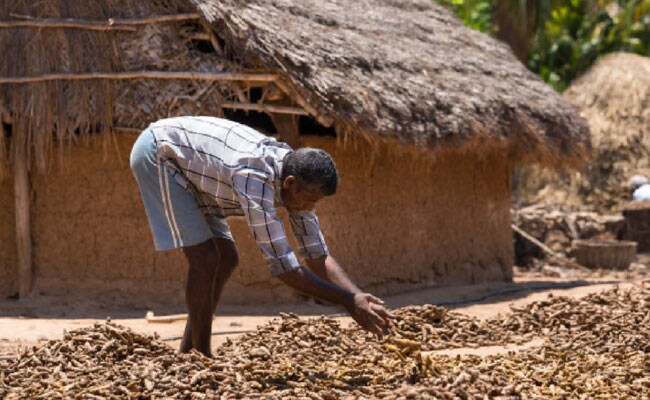
Tucked away in a tribal belt of Tamil Nadu lies Sittilingi village, 70 kms away from the town of Selam.
In this tribal hamlet there are about 500 organic farmers and 100 of them are turmeric farmers. These farmers are part of The Sittilingi Organic Farmers Association - a collective of organic farmers, started by the Tribal Health Initiative, which helps these tribal people with many facets of livelihoods and health.
SOFA was formed in 2008 to train the farmers in organic farming and to help them market their crops. At present, the community has about 15,000 people, around 4,000 of them are farmers and of that 500 are into organic farming.
With the pandemic and lockdowns, life has not been easy for these farmers. SOFA has in many innovative ways supported them last year to sustain but the challenge seems bigger this year.
The problems that we faced last year are the same problems we face this year as well. Because unfortunately again there is a lockdown and the buyers are not coming. The markets are down and therefore the wholesale buyers are not coming. Last year we had about 50 tonnes of turmeric, and this year we have 80 tonnes of turmeric, says Dr. Regi George, the founder of the Tribal Health Initiatives.
With no access to markets, no wholesale buyers and no exports, last year the farmers were staring at a distress sale. SOFA, with the help of interest free loans from Rang De, and a few other fundraising initiatives, were able to give the farmers almost 70 to 80% above market price. This not only helped the farmers tide through the crisis but also buy inputs for the next harvest. And this year they have a bumper crop of almost 80 tonnes.
With the interest free loans and other initiatives, SOFA was able to help the farmers with 3 things:
1. To build a godown to store the excess unsold turmeric.
2. To get an additional organic certification, with the hope of being able to sell globally.
3. To explore the variety of turmeric the farmers of Sittilingi grow, and try to partner with other organizations to try out different types of turmeric.
Even though SOFA has some committed buyers, they are not able to ship the turmeric across to them. The doors to export are still closed. While a bumper crop is a blessing in normal circumstances, with the pandemic and lockdown situation, this seems like a very difficult situation for the farmers of Sittilingi.
Rang De supported close to 100 organic farmers of Sittilingi last year with interest free loans, with a loan amount totalling to about 27 lakhs. And there is a 100% track record of repayment from these tribal farmers. They don't need a handout, they just need us to support them now at this time of difficulty.
The timely support would save them from distress sale and also help them store the excess turmeric and help them to sow for the next season, which is around the corner.
We continue to support these farmers but we need you to join in to revive the lives and livelihoods of these farmers. You can join in as a social investor and put a smile on the face of a farmer in rural india - Invest Now
Published: June 14, 2021 15:28 IST
also read
Solar Is The Best Economic Investment, Says Ecologist Who Has Paid Zero Power Bill For Last Three Years
Written by Aastha Ahuja, Edited by Sonia BhaskarMonthly Power Bill Of Just Rs 130, Here's How A Couple In Kochi Did It
Written by Aastha Ahuja, Edited by Sonia BhaskarHimachal Pradesh's The Kalgidhar Society Saves Rs. 3.4 Crore Per Annum By Harnessing The Power Of Solar
Written by Aastha Ahuja, Edited by Sonia Bhaskar



NDTV in partnership with Luminous has launched an awareness campaign ‘Be A Bijli Donor’ to promote the idea of ‘save power for more power’. The idea is to conserve energy today in order to get more power tomorrow.
We inherently know that saving energy results in low energy bills, but we also need to understand that a unit of energy saved today makes it available for people still living in the dark or facing regular power cuts.
Saving power or conserving energy is about knowing the sources of energy, and areas of wastage and thereby eliminating these through technology and lifestyle changes. For instance, a 100 W (Watt) incandescent (ICL) bulb can be replaced with a 9 W LED bulb offering similar performance in terms of light output, but at far lower consumption of energy.
While a 100 W ICL bulb, used for four hours a day, consumes 146 units of energy per year, a 9 W LED bulb requires only 13.5 units per year. Clearly, switching to LED is a smart choice as it provides the same output while consuming 90 per cent less energy.
The focus of the campaign is to instill the idea of ‘save power for more power’ and in order to do so, the initiative will create awareness about energy efficient products and services, smart ways to reduce power consumption, alternate sources of energy like solar energy and the need to conserve energy. The idea is to address the rising need for energy conservation in India.
As part of the campaign, we will highlight the stories of individuals and organisations who are championing the cause of energy conservation by switching to renewable sources of energy, adopting innovations to reduce energy consumption while enjoying the same output.
The initiative will provide a platform for all stakeholders to share their ideas and work towards the common goal of, ‘Save power for more power’.
Comments