




- Home/
- Time For Good Old Ration Shops To Go Cashless
Time For Good Old Ration Shops To Go Cashless
Highlights
- 2.04 lakh rations shops have PoS machines
- AEPS system to be enabled across all ration shops by June 2017
- Gujarat is the first state to make foodgrains distribution cashless
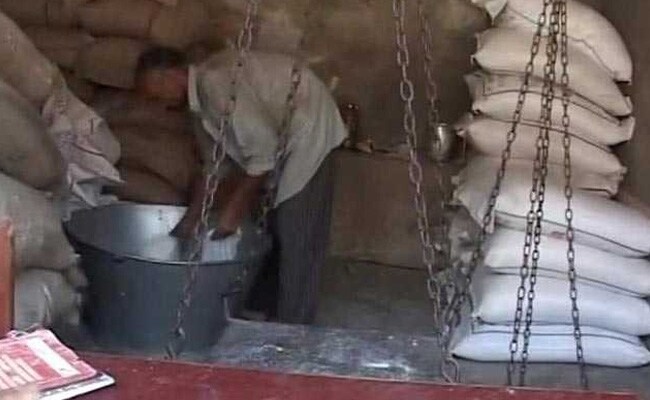
New Delhi: Ration shops have been an integral part of India's social welfare structure, as for many, they are dependable centres to avail low priced foodgrains and other daily utilities. There have been many concerns regarding ration shops, the most common one being the circulation of fake ration cards and using them to deprive people of their rightfully allotted foodgrains. In a bid to both curb the circulation of fake ration cards and promote cashless transactions in ration shops across the country, the Union government has introduced cashless payment systems across several ration shops in the country.
Since demonetisation in November 2016, the Union government has announced a wave of initiatives to make cashless transactions smoother and available across all possible avenues. Till December 2016, only 38,000 of 5.27 lakh ration shops in the country had Point of Sale (PoS) machines installed in them, a mere 7.2 per cent. This resulted in people being dependent on cash based transactions in most of the country's ration shops. In December 2016, Minister of Consumer Affairs, Food and Public Distribution Ram Vilas Paswan announced that by March 2017, all ration shops would be equipped with PoS machines, enabling buyers to buy foodgrains using debit cards. Though the March 2017 target has not been fulfilled, the number of ration shops with PoS machines has gone up to 2.04 lakh, signaling a noticeable increase to 38.7 per cent.
 The Union Government has also been advocating the usage of other digital payment methods such as Unified Payment Interface (UPI) and e-wallets as modes of payment. Till May 2017, around 50,117 ration shops across 10 states and union territories in India had the provision of paying using e-wallets and UPI systems.
With Aadhar numbers becoming mandatory to avail foodgrains under public distribution system (PDS), the Union government in February 2017 announced that by the end of June this year, Aadhar enabled payment systems (AEPS) would be installed across all ration shops in the country. This will enable identifying a beneficiary, as well as enable the beneficiary to pay without using cash or cards. Using fingerprint authentication, Aadhar enabled PoS machines will help keep a track of who is a beneficiary and the amount worth of foodgrains that have been bought. The government hopes to implement AEPS across all ration shops in the country by the end of June 2017. Mr Paswan also announced that the linking of Aadhar cards and ration cards had resulted in the elimination of nearly 2.33 crore duplicate ration cards from the country.
The states have responded well to the Union Government's announcement of making ration shops cashless and AEPS enabled. In February 2017, Gujarat became India's first state to wholly make its foodgrains distribution system cashless. Around 17,250 ration shops in the state have been AEPS enabled, requiring only Aadhar numbers of beneficiaries to provide them with rations. Kerala is also nearing completion of installing PoS systems in all 14,500 ration shops across the state. Apart from enabling purchase of ration using debit cards, beneficiaries can also use the PoS systems for withdrawal of money from their accounts, effectively making the systems as micro ATMs. Currently, the state is installing the systems in ration shops in rural areas for the rural population to have access to cashless purchase of rations. Visakhapatnam in Andhra Pradesh has also installed PoS machines in all 1,624 ration shops across Vizag city, as well as rural areas. The implementation of AEPS is already showing benefits, as Rajasthan in February reported saving 14.68 per cent wheat, 20.11 per cent sugar and 39.13 per cent kerosene from the total amount of ration allotted for the state.
The installation of PoS, AEPS and other digital payment systems across ration shops shows the current interest of the Union government in promoting cashless transaction mechanisms across all essentials of daily life. It also reduces the dependency of cash for buying foodgrains, as for beneficiaries who have linked their Aadhar cards with ration cards, all that would be required for them to avail foodgrains is their thumbprint.
Also Read: How Visakhapatnam Is Moving Towards Becoming India's First Cashless City
Since demonetisation in November 2016, the Union government has announced a wave of initiatives to make cashless transactions smoother and available across all possible avenues. Till December 2016, only 38,000 of 5.27 lakh ration shops in the country had Point of Sale (PoS) machines installed in them, a mere 7.2 per cent. This resulted in people being dependent on cash based transactions in most of the country's ration shops. In December 2016, Minister of Consumer Affairs, Food and Public Distribution Ram Vilas Paswan announced that by March 2017, all ration shops would be equipped with PoS machines, enabling buyers to buy foodgrains using debit cards. Though the March 2017 target has not been fulfilled, the number of ration shops with PoS machines has gone up to 2.04 lakh, signaling a noticeable increase to 38.7 per cent.

Ration shops in India with cashless facilities
With Aadhar numbers becoming mandatory to avail foodgrains under public distribution system (PDS), the Union government in February 2017 announced that by the end of June this year, Aadhar enabled payment systems (AEPS) would be installed across all ration shops in the country. This will enable identifying a beneficiary, as well as enable the beneficiary to pay without using cash or cards. Using fingerprint authentication, Aadhar enabled PoS machines will help keep a track of who is a beneficiary and the amount worth of foodgrains that have been bought. The government hopes to implement AEPS across all ration shops in the country by the end of June 2017. Mr Paswan also announced that the linking of Aadhar cards and ration cards had resulted in the elimination of nearly 2.33 crore duplicate ration cards from the country.
The states have responded well to the Union Government's announcement of making ration shops cashless and AEPS enabled. In February 2017, Gujarat became India's first state to wholly make its foodgrains distribution system cashless. Around 17,250 ration shops in the state have been AEPS enabled, requiring only Aadhar numbers of beneficiaries to provide them with rations. Kerala is also nearing completion of installing PoS systems in all 14,500 ration shops across the state. Apart from enabling purchase of ration using debit cards, beneficiaries can also use the PoS systems for withdrawal of money from their accounts, effectively making the systems as micro ATMs. Currently, the state is installing the systems in ration shops in rural areas for the rural population to have access to cashless purchase of rations. Visakhapatnam in Andhra Pradesh has also installed PoS machines in all 1,624 ration shops across Vizag city, as well as rural areas. The implementation of AEPS is already showing benefits, as Rajasthan in February reported saving 14.68 per cent wheat, 20.11 per cent sugar and 39.13 per cent kerosene from the total amount of ration allotted for the state.

States with number of ration shops
Also Read: How Visakhapatnam Is Moving Towards Becoming India's First Cashless City
Published: June 29, 2017 18:44 IST
also read
Solar Is The Best Economic Investment, Says Ecologist Who Has Paid Zero Power Bill For Last Three Years
Written by Aastha Ahuja, Edited by Sonia BhaskarMonthly Power Bill Of Just Rs 130, Here's How A Couple In Kochi Did It
Written by Aastha Ahuja, Edited by Sonia BhaskarHimachal Pradesh's The Kalgidhar Society Saves Rs. 3.4 Crore Per Annum By Harnessing The Power Of Solar
Written by Aastha Ahuja, Edited by Sonia Bhaskar



NDTV in partnership with Luminous has launched an awareness campaign ‘Be A Bijli Donor’ to promote the idea of ‘save power for more power’. The idea is to conserve energy today in order to get more power tomorrow.
We inherently know that saving energy results in low energy bills, but we also need to understand that a unit of energy saved today makes it available for people still living in the dark or facing regular power cuts.
Saving power or conserving energy is about knowing the sources of energy, and areas of wastage and thereby eliminating these through technology and lifestyle changes. For instance, a 100 W (Watt) incandescent (ICL) bulb can be replaced with a 9 W LED bulb offering similar performance in terms of light output, but at far lower consumption of energy.
While a 100 W ICL bulb, used for four hours a day, consumes 146 units of energy per year, a 9 W LED bulb requires only 13.5 units per year. Clearly, switching to LED is a smart choice as it provides the same output while consuming 90 per cent less energy.
The focus of the campaign is to instill the idea of ‘save power for more power’ and in order to do so, the initiative will create awareness about energy efficient products and services, smart ways to reduce power consumption, alternate sources of energy like solar energy and the need to conserve energy. The idea is to address the rising need for energy conservation in India.
As part of the campaign, we will highlight the stories of individuals and organisations who are championing the cause of energy conservation by switching to renewable sources of energy, adopting innovations to reduce energy consumption while enjoying the same output.
The initiative will provide a platform for all stakeholders to share their ideas and work towards the common goal of, ‘Save power for more power’.
Comments