




- Home/
- Universities And Colleges Are Going Digital To Eliminate Cash Payments
Universities And Colleges Are Going Digital To Eliminate Cash Payments
Highlights
- HRD Ministry launched a campaign to promote digital transactions
- UGC issued an advisory to universities to go cashless
- UGC wants to keep track of the implementation on a monthly basis
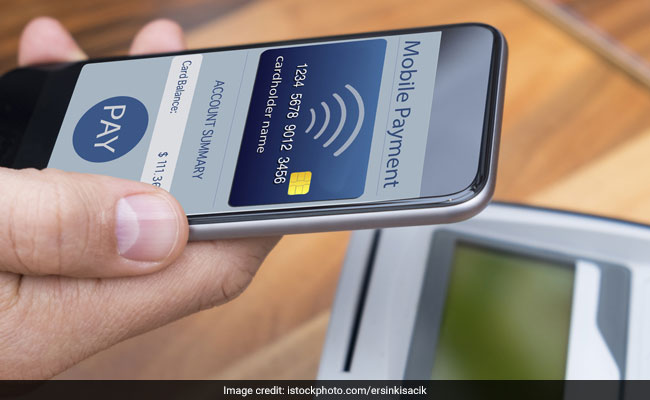
New Delhi: In accomplishing the government's challenging task of shifting India from cash dependent to a less cash-reliant economy, the University Grants Commission(UGC) came forward and issued an advisory on June 6, 2017, asking educational institutes to adopt online payment methods. The move came after the Ministry of Human Resource Development (MHRD) called all autonomous institutions to join this "challenging task". Acting on the government's directions, UGC in its statement advised that all receipts and payments related to the functioning of the institutions (student fees, exam fees, vendor payments, salary/wage payments etc.) shall be made only through online or digital modes.
Also Read: Here Are The Multiple Incentives You Can Avail By Going Cashless
"All the administrators and students, the agencies and other business establishments on the campuses may be trained in using the BHIM app by linking their bank accounts with the mobile number/Aadhaar number," the letter from UGC secretary Jaspal S Sandhu said.
Even the Union Minister for Human Resource Development (MHRD) Prakash Javadekar, detailed this in a video conference, which was attended by heads of universities and other higher educational institutions. Speaking at the conference, Mr. Javadekar appealed to the institutes to receive nothing in cash (fee/fines/deposits) and pay nothing in cash (wages/salaries/vendor payments) and develop a cashless campus (covering shops/canteens/services). And to promote digital financial transactions in institutions, the Ministry also launched the Vittiya Saksharta Abhiyan (Financial Literacy Programme) campaign. On conclusion of this campaign, 2,363 institutions reported that they have totally switched over to the digital payment systems.
Also Read: Digital Payments - Services That Do Not Need Cash Anymore
Importantly, some of the universities in the country said they have adopted digital payments systems for quite some time.
In Panjab University, Chandigarh, the facility for online payment of fees for students started way back in 2010. "About 95 per cent of all transactions being done by the university, including payments of employees or vendors, are being managed cashlessly only," said Renuka Salwan, Director Public Relations (DPR), Panjab University.
"In the campus, all kinds of facilities are being provided to students for cashless payments like credit card, Paytm and debit cards. All 194 colleges affiliated to the university use digital payment methods, while 137 colleges have their records digitised," Ms Salwan further added.
She also pointed out that this year online admissions are being managed through cloud-based system to enhance transparency and multiple options have been provided to the students for admission related payments, making it a hassle-free process.
In Chennai, Anna University adopted digitisation in all its receipts, payments and transactions within the campus, back in 2013. "We are collecting the exam fees and tuition fees in online mode only. We also plan to introduce an online mode to collect exam fees from affiliated college students as well," said S. Ganesan, Registrar, Anna University.
The University of Mumbai is also on its way to adopt cashless payment methods. "We have adopted many measures and using technology to the best of our advantage to go cashless. Out of 800 affiliated colleges, about 100 have already gone digital. All salaries, including the smaller value ones which were earlier paid in cash, are now being directly transferred in to accounts," said Dr. M.A. Khan, Registrar, University of Mumbai.
"The university is also convincing all its students, teaching and non-teaching staff to adopt different methods of cashless transactions for payment of fee, withdrawal of scholarship and other transactions and the response from all of them have so far been very promising," he further added.
And, in fulfilling the government's efforts to make the state cashless, one of the top most colleges of Delhi University, Shri Ram College of Commerce has already opted for cashless transactions. All shops and vendors in college premises, including photocopier services, canteen, and cooperative shops have adopted different modes of cashless transaction. In addition, all these shops come equipped with Point Of Sale machines.
Also, all campuses of St. Xavier's College (Autonomous), Kolkata will transit to a total digital mode of operation starting July. "Apart from availability of digital payment options like Paytm, cards and net banking, rechargeable prepaid cards will also be issued to students to pay for their on-campus purchases," said Principal Fr Felix Raj.
In Gujarat, an Ahmedabad-based Centre for Environmental Planning and Technology University has already introduced smart cards for students. With these cards, the students can buy food from the university canteen. The money is deposited by the parents online or through cheque.
And to ensure that universities do not take its directions lightly, the UGC wants universities and colleges to draw up an action plan to implement the central directive and set a target of digital transactions for themselves. The UGC wants to keep track of the implementation on a monthly basis, and also asked the university heads to communicate the same to colleges affiliated to them.
Published: June 09, 2017 16:00 IST
also read
Solar Is The Best Economic Investment, Says Ecologist Who Has Paid Zero Power Bill For Last Three Years
Written by Aastha Ahuja, Edited by Sonia BhaskarMonthly Power Bill Of Just Rs 130, Here's How A Couple In Kochi Did It
Written by Aastha Ahuja, Edited by Sonia BhaskarHimachal Pradesh's The Kalgidhar Society Saves Rs. 3.4 Crore Per Annum By Harnessing The Power Of Solar
Written by Aastha Ahuja, Edited by Sonia Bhaskar



NDTV in partnership with Luminous has launched an awareness campaign ‘Be A Bijli Donor’ to promote the idea of ‘save power for more power’. The idea is to conserve energy today in order to get more power tomorrow.
We inherently know that saving energy results in low energy bills, but we also need to understand that a unit of energy saved today makes it available for people still living in the dark or facing regular power cuts.
Saving power or conserving energy is about knowing the sources of energy, and areas of wastage and thereby eliminating these through technology and lifestyle changes. For instance, a 100 W (Watt) incandescent (ICL) bulb can be replaced with a 9 W LED bulb offering similar performance in terms of light output, but at far lower consumption of energy.
While a 100 W ICL bulb, used for four hours a day, consumes 146 units of energy per year, a 9 W LED bulb requires only 13.5 units per year. Clearly, switching to LED is a smart choice as it provides the same output while consuming 90 per cent less energy.
The focus of the campaign is to instill the idea of ‘save power for more power’ and in order to do so, the initiative will create awareness about energy efficient products and services, smart ways to reduce power consumption, alternate sources of energy like solar energy and the need to conserve energy. The idea is to address the rising need for energy conservation in India.
As part of the campaign, we will highlight the stories of individuals and organisations who are championing the cause of energy conservation by switching to renewable sources of energy, adopting innovations to reduce energy consumption while enjoying the same output.
The initiative will provide a platform for all stakeholders to share their ideas and work towards the common goal of, ‘Save power for more power’.
Comments