- Home/
- Top Stories/
- Davos 2026: Martin Wolf Hails India's Rise Amid Global Upheaval, Calls Trump Tariffs 'Crazy'
Davos 2026: Martin Wolf Hails India's Rise Amid Global Upheaval, Calls Trump Tariffs 'Crazy'
| Updated: January 22, 2026 18:36 IST
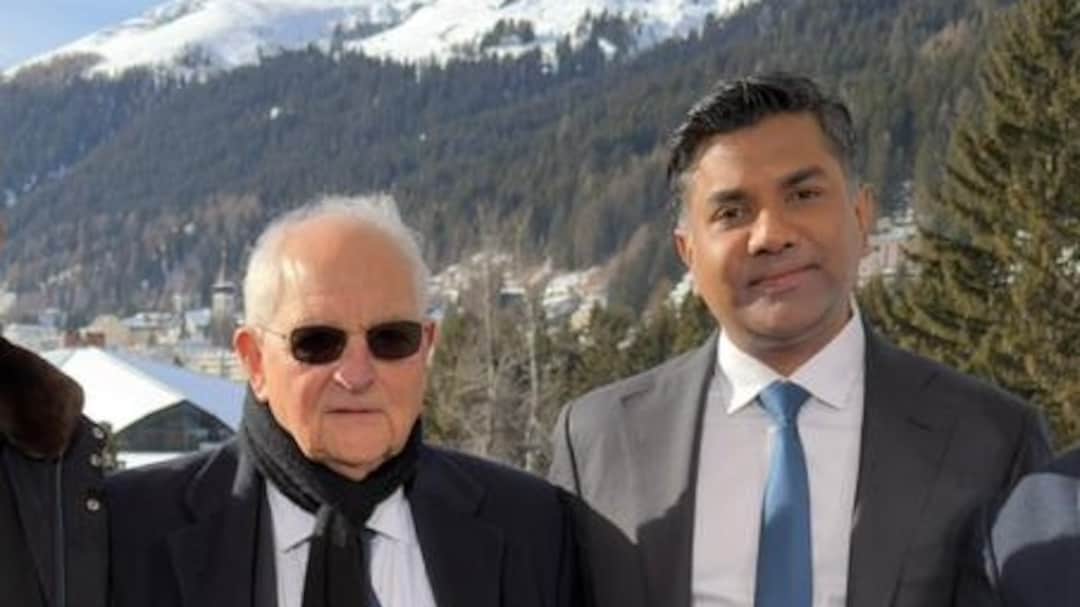
Martin Wolf and Ravi Agrawal at Davos 2026.
Highlights
- Martin Wolf praised India's economic growth and global leverage at Davos 2026
- India is the fastest-growing major economy with strong structural reforms
- Wolf called US tariffs on India irrational and counterproductive
At the 2026 World Economic Forum in Davos, Martin Wolf, Chief Economics Commentator at The Financial Times, offered a sweeping assessment of the global landscape, but it was his remarks on India's economic trajectory, strategic autonomy, and global leverage that stood out as some of the strongest endorsements the country has received on the world stage this year.
Talking to NDTV's Editor-in-Chief Rahul Kanwal, Wolf argued that while global growth continues to hold steady-powered by an AI surge, China's manufacturing boom, and post-pandemic momentum-these trends understate the significance of India's dynamism. According to him, India remains the most powerful exponent of "catch-up growth", benefitting from both technological acceleration and its own internal momentum.
He reiterated that India is among the fastest-growing major economies, a position it has earned not simply through cyclical post-pandemic rebounds but because of its scale, structural strengths and sustained reforms. India, Wolf stressed, has "extraordinary potential" and should be far and away the fastest-growing big economy over the next 20 to 30 years.
"People want to do deals with India," he added, arguing that New Delhi's rising influence gives it substantial leverage on the global stage-leverage it should use confidently.
ALSO READ: Davos 2026: Donald Trump Says Canada 'Lives Because Of USA' In Rebuke To Mark Carney
Tariffs On India: 'Completely Crazy' And Strategically Self-Defeating
In one of his sharpest critiques of US policy, Wolf called the Trump administration's tariffs on India "completely crazy," questioning why Washington would target "a really important potential partner" with punitive measures rooted, in his view, in irrational motivations.
He noted that President Donald Trump had imposed very high tariffs on several countries - including India - but had also backed down repeatedly, leaving global markets adjusting around what he termed "nuisance" tariffs rather than a decisive break in the world economy.
Despite these disruptions, Wolf emphasised that the global economy continues to "motor on," and that India's resilience and momentum remain intact.
ALSO READ: Ukraine War Worst Since World War II, NATO Ties 'A One-Way Street': Trump At Davos
India's Strategic Autonomy: The Right Path For A Shifting World
Ravi Agrawal, Editor-in-Chief of Foreign Policy, echoed and expanded on Wolf's remarks, highlighting why India's long-standing doctrine of strategic autonomy has proven so successful.
India, he noted, has not put all its eggs in one basket - a strategy that has been vindicated by the volatility of US policy in recent years. Even as India deepened ties with Washington over the last quarter-century, it simultaneously built partnerships with Europe, the UAE and other key players. Its diversified defence acquisitions, global trade agreements, and pursuit of a free-trade deal with the EU exemplify a pragmatic, multi-aligned approach.
Agrawal called this a template that "other countries are now following."
Martin Wolf from Financial Times, and Ravi Agrawal from Foreign Policy join NDTV's Rahul Kanwal to discuss the global economy, Board of Peace, and a lot more. pic.twitter.com/HTaWT6FyBx
— NDTV Profit (@NDTVProfitIndia) January 22, 2026
India's Place In A Post-Trump Global Order
Wolf warned that the pre-Trump world will not return, and neither will the old American role in global affairs. "Too much damage has been done," he said, predicting that the US will remain a troubled and destabilising force for the foreseeable future.
Yet in this fractured environment, India's rising economic power, diplomatic flexibility and global desirability position it differently. With its scale, growth and strategic balancing, Wolf argued, India has more room than ever before to shape the future, not merely adapt to it.
A World In Flux, But An India Moving Forward
As Wolf painted a picture of unprecedented volatility-from surreal swings in US policy, to fears of war over Greenland, to continued uncertainty over tariffs - the contrast with India was striking. India, he suggested, represents stability, scale, and opportunity at a moment when the global system is in historic disarray.
With technological leaps, strong growth fundamentals, diversified global relations, and increasing global leverage, India stands out as one of the few anchors of economic optimism.
Published: January 22, 2026 18:12 IST
also read
Elon Musk At Davos LIVE: AI Data Centres In Space Coming Soon, Says SpaceX Chief
Shubhayan Bhattacharya'Don't React To Noise': Telecom Tycoon Sunil Mittal's Takeaway From Meeting With Team Trump
Written by Mohammed Uzair ShaikhDavos 2026: Gita Gopinath Flags External Shocks, Market Correction, Pollution As Key Risks To India
Shubhayan Bhattacharya