




- Home/
- From Waste To Wonder: The Sustainable Revolution Of Golden Feathers
From Waste To Wonder: The Sustainable Revolution Of Golden Feathers
Team NDTV | Updated: February 02, 2026 19:08 IST
New Delhi:
In the bustling landscape of Indian innovation, a remarkable transformation is taking place - one that turns a pungent environmental hazard into the world's lightest natural fiber. Golden Feathers, a Rajasthan-based social enterprise, is redefining the concept of "craft" by upcycling chicken waste into high-end sustainable fabric, while simultaneously pulling thousands of tribal women out of poverty.
The Visionary: Radhesh Agrahari
The story of Golden Feathers is inseparable from its founder, Radhesh Agrahari, a man now affectionately known as the "Chicken Man of the Textile World". Hailing from a traditional nine-member family in Fatehpur, Uttar Pradesh, Agrahari's journey was fueled by grit; he worked part-time jobs to fund his education and nearly a decade of research. His "eureka moment" occurred in 2010 while he was a postgraduate student at the Indian Institute of Craft and Design (IICD) in Jaipur. After returning late from a job in Agra, he found his classmates had already claimed "clean" waste materials like plastic and paper for a design project. Left with no choice, he looked toward food waste.
While at a local butchery, he realized that nearly 35% of a chicken—feathers, claws, and beaks—was discarded as waste. When he first brought a bag of this stinking waste into his classroom, the smell was so overpowering he was kicked out. Undeterred, Agrahari spent the next 13 years refining a process to prove that this "dirty" waste could become a luxury material.
How Golden Feathers Works
The operational model of Golden Feathers is a blend of scientific innovation and traditional handloom expertise. The process involves several key steps:
- Collection and Sanitation: Raw chicken feathers are collected from local slaughterhouses, preventing them from contaminating water bodies.
- Natural Processing: Using Agrahari's patented method, the feathers are cleaned and sanitised without harsh chemicals, ensuring the process remains eco-friendly.
- Spinning and Weaving: The sanitized down is carded and spun into yarn, then woven on traditional handlooms to create a variety of products, from fine fabrics to unique handmade paper.
Impact: Empowering the Tribal Artisans
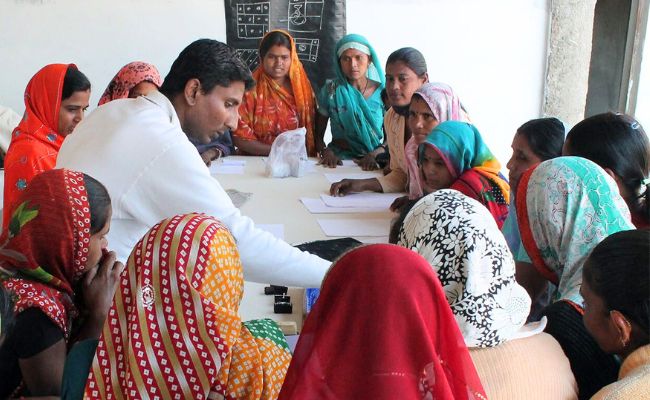
The most profound impact of Golden Feathers is social. To scale his vision, Agrahari sought a workforce capable of handling the material. However, he faced a steep challenge: in many Indian communities, touching chicken feathers was a social taboo. This led him deep into the tribal belts of Rajasthan—regions like Banswara, Baran, and Jhalawar—where poultry was already a part of daily life. Here, he met women who were earning as little as ₹80 a day through grueling labor like collecting tendu leaves. Golden Feathers offered them a new path: a dignified, home-based income. By training these women as skilled artisans, the program has revolutionized their economic status:
- Increased Earnings: Many women now earn between ₹200 and ₹400 daily, with some top artisans reaching monthly incomes of ₹10,000 to ₹12,000.
- Independence: Working from home allows these women to set their own hours, providing them with newfound independence and the ability to support their children's education.
- Environmental Stewardship: By upcycling thousands of kilograms of hazardous waste each month, the company prevents the spread of disease and contamination in their local environments.
Weaving a Future Golden Feathers is more than just a textile company; it is a 'quiet revolution' that addresses the dual crises of environmental waste and social inequality. With a vision to connect 20,000 women over the next five years through a "Paper Village" model, Agrahari and his team are proving that with imagination and empathy, even the most overlooked waste can be woven into a future of dignity and self-reliance.
Published: February 02, 2026 19:05 IST
