




- Home/
- A Successful Partnership Between USHA International And Rourkela Steel Plant
A Successful Partnership Between USHA International And Rourkela Steel Plant
Team NDTV | Updated: February 20, 2025 16:13 IST
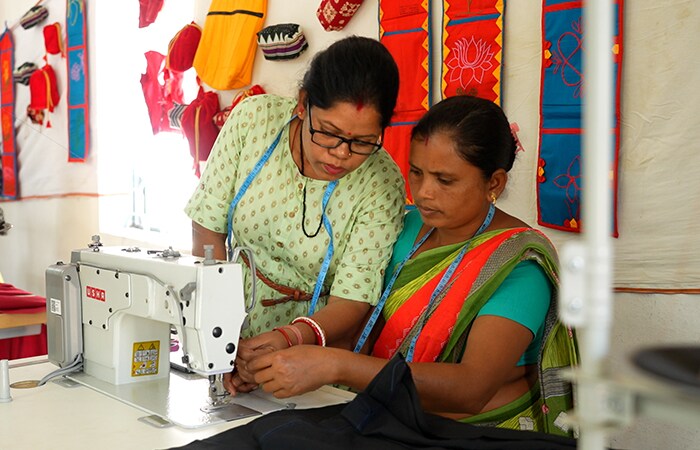
In a bid to empower women in rural Odisha, USHA International and Rourkela Steel Plant (RSP) have joined hands to provide vocational training in sewing and stitching. This initiative has not only given women a sustainable source of income but also helped them become financially independent.
Munmun Mittra, General Manager - CSR, Rourkela Steel Plant, said,
"We believe in empowering women by providing them with sustainable skills. This enables them to earn a steady income and grow in the future. We want to integrate these units and add value-added services like embroidery and applique to increase our market reach in both rural and urban areas."
The USHA Silai School Program: Turning Dreams Into Reality
The partnership has led to the establishment of the USHA Training-cum-Production Center (TCPC), where women are trained in sewing and related skills.The training program, which lasts for 35 days, includes a 10-day module on applique work, a traditional craft of Odisha. This customization has helped women create diverse products, increasing their job prospects.
The impact of this initiative has been significant. Women who were previously dependent on their families are now earning a steady income, contributing to the local economy, and creating a better future for themselves and their families.
TB Toppo, Assistant General Manager, CSR, Rourkela Steel Plant, notes,
"The Silai training has been designed in such a way that within a span of 15 days to 1 month, women can gain tremendous knowledge about design, cutting, stitching, packaging, and more."
Stitching A Brighter Future: Enabling Women In Odisha Through The USHA Silai School
This partnership is a shining example of corporate social responsibility and community development.
Rina Tirkey, a beneficiary of the USHA Silai School, shares her experience,
"We were trained for 15 days and learned how to operate a sewing machine, do fitting, cutting, and graph making. We're happy to have learned new skills and are getting a good response from the market for our products."
By empowering women, USHA International and Rourkela Steel Plant are creating a sustainable ecosystem that benefits not only the women but also their families and the local community.
Bijaynand Das, State Program Manager, USHA Silai School, Odisha, says,
“It is heartening to see women earning an income through our training and connecting with the government. Our goal is to provide employment opportunities to women in rural areas, and we are making progress toward achieving that.”
From Homes To Businesses: USHA Transforming Lives In Rural Odisha
In Odisha, where women's empowerment is a focal point of development efforts, such partnerships are crucial in creating a positive impact. By working together, organizations like USHA International and Rourkela Steel Plant can make a significant difference in the lives of women, enabling them to become financially independent and contribute to the local economy.
Published: February 20, 2025 10:30 IST
also read
Solar Is The Best Economic Investment, Says Ecologist Who Has Paid Zero Power Bill For Last Three Years
Written by Aastha Ahuja, Edited by Sonia BhaskarMonthly Power Bill Of Just Rs 130, Here's How A Couple In Kochi Did It
Written by Aastha Ahuja, Edited by Sonia BhaskarHimachal Pradesh's The Kalgidhar Society Saves Rs. 3.4 Crore Per Annum By Harnessing The Power Of Solar
Written by Aastha Ahuja, Edited by Sonia Bhaskar



NDTV in partnership with Luminous has launched an awareness campaign ‘Be A Bijli Donor’ to promote the idea of ‘save power for more power’. The idea is to conserve energy today in order to get more power tomorrow.
We inherently know that saving energy results in low energy bills, but we also need to understand that a unit of energy saved today makes it available for people still living in the dark or facing regular power cuts.
Saving power or conserving energy is about knowing the sources of energy, and areas of wastage and thereby eliminating these through technology and lifestyle changes. For instance, a 100 W (Watt) incandescent (ICL) bulb can be replaced with a 9 W LED bulb offering similar performance in terms of light output, but at far lower consumption of energy.
While a 100 W ICL bulb, used for four hours a day, consumes 146 units of energy per year, a 9 W LED bulb requires only 13.5 units per year. Clearly, switching to LED is a smart choice as it provides the same output while consuming 90 per cent less energy.
The focus of the campaign is to instill the idea of ‘save power for more power’ and in order to do so, the initiative will create awareness about energy efficient products and services, smart ways to reduce power consumption, alternate sources of energy like solar energy and the need to conserve energy. The idea is to address the rising need for energy conservation in India.
As part of the campaign, we will highlight the stories of individuals and organisations who are championing the cause of energy conservation by switching to renewable sources of energy, adopting innovations to reduce energy consumption while enjoying the same output.
The initiative will provide a platform for all stakeholders to share their ideas and work towards the common goal of, ‘Save power for more power’.