




- Home/
- Empowerment In Every Stitch: Sobiyamari's Road To Success
Empowerment In Every Stitch: Sobiyamari's Road To Success
Team NDTV | Updated: December 26, 2024 15:57 IST
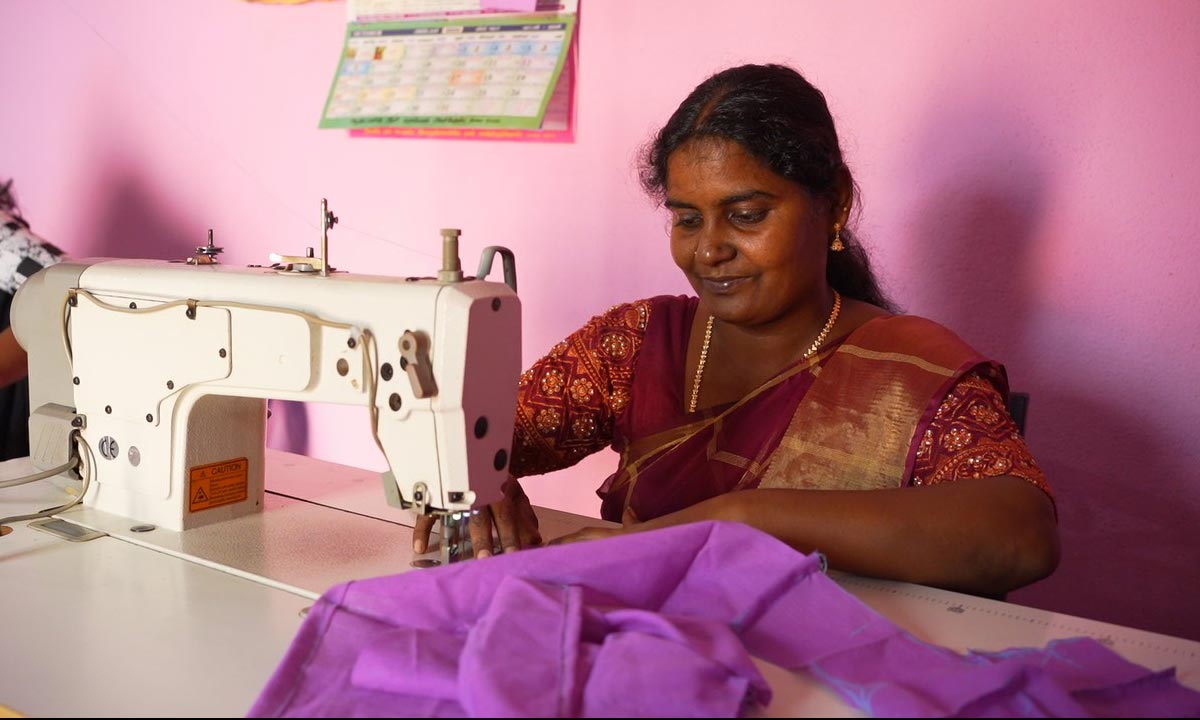
Every day, millions of women wake up bearing the weight of the world on their shoulders. Among them are single mothers, warriors fighting unseen battles. They work tirelessly, not for recognition, but for the love of their children and the promise of a brighter future. Sobiyamari from Villupuram, Tamil Nadu, is one such woman.
After losing her husband while pregnant, Sobiyamari returned to her village with an uncertain future. Refusing to burden her struggling parents, she began stitching clothes, a skill she had learned during a short tailoring course in Mumbai. Despite her initial struggles, she persevered, balancing her roles as a provider, nurturer, teacher, and protector.
Sobiyamari, Silai School Entrepreneur said,
I struggled for money. I had an interest in tailoring. A nun brought me to a convent school where the Silai School training was going on. I learned the basics from there.
A Decade of Transformation: Saroj Namdev's Story Of Sewing Dreams
In 2013, through the village president and USHA's NGO partner, PMSSS, Sobiyamari learned about USHA Silai School's residential training program. She attended a seven-day session in Puducherry, where she enhanced her stitching and finishing techniques. With new confidence, she opened a Silai School at home in 2014.
Sobiyamari said,
I came to know from the head of the village about free training. Initially, I wasn't confident to teach others, but gradually, I started getting students. I charged Rs. 300 at first, then Rs. 500, and now Rs. 1,000.
Through word-of-mouth promotion, her meticulous work earned her trust and students. Over a decade, Sobiyamari trained 146 learners, earning an average monthly income of Rs. 25,000. This enabled her to support her daughter's education, move from a hut to a proper house, and even purchase land to expand her school.
She said,
I bought land and I am building a house. After that, I plan to buy more machines and hope to provide employment opportunities for women like myself.
USHA International Ltd. played a pivotal role in Sobiyamari's journey, providing advanced training and regular support.
Vadivelan Perumal, Regional Manager (South), USHA Social Services said,
We've given advanced training and associated her with designers. She's part of our USHA's Master Trainers program, ensuring she engages in further Silai School programs. Over 10 years, she's trained about 140 learners across nearby villages.
Making Women Self-Reliant Through Usha-Common Service Centre Certification
Sobiyamari's transformation from a homemaker to an entrepreneur symbolizes resilience and empowerment. With the support of USHA Silai Schools, many women like her have broken societal barriers and created a ripple effect in their communities.
Mary Rupa Tete, Head of Department, Vice President, USHA Social Services said,
Think of a woman from rural India facing economic hardships. Many started with just a dream. Today, they support families, educate children, and access better health facilities. These women are transforming lives and creating hope.
Sobiyamari's story is a testament to what's possible when determination meets opportunity. As she looks to the future, she carries the lessons of resilience, courage, and an unwavering belief in her potential.
Published: December 26, 2024 12:41 IST
also read
Solar Is The Best Economic Investment, Says Ecologist Who Has Paid Zero Power Bill For Last Three Years
Written by Aastha Ahuja, Edited by Sonia BhaskarMonthly Power Bill Of Just Rs 130, Here's How A Couple In Kochi Did It
Written by Aastha Ahuja, Edited by Sonia BhaskarHimachal Pradesh's The Kalgidhar Society Saves Rs. 3.4 Crore Per Annum By Harnessing The Power Of Solar
Written by Aastha Ahuja, Edited by Sonia Bhaskar



NDTV in partnership with Luminous has launched an awareness campaign ‘Be A Bijli Donor’ to promote the idea of ‘save power for more power’. The idea is to conserve energy today in order to get more power tomorrow.
We inherently know that saving energy results in low energy bills, but we also need to understand that a unit of energy saved today makes it available for people still living in the dark or facing regular power cuts.
Saving power or conserving energy is about knowing the sources of energy, and areas of wastage and thereby eliminating these through technology and lifestyle changes. For instance, a 100 W (Watt) incandescent (ICL) bulb can be replaced with a 9 W LED bulb offering similar performance in terms of light output, but at far lower consumption of energy.
While a 100 W ICL bulb, used for four hours a day, consumes 146 units of energy per year, a 9 W LED bulb requires only 13.5 units per year. Clearly, switching to LED is a smart choice as it provides the same output while consuming 90 per cent less energy.
The focus of the campaign is to instill the idea of ‘save power for more power’ and in order to do so, the initiative will create awareness about energy efficient products and services, smart ways to reduce power consumption, alternate sources of energy like solar energy and the need to conserve energy. The idea is to address the rising need for energy conservation in India.
As part of the campaign, we will highlight the stories of individuals and organisations who are championing the cause of energy conservation by switching to renewable sources of energy, adopting innovations to reduce energy consumption while enjoying the same output.
The initiative will provide a platform for all stakeholders to share their ideas and work towards the common goal of, ‘Save power for more power’.