




- Home/
- From Montessori To Play-Way: Bachpan Manao Looks At Learning Beyond Books
From Montessori To Play-Way: Bachpan Manao Looks At Learning Beyond Books
Written by Team NDTV | Updated: May 22, 2026 16:51 IST
New Delhi:
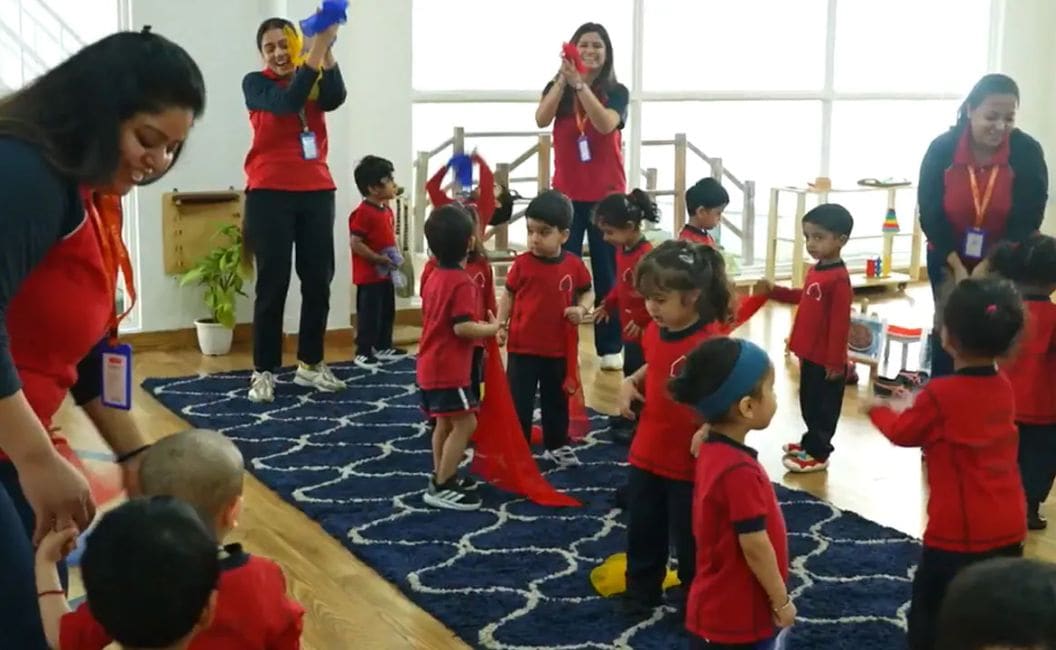
Childhood learning is not just about books, exams and finishing lessons on time. That is the core idea behind Bachpan Manao, a campaign by EkStep and NDTV that focuses on helping young children learn and grow through play, curiosity and everyday experiences. In its latest offering, the campaign turns the spotlight on different approaches to learning that move beyond textbooks and rigid routines. Through conversations with educators and visits to learning spaces across India, it explores how children learn best when they are encouraged to play, explore, observe and follow their natural curiosity. The campaign looks at learning methods like Montessori, Waldorf and play-way education, all of which share one common belief – childhood learning should feel joyful, hands-on and meaningful.
Following The Child In Montessori Learning
At The Ardee Schools, the Montessori approach focuses on giving children freedom within limits. Sunpritt Dang, Head of Montessori at The Ardee Schools, explained that children are encouraged to follow their own rhythm instead of a strict clock. “There were no bells and no loud instructions,” she said, adding that children are allowed to choose activities that interest them, whether it is language, maths, cultural subjects, or simply talking with friends. The classrooms are designed to be multisensory, where children can touch, hold and experience learning materials instead of memorising facts. Dang shared that children often naturally get drawn towards objects like maps or globes because curiosity guides their learning. She also highlighted how important it is for adults to pause and observe what interests a child. “A child loves small objects,” she said, explaining how even stopping to look at a ladybug can become a learning experience filled with questions and wonder.
The Waldorf Way And Learning Through The Senses
At Banyan Earth School, the Waldorf method focuses on what educators call the “head, heart and hands” approach. Founder Rohanna Arora Kohli explained that children learn deeply when they use their bodies, emotions and thinking together. Activities like movement, music and handwork are part of daily learning because they help build important developmental skills during the early years. Kohli compared children to saplings that need care and protection before facing the pressures of competition.
“Play is actually very serious business for a child,” she said, adding that children learn problem-solving and creativity while exploring objects and materials during playtime.
Why Play-Way Learning Works
At Creative Kids, learning happens through games, pretend play and daily household activities. Founder Principal Dr Alefia Poonawala said children remember things better when they learn by doing. Instead of formal teaching, lessons are built around what children are naturally interested in, whether it is cars, dinosaurs or utensils from the kitchen. “Let children explore, let them make mistakes,” she said, explaining that simple activities like cleaning, making chapatis or sorting household items can become learning moments. The campaign also connects these ideas to Indian education pioneers like Rabindranath Tagore and Sri Aurobindo, who believed that education should nurture the full potential of a child. Today, these ideas are also reflected in India's National Education Policy 2020 and the National Curriculum Framework for the Foundational Stage, which place play and curiosity at the centre of early learning.
As Rukmini Banerji, CEO of Pratham Education Foundation, explained, children learn best when they are connected to their surroundings and given the freedom to explore. And sometimes, learning can begin with something as simple as sorting onions and potatoes at home.
Published: May 15, 2026 13:57 IST
also read
Solar Is The Best Economic Investment, Says Ecologist Who Has Paid Zero Power Bill For Last Three Years
Written by Aastha Ahuja, Edited by Sonia BhaskarMonthly Power Bill Of Just Rs 130, Here's How A Couple In Kochi Did It
Written by Aastha Ahuja, Edited by Sonia BhaskarHimachal Pradesh's The Kalgidhar Society Saves Rs. 3.4 Crore Per Annum By Harnessing The Power Of Solar
Written by Aastha Ahuja, Edited by Sonia Bhaskar



NDTV in partnership with Luminous has launched an awareness campaign ‘Be A Bijli Donor’ to promote the idea of ‘save power for more power’. The idea is to conserve energy today in order to get more power tomorrow.
We inherently know that saving energy results in low energy bills, but we also need to understand that a unit of energy saved today makes it available for people still living in the dark or facing regular power cuts.
Saving power or conserving energy is about knowing the sources of energy, and areas of wastage and thereby eliminating these through technology and lifestyle changes. For instance, a 100 W (Watt) incandescent (ICL) bulb can be replaced with a 9 W LED bulb offering similar performance in terms of light output, but at far lower consumption of energy.
While a 100 W ICL bulb, used for four hours a day, consumes 146 units of energy per year, a 9 W LED bulb requires only 13.5 units per year. Clearly, switching to LED is a smart choice as it provides the same output while consuming 90 per cent less energy.
The focus of the campaign is to instill the idea of ‘save power for more power’ and in order to do so, the initiative will create awareness about energy efficient products and services, smart ways to reduce power consumption, alternate sources of energy like solar energy and the need to conserve energy. The idea is to address the rising need for energy conservation in India.
As part of the campaign, we will highlight the stories of individuals and organisations who are championing the cause of energy conservation by switching to renewable sources of energy, adopting innovations to reduce energy consumption while enjoying the same output.
The initiative will provide a platform for all stakeholders to share their ideas and work towards the common goal of, ‘Save power for more power’.