




- Home/
- In Odisha's Rourkela, Women Are Stitching A Life Of Financial Independence With Usha
In Odisha's Rourkela, Women Are Stitching A Life Of Financial Independence With Usha
Team NDTV | Updated: January 05, 2024 16:40 IST
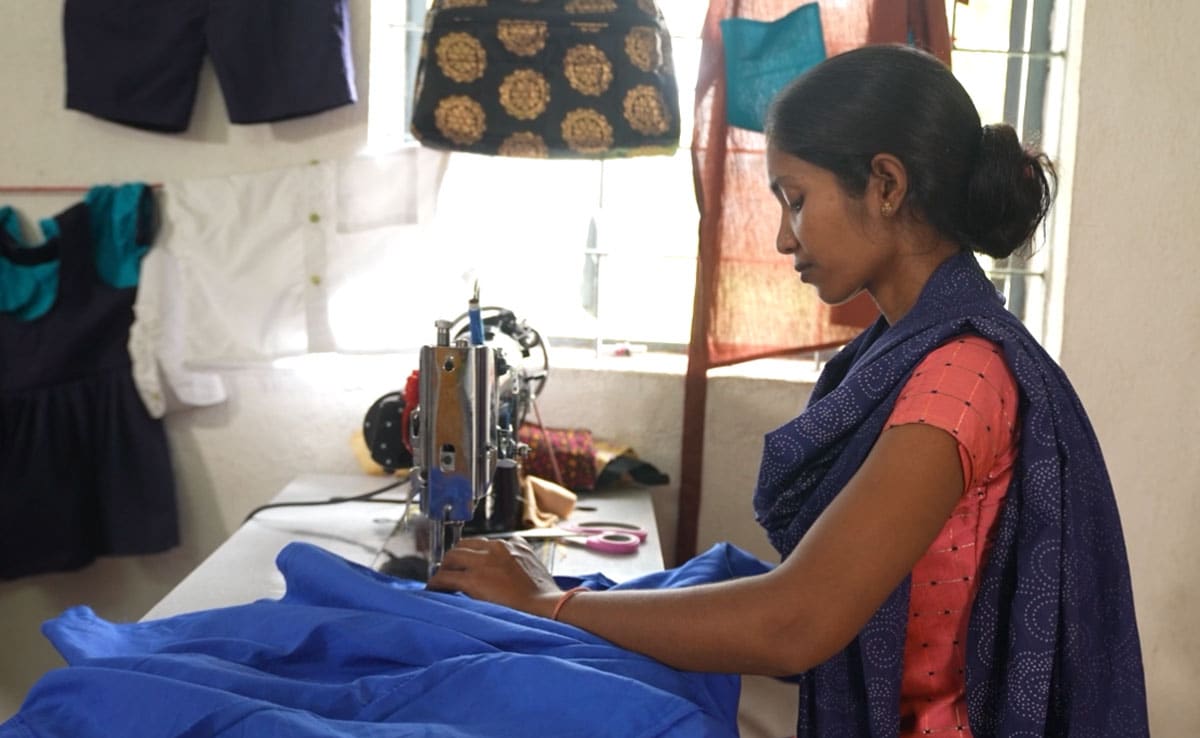
In Purunapani village of Rourkela in Odisha, women are determined to build a better life for themselves. A life of financial independence. And this has been made possible by another government body's collaboration with Usha. The collaboration between Usha Silai School and Rourkela Steel Plant represents a fusion of corporate social responsibility and the promotion of skill development and entrepreneurship. The partnership aims to harness the strengths of both organisations to create a sustainable ecosystem for empowering women in the Rourkela region of Odisha.
Also Read: Meet Balamani, Usha Super Achiever Bringing Transformative Change In Telangana's Jadcherla
Talking about the partnership, Munmun Mitra, General Manager, CSR, Rourkela Steel Plant, SAIL said,
Usha Silai School has been involved in our Corporate Social Responsibility (CSR) and Enterprise Social Commitment (ESC) initiatives and we have had a very positive experience with them. Rourkela steel plant had a tie-up with the Usha project to train women and provide them with equipment and the hardware to pursue their sewing jobs in their villages following a blue ocean strategy.
The blue ocean strategy essentially means creating a new market space and demand.
The Rourkela Steel Plant, one of India's largest steel plants, demonstrates a steadfast dedication to the advancement of the community and is involved in diverse welfare initiatives. Going beyond mere acts of philanthropy or charity, the Rourkela Steel Plant has embraced a strategic approach aimed at fostering sustainable development within the surrounding villages. Simultaneously, for over three decades, the Gram-Utthan NGO has played a pivotal role in bridging the gap between women residing in rural areas and Usha's training program.
Also Read: This Silai School Teacher Is Helping Women In Odisha Become Financially Independent
Sharing details of the programme, Guru Prasad Mohanty, Project Coordinator, Gram-Utthan NGO said,
First we go door-to-door in the villages and select those women who have some prior knowledge of sewing. Then an assessment is carried out after which we shortlist 15 women. We monitor them every month and help link them with Mission Shakti.
The training-cum-production centre in the Purunapani village was granted a corpus seed money of Rs. 50,000 by Rourkela Steel Plant. This marks the first such introduction of this concept, which not only involves a financial contribution but also emphasises the active involvement of the funding partner. It demonstrates the trust that all partners have in the abilities of the women involved and helps women to start accepting initial bulk orders without concerns about expenses.
Bijayananda Dash, Program Coordinator, Odisha, Usha Silai School explained,
We thought that these women possess great capabilities for work. If we help them with capacity building, they can progress further. But a common problem is that when they receive orders, they often don't have money to buy raw materials. Our proposal to the Rourkela Steel Plant was to provide these women with the seed money needed for their projects.
Also Read: 37-Year-Old Anita Bal Is Stitching A Story Of Self-Sufficiency With Usha Silai School
Usha is continuously working to improve the social and economic status of women. And it is evident how training has proved to be beneficial for them, as their conditions are changing and their lives are taking a new turn.
Shanti Dang, one of the Trainees at the Usha Silai School in Odisha shared,
We were informed by one of our committee members that Usha is looking to train those women who have a little education, and know a little about sewing. We all came here and people from Usha, Rourkela Steel Plant, and Gram-Utthan were also here. We learned sewing and now we are running our own business. We are also selling a few items in the market.
One of the unique aspects of the Usha Silai School training program is its emphasis on training women to become all-rounders. Beyond the technical skills of stitching and embroidery, the 15-day program includes modules on marketing and sales strategies. Trainers at these schools recognise that merely mastering the craft is just the first step. It is equally important for these women to understand how to effectively market and sell their products.
Also Read: Empowering Women Through Skill And Tradition: The Usha Silai Initiative In Karauli
Shanti Dang added,
We take our products to sell in the market. People ask us about them. Customers like our products and happily buy them.
Further talking about the success of the programme, Mr Dash said, “Within three to four months, these women have earned around Rs. 50,000. The good thing is that they have distributed the profit among themselves. They use a collective approach to make their products and market them.”
The collaboration between Usha Silai School and Rourkela Steel Plant in establishing the Usha Training-cum-Production Center exemplifies the potential for positive change when corporates, governments, non-governmental organisations (NGOs) and individuals collaborate with grassroots initiatives to empower women.
The Usha Silai School Programme has collaborated with many government institutions and entities which has proven to be immensely significant in impacting the lives of rural women positively in many parts of India, believes Rupa Tete, Vice President, Usha Social Services. She added,
We have local master trainers who can teach in the regional language and we also have a robust management information system for seamless review and monitoring.
The initiative not only provides essential skills to women but also promotes financial independence, gender equality, and community development. It serves as an inspiring example of how collaborative efforts can contribute to a more inclusive and empowered society.
Also Read: Usha And NEEPCO Are Empowering Women Through Skill Enhancement And Employment Prospects
Published: January 05, 2024 16:40 IST
also read
Solar Is The Best Economic Investment, Says Ecologist Who Has Paid Zero Power Bill For Last Three Years
Written by Aastha Ahuja, Edited by Sonia BhaskarMonthly Power Bill Of Just Rs 130, Here's How A Couple In Kochi Did It
Written by Aastha Ahuja, Edited by Sonia BhaskarHimachal Pradesh's The Kalgidhar Society Saves Rs. 3.4 Crore Per Annum By Harnessing The Power Of Solar
Written by Aastha Ahuja, Edited by Sonia Bhaskar



NDTV in partnership with Luminous has launched an awareness campaign ‘Be A Bijli Donor’ to promote the idea of ‘save power for more power’. The idea is to conserve energy today in order to get more power tomorrow.
We inherently know that saving energy results in low energy bills, but we also need to understand that a unit of energy saved today makes it available for people still living in the dark or facing regular power cuts.
Saving power or conserving energy is about knowing the sources of energy, and areas of wastage and thereby eliminating these through technology and lifestyle changes. For instance, a 100 W (Watt) incandescent (ICL) bulb can be replaced with a 9 W LED bulb offering similar performance in terms of light output, but at far lower consumption of energy.
While a 100 W ICL bulb, used for four hours a day, consumes 146 units of energy per year, a 9 W LED bulb requires only 13.5 units per year. Clearly, switching to LED is a smart choice as it provides the same output while consuming 90 per cent less energy.
The focus of the campaign is to instill the idea of ‘save power for more power’ and in order to do so, the initiative will create awareness about energy efficient products and services, smart ways to reduce power consumption, alternate sources of energy like solar energy and the need to conserve energy. The idea is to address the rising need for energy conservation in India.
As part of the campaign, we will highlight the stories of individuals and organisations who are championing the cause of energy conservation by switching to renewable sources of energy, adopting innovations to reduce energy consumption while enjoying the same output.
The initiative will provide a platform for all stakeholders to share their ideas and work towards the common goal of, ‘Save power for more power’.