




- Home/
- Play Isn't Just Fun, It's Science: Dr Zirak Marker
Play Isn't Just Fun, It's Science: Dr Zirak Marker
Team NDTV | Updated: April 30, 2025 16:45 IST

“We don't stop playing because we grow old, we grow old because we stop playing.”
- George Bernard Shaw
Experts consider the first 3000 days of a child's life as the most crucial period. Highlighting this vital timeframe, initiatives like Bachpan Manao by NDTV and EkStep Foundation highlight that during this duration, the child develops an emotional quotient (EQ), Intellectual Quotient (IQ), and physical capabilities. In this technological age where devices hasten the process of essential development, it becomes crucial to emphasise traditional learning and playful patterns for the child. Engaging learning and active participation in physical, creative and cognitive exercises ensures a child's holistic development.
Highlighting the significance of play, Dr Zirak Marker, a Child, Adolescent, and Family Psychiatrist, said that 90 percent of one's learning and neuronal development happens because of a concept called 'Neuroplasticity'.
Dr Zirak Marker, Child, Adolescent and Family Psychiatrist, said,
This phenomenon is completed approximately 90 per cent by the age of 5-6 years.
He further said that learning isn't restricted to academics and linguistics; it develops through physical development, energy building, balance and motor skills. The child develops the ‘pre-reading and pre-writing', which develop further into their education, their curiosity, and their motivation to learn, these are all driven by dopamine, the “happy hormone” play releases. He added,
Playing at an early onset leaves with so many beautiful learnings.
With that being said and done, there sure are some elements that prove to be of utmost importance while engaging with kids between the ages of 0-8 years as parents (you might want to look out for these).
According to Dr Marker, there's a certain set of essentials that are required to be taught to children in the ‘Parenting Starter Kit'.
For one, expert and parental advice pertains to agreeing on a common conclusion, it is imperative to teach the kids the importance of failing. They need to know it is not always about the win, Dr Marker stated, they need to learn from failure too.
Secondly, it always comes in handy to be equipped with anger management skills. It helps the child with conflict resolution and team-building.

Third, and the most important lesson we need to teach the kids as parents, as educators and as stakeholders in the child's life is to be kind, empathetic, gentle, creative and open not just towards each other, but also towards nature and all its elements.
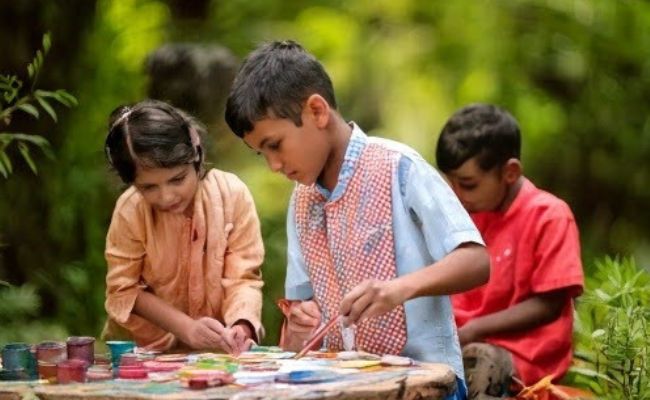
All of these, no matter how spoken about and no matter how repetitive, are essential for the child's physical and mental growth and health. In recent years, children, even 9-10-year-olds, are being diagnosed with chronic illnesses, diabetes, obesity, anxiety, depression, stress and much more. So, to avoid these extreme circumstances, let children be children, let play drive them.
Thus, by consciously prioritising foundational experiences, minimising screen exposure and academic pressures, one can empower their children to develop resilience, empathy and a genuine eagerness for learning, ultimately fostering a generation that is not only academically capable but also emotionally adept and physically capable.
Take the pledge to ensure less screen, more play for your children. Log on to ndtv.com/bachpanmanao.
Published: April 29, 2025 14:47 IST
also read
Solar Is The Best Economic Investment, Says Ecologist Who Has Paid Zero Power Bill For Last Three Years
Written by Aastha Ahuja, Edited by Sonia BhaskarMonthly Power Bill Of Just Rs 130, Here's How A Couple In Kochi Did It
Written by Aastha Ahuja, Edited by Sonia BhaskarHimachal Pradesh's The Kalgidhar Society Saves Rs. 3.4 Crore Per Annum By Harnessing The Power Of Solar
Written by Aastha Ahuja, Edited by Sonia Bhaskar



NDTV in partnership with Luminous has launched an awareness campaign ‘Be A Bijli Donor’ to promote the idea of ‘save power for more power’. The idea is to conserve energy today in order to get more power tomorrow.
We inherently know that saving energy results in low energy bills, but we also need to understand that a unit of energy saved today makes it available for people still living in the dark or facing regular power cuts.
Saving power or conserving energy is about knowing the sources of energy, and areas of wastage and thereby eliminating these through technology and lifestyle changes. For instance, a 100 W (Watt) incandescent (ICL) bulb can be replaced with a 9 W LED bulb offering similar performance in terms of light output, but at far lower consumption of energy.
While a 100 W ICL bulb, used for four hours a day, consumes 146 units of energy per year, a 9 W LED bulb requires only 13.5 units per year. Clearly, switching to LED is a smart choice as it provides the same output while consuming 90 per cent less energy.
The focus of the campaign is to instill the idea of ‘save power for more power’ and in order to do so, the initiative will create awareness about energy efficient products and services, smart ways to reduce power consumption, alternate sources of energy like solar energy and the need to conserve energy. The idea is to address the rising need for energy conservation in India.
As part of the campaign, we will highlight the stories of individuals and organisations who are championing the cause of energy conservation by switching to renewable sources of energy, adopting innovations to reduce energy consumption while enjoying the same output.
The initiative will provide a platform for all stakeholders to share their ideas and work towards the common goal of, ‘Save power for more power’.