




- Home/
- Rekha Kishan's Story Of Empowerment Through Usha And CADAT
Rekha Kishan's Story Of Empowerment Through Usha And CADAT
Team NDTV | Updated: January 24, 2025 13:35 IST
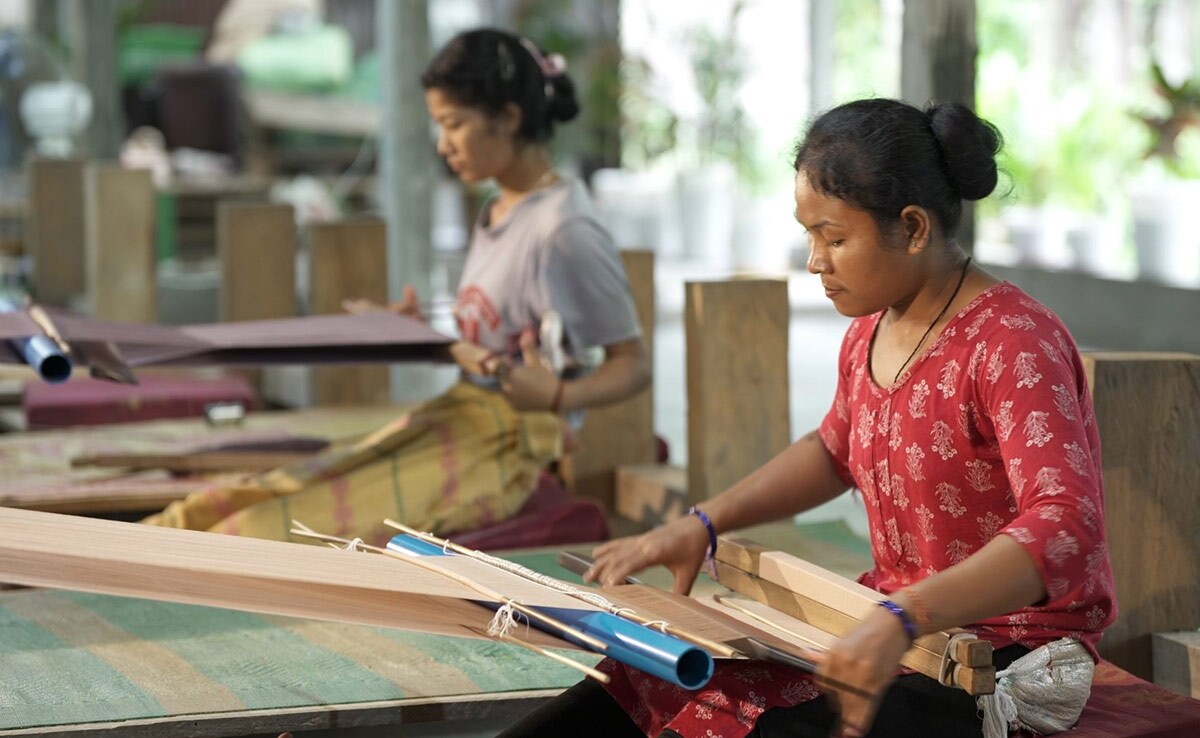
Women receive both technical training and holistic guidance to thrive as Usha partners with NGOs
Usha Silai Schools are not just centers of learning; they are transformative spaces where women in rural India rebuild their lives and communities. Through the art of sewing, they weave their dreams, step into their power, and ignite change. Usha collaborates with a network of NGOs to amplify this mission, creating a powerful alliance that enhances the reach and effectiveness of the Silai Schools. These partnerships bring mentorship, resources, and community support, ensuring that women receive both technical training and holistic guidance to thrive.
For the NGOs partnered with Usha, the collaboration has attracted support from other corporate and government institutions, expanding their impact. Inspired by the programme's success, larger NGOs have independently mobilised funds and resources to further enhance the Silai School initiative. These partnerships have strengthened trust and empowered NGOs to secure support for various other community-driven projects, leading to lasting, positive change.
Also Read: Threading Hope: Sakuben Ahir's Journey From Challenges To Empowerment
In Assam's Biswanath district, home to majestic tea gardens and vast agricultural landscapes, the Centre for Development Action and Appropriate Technology (CADAT) has been a key partner in the Usha Silai School programme since 2016. The collaboration has allowed CADAT to reach marginalised communities such as tea garden workers and tribal groups, offering women new opportunities for empowerment.
Today, CADAT runs at least 40 Silai Schools across Assam. Hundreds of rural women have been trained, and the NGO itself has gained renewed credibility and support. Rekha Kishan, a 47-year-old from the Mijicajan tea garden community, is a shining example of this success. She runs a Silai School from the verandah of her home and now earns around Rs. 10,000 a month. Her success has not only transformed her life but also boosted CADAT's credibility as a grassroots organisation working for the betterment of rural women. Speaking about her experience with CADAT, Rekha Kishan, Usha Silai School Trainer said,
CADAT has helped me a lot. I attended a 7-day training by Usha International and received a sewing machine. I started teaching others at home, and now I earn a steady income. CADAT has supported me throughout, and I'm proud of my work. It's fulfilling to see others acknowledge it.
For CADAT, the partnership with Usha has opened doors to new projects and activities in Biswanath. By showcasing the success of the Silai School programme, CADAT has gained support from other institutions. Usha's Social Services team helps NGOs like CADAT by facilitating connections, proposal writing, and building capacities to expand their portfolios. Dhiren Deka, Chairman, CADAT said,
Rekha Kishan is a community worker. Running this school has brought her satisfaction and benefits. We're also thrilled that Usha's Silai School programme is making a real difference.
Also Read:From Village Struggles To Lakme Fashion Week Stardom: Sunita's Inspiring Journey
The collaboration with Usha has played a pivotal role in CADAT's growth, earning the trust of local communities and corporate partners. In the Khagrabari region, inhabited by Bodo tribal communities, CADAT has launched a livelihood project with funding from NABARD. This initiative builds on the success of the Silai School programme, further establishing CADAT as a reliable resource. Reflecting on the success, Manoranjan Hazarika, General Secretary, CADAT said,
We've been part of the Usha Silai School project since 2012, and our work has expanded to the state level. Our success with Usha attracted other agencies like NABARD, who funded a micro-enterprise program for 30 women. This success is a testament to Usha's support.
The Usha Silai School programme has become a catalyst for positive change, impacting civil society and driving new initiatives in rural communities. What began as a simple sewing project has evolved into a powerful force for empowerment and growth across India.
Published: January 14, 2025 13:58 IST
also read
Solar Is The Best Economic Investment, Says Ecologist Who Has Paid Zero Power Bill For Last Three Years
Written by Aastha Ahuja, Edited by Sonia BhaskarMonthly Power Bill Of Just Rs 130, Here's How A Couple In Kochi Did It
Written by Aastha Ahuja, Edited by Sonia BhaskarHimachal Pradesh's The Kalgidhar Society Saves Rs. 3.4 Crore Per Annum By Harnessing The Power Of Solar
Written by Aastha Ahuja, Edited by Sonia Bhaskar



NDTV in partnership with Luminous has launched an awareness campaign ‘Be A Bijli Donor’ to promote the idea of ‘save power for more power’. The idea is to conserve energy today in order to get more power tomorrow.
We inherently know that saving energy results in low energy bills, but we also need to understand that a unit of energy saved today makes it available for people still living in the dark or facing regular power cuts.
Saving power or conserving energy is about knowing the sources of energy, and areas of wastage and thereby eliminating these through technology and lifestyle changes. For instance, a 100 W (Watt) incandescent (ICL) bulb can be replaced with a 9 W LED bulb offering similar performance in terms of light output, but at far lower consumption of energy.
While a 100 W ICL bulb, used for four hours a day, consumes 146 units of energy per year, a 9 W LED bulb requires only 13.5 units per year. Clearly, switching to LED is a smart choice as it provides the same output while consuming 90 per cent less energy.
The focus of the campaign is to instill the idea of ‘save power for more power’ and in order to do so, the initiative will create awareness about energy efficient products and services, smart ways to reduce power consumption, alternate sources of energy like solar energy and the need to conserve energy. The idea is to address the rising need for energy conservation in India.
As part of the campaign, we will highlight the stories of individuals and organisations who are championing the cause of energy conservation by switching to renewable sources of energy, adopting innovations to reduce energy consumption while enjoying the same output.
The initiative will provide a platform for all stakeholders to share their ideas and work towards the common goal of, ‘Save power for more power’.