




- Home/
- Stitching Independence: Inside USHA's Silai Movement Empowering Women Nationwide
Stitching Independence: Inside USHA's Silai Movement Empowering Women Nationwide
Written by Team NDTV | Updated: December 12, 2025 12:07 IST
New Delhi:
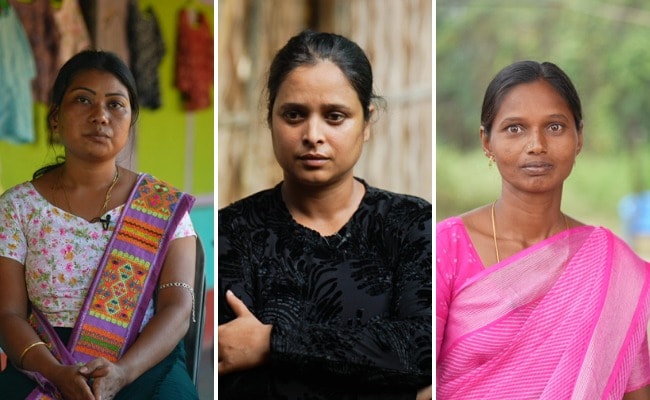
The sewing machine, an unassuming tool, is becoming a catalyst for independence for thousands of women across India. Through its Silai School Programme, USHA has built a quiet but powerful grassroots network of rural entrepreneurs, teachers, designers and changemakers who are transforming their own lives and uplifting their communities. As the partnership with NDTV highlights, these journeys reveal powerful stories of survival, healing and aspiration. What began as a livelihood initiative has evolved into a community-driven movement. As demand for skilled trainers grew, USHA began training its own Silai entrepreneurs to become master trainers, creating a self-sustaining cycle of women empowering women.
The result is a ripple effect: new incomes, greater confidence and intergenerational inspiration spreading from one home to the next.
In Nagaland, Silai Schools Are Turning Sewing Into Healing
In Nagaland, sewing has become a path for many women to reclaim their emotional wellbeing. One of them is Sukla Dey from Dimapur, who survived years of abuse. She recalls,
I was pushed to a point where I felt like giving up on life.
Joining the Silai School in 2018 changed everything. Today, Sukla is a master trainer, travelling across Assam, Meghalaya, Manipur and Nagaland. In 2024, she won the Gold Award at the India Style Fashion Show in Gurugram. “I felt I'm in a different world, I felt like a celebrity myself,” she says. For her, financial independence is true freedom. “Earlier, no one knew me, but now people say, ‘She's a designer, she's a master trainer."
Assam's Forested Hills: Rabina Rabha's Silent Strength
In Mushaljhara, Kokrajhar, Rabina Rabha, once isolated by widowhood and social stigma, found her voice in the Silai School. She says,
After I lost my husband, I used to wonder how I could earn, even one or two rupees.
The training offered her not just skills but dignity, and sewing became her way forward.
The tailoring machine is not just a machine to me, it has changed my entire future.
Rabina now runs her own Silai School, earns a steady income, and is respected as a community teacher. “After completing my training, people began calling me ‘madam'.”
Telangana's Story Of Renewal: Chukka Madhavi
In Kowkonda village, Hanumakonda district, 39-year-old Chukka Madhavi had long struggled as an agricultural labourer while caring for her children and coping with her husband's alcoholism. Identified by Sarvodaya Youth Organisation, she joined the Silai School programme supported by USHA. With training and a free sewing machine, Madhavi began teaching women in her village. Soon, she was earning Rs 600 to Rs 1,000 per day. Her husband eventually quit alcohol. With their savings, the couple bought an auto-rickshaw. Their home now runs on shared respect and shared income. Madhavi says,
Earlier, I worked under others, but today I am training several women myself.
A Movement Stitched With Purpose
Across India, Silai Schools have grown into spaces where women learn skills, rebuild confidence and find new opportunities. As they earn an income, their sense of identity strengthens. Children begin to dream bigger, husbands become supporters and entire communities start to change.
Published: December 11, 2025 16:12 IST
also read
Solar Is The Best Economic Investment, Says Ecologist Who Has Paid Zero Power Bill For Last Three Years
Written by Aastha Ahuja, Edited by Sonia BhaskarMonthly Power Bill Of Just Rs 130, Here's How A Couple In Kochi Did It
Written by Aastha Ahuja, Edited by Sonia BhaskarHimachal Pradesh's The Kalgidhar Society Saves Rs. 3.4 Crore Per Annum By Harnessing The Power Of Solar
Written by Aastha Ahuja, Edited by Sonia Bhaskar



NDTV in partnership with Luminous has launched an awareness campaign ‘Be A Bijli Donor’ to promote the idea of ‘save power for more power’. The idea is to conserve energy today in order to get more power tomorrow.
We inherently know that saving energy results in low energy bills, but we also need to understand that a unit of energy saved today makes it available for people still living in the dark or facing regular power cuts.
Saving power or conserving energy is about knowing the sources of energy, and areas of wastage and thereby eliminating these through technology and lifestyle changes. For instance, a 100 W (Watt) incandescent (ICL) bulb can be replaced with a 9 W LED bulb offering similar performance in terms of light output, but at far lower consumption of energy.
While a 100 W ICL bulb, used for four hours a day, consumes 146 units of energy per year, a 9 W LED bulb requires only 13.5 units per year. Clearly, switching to LED is a smart choice as it provides the same output while consuming 90 per cent less energy.
The focus of the campaign is to instill the idea of ‘save power for more power’ and in order to do so, the initiative will create awareness about energy efficient products and services, smart ways to reduce power consumption, alternate sources of energy like solar energy and the need to conserve energy. The idea is to address the rising need for energy conservation in India.
As part of the campaign, we will highlight the stories of individuals and organisations who are championing the cause of energy conservation by switching to renewable sources of energy, adopting innovations to reduce energy consumption while enjoying the same output.
The initiative will provide a platform for all stakeholders to share their ideas and work towards the common goal of, ‘Save power for more power’.