




- Home/
- The Energy Transition Dialogues (TETD) Concludes Successfully With The Release Of TETD Communique
The Energy Transition Dialogues (TETD) Concludes Successfully With The Release Of TETD Communique
Team NDTV | Updated: November 23, 2023 11:18 IST
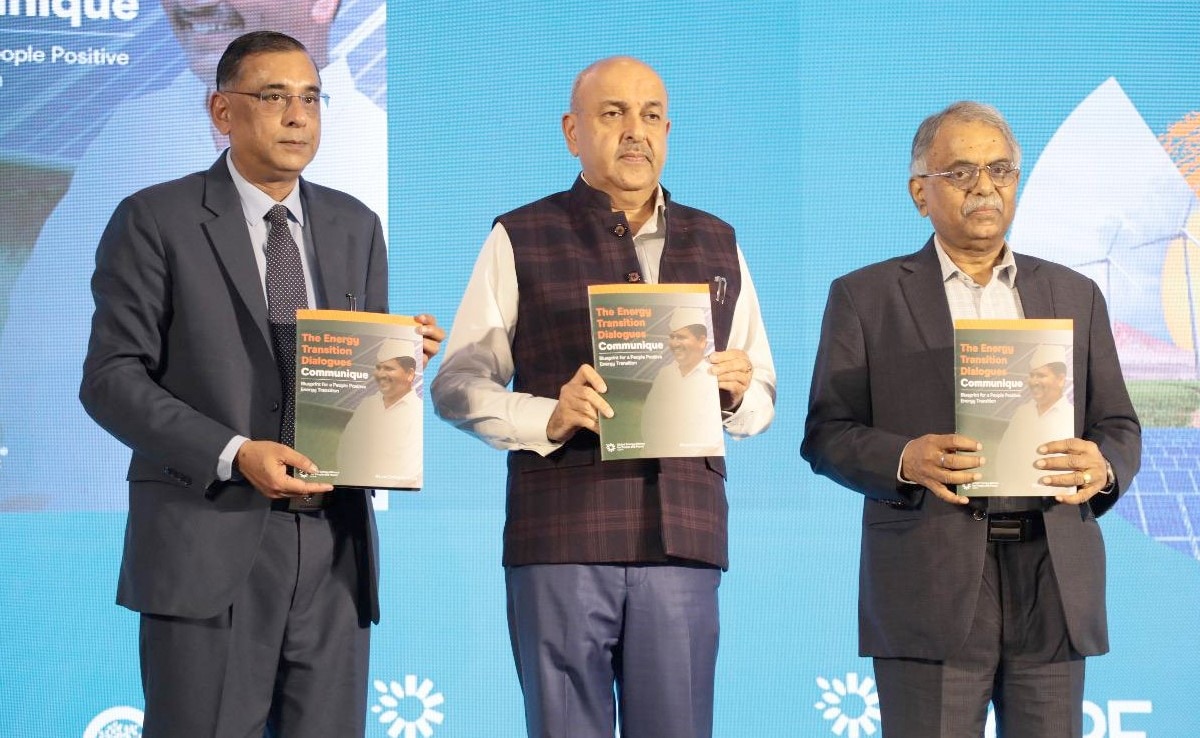
The three-day Energy Transition Dialogues (TETD) event, jointly organised by the Global Energy Alliance for People and Planet (GEAPP) and the Observer Research Foundation (ORF), has come to an end with the release of the TETD Communique. The document, Blueprint for a People-Positive Energy Transition, will work as a guide and offer a roadmap to expedite a sustainable energy transition for India and the world. The document offers essential principles and an actionable plan that will help in the long run.
The TETD Communique is the result of extensive collaborative discussions led by GEAPP. These discussions revolved around six crucial aspects of energy action, which include boosting renewable energy and battery energy storage systems to achieve an annual capacity of 50 gigawatts, scaling up energy efficiency, utility modernisation, decarbonisation of transportation, fostering a people-positive energy transition, and promoting clean energy financing.
This comprehensive document not only outlines the main priority areas but also provides policy and regulatory recommendations to drive India's ambition of achieving net-zero emissions. It serves as a well-thought-out blueprint for ensuring reliable access to energy in the lead-up to COP28. The communique was released by Tarun Kapoor, Advisor, Prime Minister's Office, Government of India who stated, “Energy transition pathway is challenging but not very difficult. India is currently seeing exponential growth and demand for energy.
To ensure energy security, affordability and environmental protection, the country has to utilise renewables, green hydrogen and biofuels for a sustainable and clean energy future.” Building on the achievements and commitments established during India's G20 Presidency, notably through 'The New Delhi Declaration,' GEAPP is dedicated to supporting the government's vision of expediting a clean, sustainable, affordable, and inclusive energy transition.
The introduction of the Global Biofuels Alliance during the G20 conference in India underscores GEAPP's commitment to serving as a platform for global collaboration aimed at advancing and widely adopting biofuels. Ravi Venkatesan, Chairman, GEAPP said,
To solve systemic problems, we need a large number of problem solvers. GEAPP, through its various initiatives, is trying to create an ecosystem for entrepreneurs, innovators and MSMEs to increase the speed of change towards the growth of renewable energy solutions.
Extensive deliberations took place at The Energy Transition Dialogues, covering crucial topics such as collaborative avenues for promoting accessible energy, MDB reforms, India's growing prominence as an energy hub in the Indo-Pacific region, global collaborations for sustainable transportation, expanding the utilisation of wind and solar energy in developing nations, and the establishment of a global climate alliance to regulate pricing, trade, investment, and technology; fostering a seamless shift towards a cleaner energy future.
Several key dignitaries presided over the sessions including Hardeep Singh Puri, Minister of Petroleum and Natural Gas, Government of India; Piyush Goyal, Minister of Commerce and Industry, Government of India, Jayant Sinha, Member of Parliament & Former Minister of State for Finance, Government of India, Amitabh Kant, G20 Sherpa, Government of India, and Professor Yemi Osinbajo SAN, Former Vice President of Nigeria. “The first edition of the Dialogues witnessed attendance from over 300 speakers and delegates who engaged in discussions and devised solutions to accelerate people-positive energy transition.
GEAPP is committed to strengthening coordination and capacity building across different sectors in the energy ecosystem”, said Saurabh Kumar, Vice President - India, GEAPP. Dr. V. Anantha Nageswaran, the Chief Economic Advisor (CEA) to the Government of India, extended congratulations to GEAPP and ORF for TETD.
He stated that the energy transition is a complex multi-decadal process for which we do not have a silver bullet solution. He emphasised that countries must take ownership of the climate problem and promote a collaborative atmosphere for embracing and actively engaging in climate action. During the event, GEAPP also felicitated the winners of the Energy Transitions Innovation Challenge (ENTICE), including AmpereHour Energy, REConnect Energy, VFlowTech and Cancrie.
ENTICE is GEAPP's annual initiative that aims to mainstream the role of innovation in addressing climate change challenges and support path-breaking clean energy solutions. The winners were presented awards by Amitabh Kant, G20 Sherpa of India. A comprehensive report on ‘Accelerating Battery Storage Adoption by DISCOMS in India' was also released during the event. This report is a result of the collective effort by GEAPP and RMI. This report addresses the pivotal role of energy storage, emphasising the critical importance of effectively integrating BESS assets at the distribution level to meet the evolving demands of our power system.
Published: November 10, 2023 13:39 IST
also read
Solar Is The Best Economic Investment, Says Ecologist Who Has Paid Zero Power Bill For Last Three Years
Written by Aastha Ahuja, Edited by Sonia BhaskarMonthly Power Bill Of Just Rs 130, Here's How A Couple In Kochi Did It
Written by Aastha Ahuja, Edited by Sonia BhaskarHimachal Pradesh's The Kalgidhar Society Saves Rs. 3.4 Crore Per Annum By Harnessing The Power Of Solar
Written by Aastha Ahuja, Edited by Sonia Bhaskar



NDTV in partnership with Luminous has launched an awareness campaign ‘Be A Bijli Donor’ to promote the idea of ‘save power for more power’. The idea is to conserve energy today in order to get more power tomorrow.
We inherently know that saving energy results in low energy bills, but we also need to understand that a unit of energy saved today makes it available for people still living in the dark or facing regular power cuts.
Saving power or conserving energy is about knowing the sources of energy, and areas of wastage and thereby eliminating these through technology and lifestyle changes. For instance, a 100 W (Watt) incandescent (ICL) bulb can be replaced with a 9 W LED bulb offering similar performance in terms of light output, but at far lower consumption of energy.
While a 100 W ICL bulb, used for four hours a day, consumes 146 units of energy per year, a 9 W LED bulb requires only 13.5 units per year. Clearly, switching to LED is a smart choice as it provides the same output while consuming 90 per cent less energy.
The focus of the campaign is to instill the idea of ‘save power for more power’ and in order to do so, the initiative will create awareness about energy efficient products and services, smart ways to reduce power consumption, alternate sources of energy like solar energy and the need to conserve energy. The idea is to address the rising need for energy conservation in India.
As part of the campaign, we will highlight the stories of individuals and organisations who are championing the cause of energy conservation by switching to renewable sources of energy, adopting innovations to reduce energy consumption while enjoying the same output.
The initiative will provide a platform for all stakeholders to share their ideas and work towards the common goal of, ‘Save power for more power’.