




- Home/
- The Hidden Power Of Boredom: Letting Children Explore Their Inner World
The Hidden Power Of Boredom: Letting Children Explore Their Inner World
Written by Team NDTV | Updated: July 15, 2025 15:50 IST
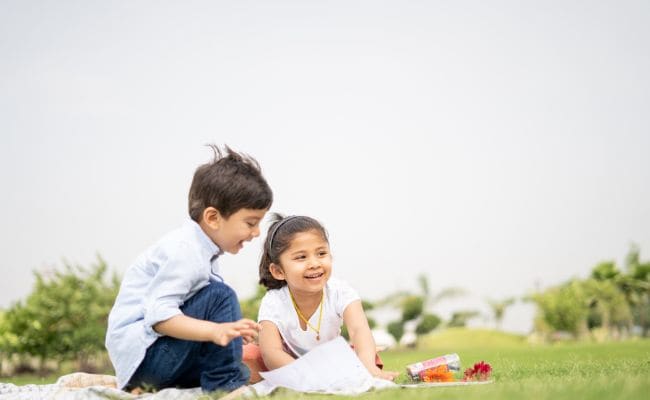
New Delhi: Being a parent in today's world is very challenging because parents have to constantly meet the needs of their kids, which includes teaching, engaging, entertaining, protecting, and educating. Nowadays, it is common for parents to keep their children busy by enrolling them in educational and extracurricular activities, which is not always fair to the child. Instead, they can choose the simpler path: letting the child play freely. Many parents have adopted the practice of free play for their children, and they have observed numerous positive changes.
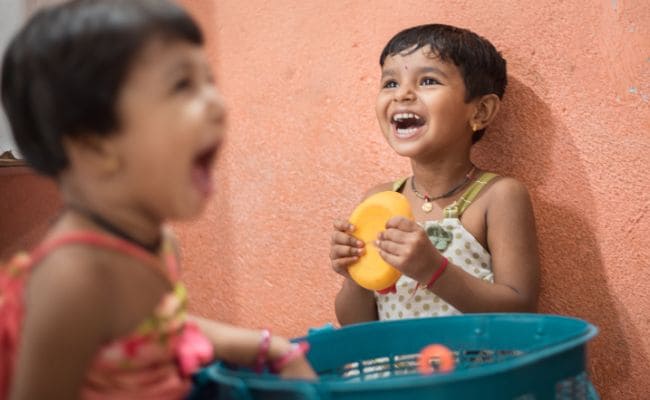
Bachpan Manao, in collaboration with Ek Step and NDTV, is a celebration of the first three thousand days. It emphasises that play is the most crucial activity during childhood, as it allows children to grow emotionally and physically, and helps them learn problem-solving skills. This raises an important question: What should a child do when they are getting bored?
Getting bored is a developmental process for children because it enhances their creativity, imagination, and encourages them to explore new things. Boredom is an initial stage in overall growth, as it motivates children to try activities they haven't attempted before.
Dr. Madhavi Bhardwaj, Consultant Paediatrician and Neonatologist, Lifetree Healthcare, Mohali, said,
“I left my daughter for a good fifteen minutes on the floor, and she started playing with her hand's shadow. Just let your child be. You do not need to leave them with any game or entertain them directly.”
This clearly shows that parents do not need to be present around their children at all times. Children find ways to keep themselves busy and engaged in activities, and parents do not always have to buy fancy toys for their children. Instead, giving a child a simple coloring pencil might inspire them to start drawing or sketching, which can gradually develop their intelligence. Further, she highlighted,
“These days we think it is very important to keep our kids engaged all the time, but that would not be the right approach. You have to leave them be, and you will be surprised to see how they entertain themselves well”.

Additionally, if a parent leaves their child without toys or games, they might pick up a dupatta and start playing with it.
Now, it is a parent's responsibility to understand that they also need to give their child some space. Allowing children to play freely is just as important as keeping them engaged in structured play or games. If parents restrict free play, they might observe that the child becomes more irritated and mentally weaker than those who play freely.
When children are set free to play, they have the authority to choose their toys, interests, and the scenarios they create. The more a child plays freely, the more they will put themselves in risky situations, which can help them learn to take care of themselves.
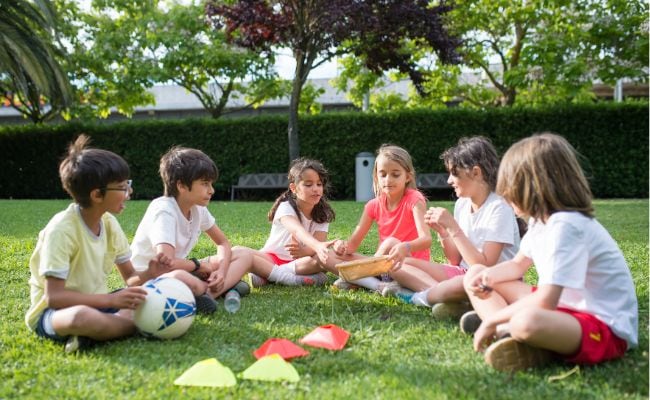
There are certain drawbacks, including safety issues, injuries, or disputes. Nevertheless, these can be reduced with adequate parental supervision. Parents should monitor their children during free play, and if situations escalate, they should step in as needed.
Permitting children to engage in free play is just as vital as involving them in organized games or activities. Striking a balance is key in this regard. It is important to recognize that a balanced method, where children enjoy free play under the watchful eye of their parents, is optimal for their growth.
Published: July 14, 2025 17:53 IST
also read
Solar Is The Best Economic Investment, Says Ecologist Who Has Paid Zero Power Bill For Last Three Years
Written by Aastha Ahuja, Edited by Sonia BhaskarMonthly Power Bill Of Just Rs 130, Here's How A Couple In Kochi Did It
Written by Aastha Ahuja, Edited by Sonia BhaskarHimachal Pradesh's The Kalgidhar Society Saves Rs. 3.4 Crore Per Annum By Harnessing The Power Of Solar
Written by Aastha Ahuja, Edited by Sonia Bhaskar



NDTV in partnership with Luminous has launched an awareness campaign ‘Be A Bijli Donor’ to promote the idea of ‘save power for more power’. The idea is to conserve energy today in order to get more power tomorrow.
We inherently know that saving energy results in low energy bills, but we also need to understand that a unit of energy saved today makes it available for people still living in the dark or facing regular power cuts.
Saving power or conserving energy is about knowing the sources of energy, and areas of wastage and thereby eliminating these through technology and lifestyle changes. For instance, a 100 W (Watt) incandescent (ICL) bulb can be replaced with a 9 W LED bulb offering similar performance in terms of light output, but at far lower consumption of energy.
While a 100 W ICL bulb, used for four hours a day, consumes 146 units of energy per year, a 9 W LED bulb requires only 13.5 units per year. Clearly, switching to LED is a smart choice as it provides the same output while consuming 90 per cent less energy.
The focus of the campaign is to instill the idea of ‘save power for more power’ and in order to do so, the initiative will create awareness about energy efficient products and services, smart ways to reduce power consumption, alternate sources of energy like solar energy and the need to conserve energy. The idea is to address the rising need for energy conservation in India.
As part of the campaign, we will highlight the stories of individuals and organisations who are championing the cause of energy conservation by switching to renewable sources of energy, adopting innovations to reduce energy consumption while enjoying the same output.
The initiative will provide a platform for all stakeholders to share their ideas and work towards the common goal of, ‘Save power for more power’.