




- Home/
- The Magic Of The First 3,000 Days: How Simple Parenting Can Transform Your Child's Future
The Magic Of The First 3,000 Days: How Simple Parenting Can Transform Your Child's Future
Team NDTV | Updated: July 15, 2025 15:52 IST

New Delhi :The significance of play in day-to-day children's lives and their healthy development has become more prominent over the last decade. A growing body of evidence supports the notion that play, throughout childhood, is not only an inborn behavior but also maximises a child's quality of life, well-being, and physical, social, emotional, and cognitive development. The setting where play takes place plays a vital role as it affects their experiences, decisions, and relationships with the people around them and their environment.
There has been considerable debate over the years about the specific purpose of play in child development. It has frequently been suggested that as children play, they develop skills that will be important in adult life. Yet increasingly, it is recognised that play is something that simply exists for its own sake and serves a crucial role in development. From the earliest stages of brain development and attachment to parents to the independence and autonomy of adolescence, play is an important growth factor.
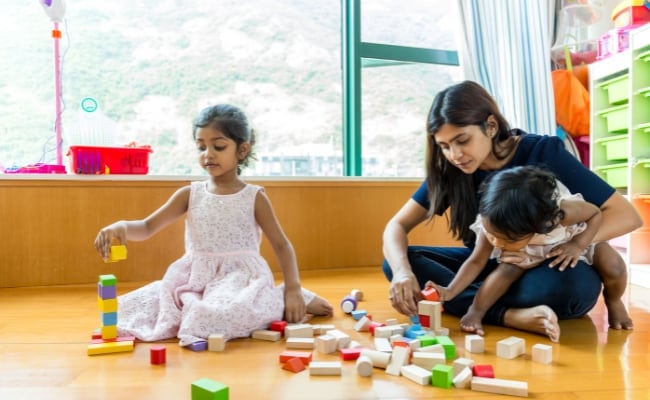
NDTV and the EkStep Foundation have come together to celebrate the initial 3000 days of a child's life, firmly believing that play is central to early childhood development.
The Science Behind Parenting
In conversation with Professor Usha Goswami, Director of the Center for Neuroscience in Education, University of Cambridge, she reveals that three fundamental behaviors can transform a child's developmental trajectory, and they're surprisingly simple to implement.
First and foremost is warmth. As Professor Goswami explains, this means
"Always being positive and rewarding to your child in the way you interact from an emotional point of view."
This isn't about being permissive or avoiding boundaries; it's about creating an emotional foundation of safety and love from which children can confidently explore their world.
The second crucial point is recognising your child as an active learner. This means that when your toddler dumps toys on the floor, they aren't acting out, they're exploring, learning about cause and effect, and examining their environment. Instead of saying "stop that," effective parents might say, "We shouldn't leave this on the floor. "Let's put it back in the box together." This will positively influence the child's mindset, allowing them to make mistakes and learn from those experiences without feeling guilty or blameworthy.
The third pillar is perhaps the most powerful: Conversation.
"The more conversation, the better the brain will develop. "You need as linguistically rich an environment as you can create"
Professor Goswami emphasises. This doesn't mean formal lessons or flashcards, it means talking to your child throughout the day, narrating activities, asking questions, and engaging in back-and-forth dialogue.
The Hidden Damages Of Negative Parenting
While positive interactions fuel healthy brain development, negative parenting patterns can have lasting consequences. Professor Goswami's research shows that
"If the parenting is too angry and negative, the outcomes for the child are poorer, both learning at school and in that child's emotional self-regulation."
Particularly damaging is what she calls "empty language". This includes constant commands like "stop that, don't do that, I told you not to do that." Children exposed to this type of communication tend to have worse outcomes. The alternative? "Oh, please don't do that, let me help you do it this way" language that's warm, supportive, and solution-focused.
In our achievement-oriented culture, it takes courage to trust in the power of simplicity. The neuroscience is clear: the most profound gift we can give our children during these crucial first 3,000 days isn't found in structured programs or academic pressure. It's found in our warmth, our recognition of their natural curiosity, and our willingness to engage them in rich, meaningful conversation. As Professor Goswami reminds us,
"Play is the heart of early childhood. "It is play that makes learning joyful and builds the best foundation for our children to thrive."
Perhaps it's time we trusted this beautiful truth and let our children simply play while we join them in the wonder of discovery.
Published: July 15, 2025 13:49 IST
also read
Solar Is The Best Economic Investment, Says Ecologist Who Has Paid Zero Power Bill For Last Three Years
Written by Aastha Ahuja, Edited by Sonia BhaskarMonthly Power Bill Of Just Rs 130, Here's How A Couple In Kochi Did It
Written by Aastha Ahuja, Edited by Sonia BhaskarHimachal Pradesh's The Kalgidhar Society Saves Rs. 3.4 Crore Per Annum By Harnessing The Power Of Solar
Written by Aastha Ahuja, Edited by Sonia Bhaskar



NDTV in partnership with Luminous has launched an awareness campaign ‘Be A Bijli Donor’ to promote the idea of ‘save power for more power’. The idea is to conserve energy today in order to get more power tomorrow.
We inherently know that saving energy results in low energy bills, but we also need to understand that a unit of energy saved today makes it available for people still living in the dark or facing regular power cuts.
Saving power or conserving energy is about knowing the sources of energy, and areas of wastage and thereby eliminating these through technology and lifestyle changes. For instance, a 100 W (Watt) incandescent (ICL) bulb can be replaced with a 9 W LED bulb offering similar performance in terms of light output, but at far lower consumption of energy.
While a 100 W ICL bulb, used for four hours a day, consumes 146 units of energy per year, a 9 W LED bulb requires only 13.5 units per year. Clearly, switching to LED is a smart choice as it provides the same output while consuming 90 per cent less energy.
The focus of the campaign is to instill the idea of ‘save power for more power’ and in order to do so, the initiative will create awareness about energy efficient products and services, smart ways to reduce power consumption, alternate sources of energy like solar energy and the need to conserve energy. The idea is to address the rising need for energy conservation in India.
As part of the campaign, we will highlight the stories of individuals and organisations who are championing the cause of energy conservation by switching to renewable sources of energy, adopting innovations to reduce energy consumption while enjoying the same output.
The initiative will provide a platform for all stakeholders to share their ideas and work towards the common goal of, ‘Save power for more power’.