




- Home/
- Threads of Inclusion: Usha Silai School Weaves Dignity For The Marginalised
Threads of Inclusion: Usha Silai School Weaves Dignity For The Marginalised
Team NDTV | Updated: January 29, 2026 16:46 IST
New Delhi:
In West Bengal's shadowed margins, 15 transgender individuals thread needles under NIRDPR's Action Lab, their machines humming defiance against multi-dimensional poverty. Partnered with CIRDAP, PLEQSUS India Foundation, and Usha Silai School, five excel in high-end apparel, poised for market dominance—proving skilling trumps begging, birthing role models and trans-led enterprises.
Tribal Stitches In Mulugu
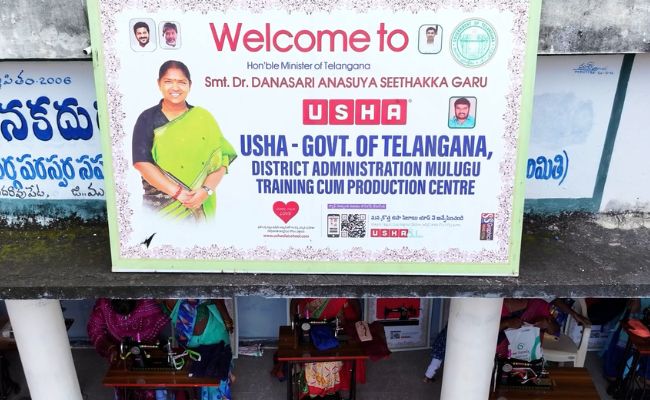
Telangana's Mulugu forests echo with 80 women's pedals at Chalwai centre, sparked by District Collector T.S. Divakara's vision. Usha Entrepreneurs Initiative trains the poorest, securing ₹1 lakh school uniform orders for steady ₹5,000-6,000 incomes—funding education without spousal aid, as Prashanthi masters stitches in 14 days.[script] From shy homemakers to confident group leaders, they teach others, fueling circular economies.
Heritage Revival In Meghalaya
Meghalaya's matrilineal hills bloom via six-year Usha-MSRLS pact: 17 Training Cum Production Centres skill 250+ women, spotlighted at Saras Aajivika Fairs' ramps. Khneng embroidery, fading from four to two villages, revives through modern tailoring—empowering fields-women as designers, blending tradition with bulk orders.[script] CEO Ram Krishna hails their enthusiasm; Conrad Sangma champions localised livelihoods.
Policy To Pedal
Kushalta Ke Kadam spotlights government synergies: NIRDPR's unreached focus aligns with Usha's 14-year expertise, providing machines, curricula, and linkages for self-employment. Dr. Sandhya Gopakumaran envisions enterprises; Avinava Dutta seeds community employers.[script] Sudeb Suvana dreams trans-led companies defying gender norms in timeless tailoring.
A Shared Horizon
These collaborations scale inclusion—transgenders from streets to shops, tribals from dependence to dignity, Meghalayans from fields to fairs. Usha's model ensures sustainability: handholding, bulk orders, alumni networks toward equitable growth.[script] No one left behind; every stitch advances Viksit Bharat. Adopt at ushasilaischool.com.
Published: January 29, 2026 16:38 IST
also read
Solar Is The Best Economic Investment, Says Ecologist Who Has Paid Zero Power Bill For Last Three Years
Written by Aastha Ahuja, Edited by Sonia BhaskarMonthly Power Bill Of Just Rs 130, Here's How A Couple In Kochi Did It
Written by Aastha Ahuja, Edited by Sonia BhaskarHimachal Pradesh's The Kalgidhar Society Saves Rs. 3.4 Crore Per Annum By Harnessing The Power Of Solar
Written by Aastha Ahuja, Edited by Sonia Bhaskar



NDTV in partnership with Luminous has launched an awareness campaign ‘Be A Bijli Donor’ to promote the idea of ‘save power for more power’. The idea is to conserve energy today in order to get more power tomorrow.
We inherently know that saving energy results in low energy bills, but we also need to understand that a unit of energy saved today makes it available for people still living in the dark or facing regular power cuts.
Saving power or conserving energy is about knowing the sources of energy, and areas of wastage and thereby eliminating these through technology and lifestyle changes. For instance, a 100 W (Watt) incandescent (ICL) bulb can be replaced with a 9 W LED bulb offering similar performance in terms of light output, but at far lower consumption of energy.
While a 100 W ICL bulb, used for four hours a day, consumes 146 units of energy per year, a 9 W LED bulb requires only 13.5 units per year. Clearly, switching to LED is a smart choice as it provides the same output while consuming 90 per cent less energy.
The focus of the campaign is to instill the idea of ‘save power for more power’ and in order to do so, the initiative will create awareness about energy efficient products and services, smart ways to reduce power consumption, alternate sources of energy like solar energy and the need to conserve energy. The idea is to address the rising need for energy conservation in India.
As part of the campaign, we will highlight the stories of individuals and organisations who are championing the cause of energy conservation by switching to renewable sources of energy, adopting innovations to reduce energy consumption while enjoying the same output.
The initiative will provide a platform for all stakeholders to share their ideas and work towards the common goal of, ‘Save power for more power’.