


- Home/
- AIIMS Delhi Study Maps How Urban Air Pollution Breaches Placental Barrier And Impairs Foetal Growth
AIIMS Delhi Study Maps How Urban Air Pollution Breaches Placental Barrier And Impairs Foetal Growth
Reported by Shreya Ghosh | Updated: June 04, 2026 16:02 IST
Highlights
- Urban fine particulate matter can cross the placenta and trigger inflammation during pregnancy
- PM2.5 exposure inhibits IGFBP3 protein essential for placental function and fetal growth
- Study links Delhi pollution to low birth weight and increased preeclampsia risk in mothers
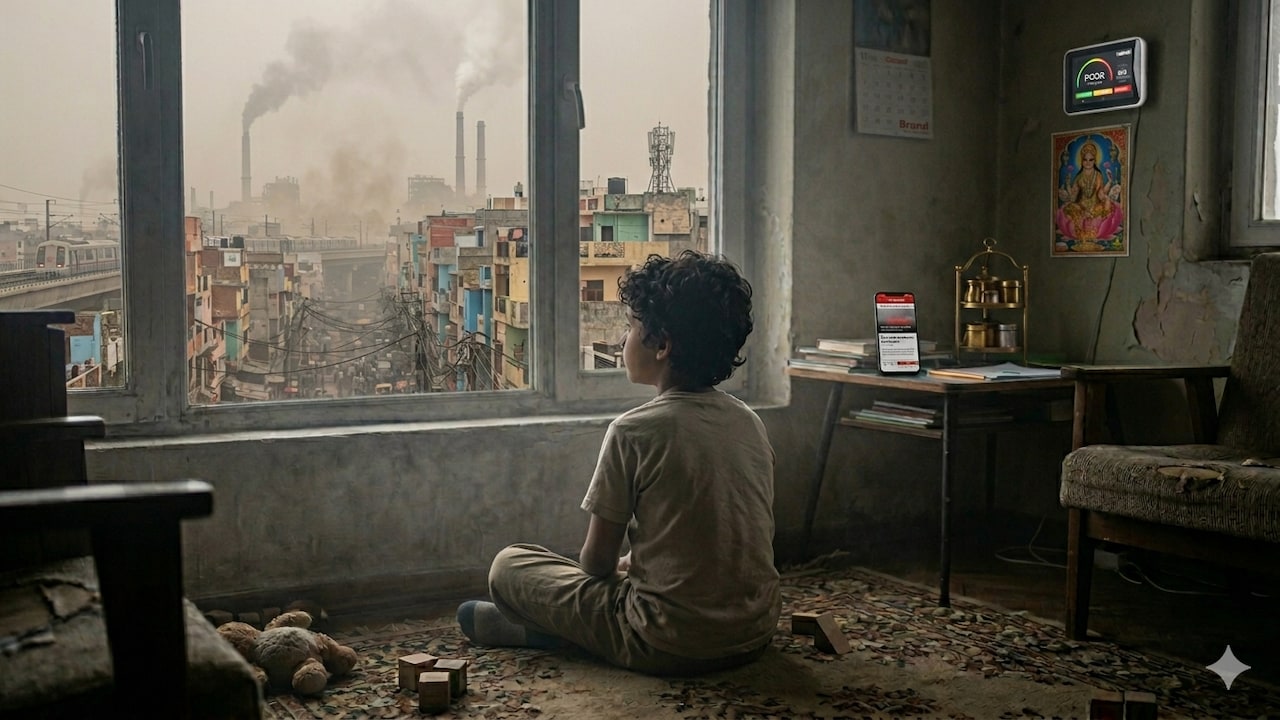
Fine particulate matter from urban air pollution can cross the placental barrier and disrupt critical foetal development by triggering inflammation and suppressing a key growth-regulating protein, according to new research from the All India Institute of Medical Sciences (AIIMS), Delhi.
The ICMR-funded study, published in EMBO Molecular Medicine, provides the most comprehensive molecular pathway to date linking maternal exposure to particulate matter (PM2.5) with adverse pregnancy outcomes and potential long-term effects on children.
Researchers found that exposure to urban particulate matter activates inflammatory pathways in the placenta, which in turn inhibit the expression of IGFBP3 - a protein essential for maintaining placental balance and supporting embryonic growth. Reduced IGFBP3 levels impair nutrient exchange, blood vessel formation, and overall placental function, leading to restricted foetal growth.
"Our research reveals that exposure during pregnancy to Urban Particulate Matter activates inflammatory pathways that inhibit IGFBP3 expression, a key protein governing the equilibrium of the placenta and growth of the embryo. This reduction in IGFBP3 impairs critical placental processes, resulting in restricted foetal growth and altered developmental trajectories," said Subhradip Karmakar, Professor of Biochemistry at AIIMS Delhi and corresponding author of the paper.
The study combined human epidemiological data with detailed animal experiments. Researchers analysed delivery records of 994 women from high-pollution Delhi and low-pollution Deoghar in Jharkhand. In Delhi, PM2.5 exposure emerged as a significant risk factor for low birth weight, while higher pollution levels were also associated with increased rates of preeclampsia.
In parallel rodent studies simulating Delhi's pollution levels, pregnant rats exposed to the particulates showed clear placental damage. The pollution impaired the placenta's ability to invade the uterine wall, form the nutrient-exchange layer, and develop adequate blood vessels. It also induced severe oxidative stress and epigenetic changes that alter gene expression.
These effects translated into measurable outcomes: litter sizes reduced by up to 25 per cent, placentas were smaller, and newborns weighed about 34 per cent less at term compared to controls. Offspring also exhibited neurological deficits, including impaired motor coordination, heightened anxiety-like behaviour, and altered stress responses - signs consistent with prenatal origins of later developmental issues.
While earlier research had established that PM2.5 and PM10 can cross the placental barrier and cause oxidative stress and inflammation, the AIIMS study stands out for tracing the full biological cascade from exposure to molecular disruption and clinical consequences in a unified framework.
Dr. Karmakar noted that previous work had examined isolated aspects of this process. "We showed the entire pathway," he emphasised.
The researchers cautioned that the full scope of long-term impacts - including potential effects on motor development, cognitive function, cardiovascular health, cancer risk, and metabolic disorders in later life - requires further transgenerational studies.
They suggested immediate practical measures such as pregnant women using masks in highly polluted areas and consuming antioxidant-rich diets as interim protections. However, they stressed that systemic pollution control remains essential.
"Risk mitigation in terms of controlling pollution will have to be multi-dimensional," Dr. Karmakar said. "The research findings call for pollution monitoring to be integrated into prenatal care."
\r\n
\r\n
Disclaimer: This content including advice provides generic information only. It is in no way a substitute for a qualified medical opinion. Always consult a specialist or your own doctor for more information. NDTV does not claim responsibility for this information.
Published: June 04, 2026 15:43 IST
 Friday June 05, 2026
For more than a decade, the United States dramatically reduced its national smog levels, but since 2015 smoke from increasingly larger wildfires is reversing that clean-up trend and making the air dirtier and deadlier, a new study finds.
- Edited by Ritu Singh | Friday June 05, 2026
The day serves as a powerful reminder of the urgent need to address pressing environmental challenges, including climate change, plastic pollution, air quality deterioration, and biodiversity loss.
- Reported by Shreya Ghosh | Thursday June 04, 2026
The ICMR-funded study, published in EMBO Molecular Medicine, provides the most comprehensive molecular pathway to date linking maternal exposure to particulate matter (PM2.5) with adverse pregnancy outcomes and potential long-term effects on children.
- Wednesday June 03, 2026
The scheme will benefit approximately 2.07 lakh (1.91 lakh trucks and 16,329 buses) vehicle owners in Delhi-NCR (comprising Delhi, Haryana, Rajasthan, and Uttar Pradesh), the statement said.
- Written by NDTV Auto Desk | Wednesday June 03, 2026
The plan to phase out older trucks and buses in Delhi NCR targets 1.9 lakh trucks and approximately 16,000 buses.




................................ Advertisement ................................



Blog | Well Done, Delhi. You've Turned Lung Sacrifice Into A Badge Of HonourSaikat Kumar Bose
Monday November 10, 2025Till some years back, Delhiites would ask angry questions to those in power about the capitals annual tryst with toxic air. This has changed. Those in the driving seat dont see the need to answer now.
Opinion | Why Indians Have Just Given Up On Air Pollution CrisisTanushree Ganguly
Friday December 20, 2024While some may argue that people in Delhi are now more aware of air pollution than they were a decade back, my rebuttal would be that awareness does not mean that people are concerned.
Opinion | You Must Outrage Over Filthy Air More Than Once A YearJyoti Pande Lavakare
Tuesday December 10, 2024Delhi welcomed us with monsoon rains and mangos. We were home. Fast forward a couple of years, in the winter of 2012, I found myself in denial about something other parents, mostly expats, were calling toxic air.
Opinion | Delhi's Air Pollution Situation Is Like A Bad MarriageNishtha Gautam
Friday November 22, 2024On a good day, such as today, the AQI reading in Delhi is 407. We are jubilant at the sickly sunshine trickling through the slightly dissipated smog. At least its not 1600.
दिवाली... पराली... सियासी जुगाली!Ashwini kumar
Monday November 18, 2024दिल्ली-एनसीआर में प्रदूषण का समाधान तो आज तक मिला नहीं. हर साल चिंतित होकर हम-आप सांसों की तकलीफ के साथ-साथ दिल और ब्लड प्रेशर के मरीज भी क्यों बनें?


