- Home/
- Beating India's Cervical Crisis: Anirban Palit's Cervicheck Kit That Saves Lives Before It's Too Late
Beating India's Cervical Crisis: Anirban Palit's Cervicheck Kit That Saves Lives Before It's Too Late
Team NDTV | Updated: January 28, 2026 12:40 IST
New Delhi:
In a country, where late diagnosis often determines survival, Anirban Palit has dedicated his work to the belief that healthcare must reach people before disease becomes irreversible. As the co-founder and Managing Director of Pragmatech Healthcare Solutions Pvt. Ltd., Palit has helped design preventive diagnostic solutions tailored for India's healthcare realities. These solutions prioritise access, dignity, and early intervention. His work addresses two of India's most persistent silent killers, heart disease and cervical cancer.
Who Is Anirban Palit?
With over 10 years of experience in the molecular diagnostics industry, Anirban Palit spent a significant part of his career at Roche Diagnostics India, where he worked closely with cutting-edge diagnostic technologies. That experience also exposed that many advanced screening tools never reach the people who need them most. Palit holds a Master's degree in Biotechnology from Macquarie University, Sydney, and an Executive MBA from Great Lakes Institute of Management, Chennai.
His professional strength lies in sales and marketing, but his larger contribution has been translating complex diagnostic science into solutions that work in low-resource and high-need settings. At Pragmatech Healthcare Solutions, Palit and his three co-founders set out to solve health problems specific to India. Their approach focuses on diagnostic strategies used in developed countries that cannot be directly applied to India without rethinking cost, infrastructure, and social barriers.
https://pragmatech.co.in/story/
Cervical Cancer
The idea for Cervicheck began with loss. Anirban Palit and his co-founders lost a close housemate to cervical cancer. Her symptoms were mild and easily dismissed as fatigue, back pain, leg cramps, and weight loss. By the time cervical cancer was diagnosed, it was too late. Cervical cancer, caused primarily by the human papillomavirus (HPV), can remain asymptomatic for years. Despite being one of the most preventable cancers, a woman in India dies from cervical cancer every eight minutes. Yet fewer than one per cent of Indian women undergo regular screening, far below the World Health Organization's 70 per cent target.
Screening often requires travel, invasive pelvic exams, and interaction with unfamiliar healthcare settings. These factors discourage millions of women from ever being tested. Determined to change this, Palit left his role at Roche Diagnostics. Along with co-founder Sayantani Pramanik and the Pragmatech team, he spent four and a half years building, validating, and licensing a solution that would work for Indian women, not against them.
Cervicheck
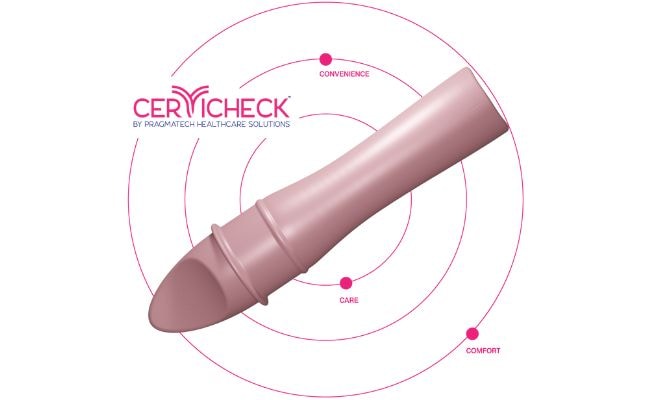
The result was Cervicheck, India's first clinically validated at-home self-sampling kit for cervical cancer screening.
The kit allows women to collect samples privately and safely, without invasive procedures or hospital visits. Its accuracy is comparable to clinic-based tests, but the experience is designed to reduce fear, stigma, and discomfort. Through partnerships with NGOs, CSR programmes, and public health initiatives, the kit has already reached thousands of women, from urban low-income communities in Chennai to remote villages in Uttar Pradesh and Gujarat. Education and awareness are integral to every screening effort, with healthcare workers explaining what cervical cancer is, why early detection matters, and how treatment can save lives.
Today, the kit is available to consumers at around Rs 1,700, including testing. For large-scale public health programmes, the cost can drop to as little as Rs 100 per unit, less than the cost of travelling to a screening camp. The team is also developing a point-of-care diagnostic test to detect precancerous lesions, strengthening early intervention even further.
Cervicheck gained national attention when Anirban Palit appeared on Shark Tank India, bringing women's preventive healthcare into mainstream conversation. The long term goal is for every woman being able to screen herself at home as easily as a pregnancy test.
Published: January 28, 2026 12:38 IST
also read
Important To Implement Environmental Rules To Sustain Gains Of Lockdown: Union Environment Minister Prakash Javadekar
PTIMumbai Based Green Champion Is Striving To Make The City The Cycling Capital By 2030
Reported by Ambika Singh KahmaDr Naresh Trehan On The Learnings From The Coronavirus Pandemic And How Technology Can Help Save The Environment
Written by Aastha Ahuja, Edited by Sonia Bhaskar
 Written by Sneha Mordani | Wednesday November 25, 2026
One person dies every 2nd day in Delhi due to Lung Cancer reveals data from an RTI query. Top Delhi Chest Surgeon says the number of a gross underestimate.
- Written by Debosmita Ghosh | Wednesday November 25, 2026
6,581 lung cancer cases were reported at AIIMS, Ram Manohar Lohia (RML) Hospital and the Delhi State Cancer Institute (DSCI) between January 1, 2020, and July 31, 2026. Safdarjung Hospital did not provide its total number of cases but reported 393 lung cancer deaths.
- Written by Shreya Goswami | Wednesday November 25, 2026
Air pollution may increase the risk of Alzheimer's disease and dementia by disrupting the brain's immune cells, a new study finds. With Indian cities facing high PM2.5 levels, researchers' findings raise fresh concerns about the long-term neurological effects of polluted air.
- Written by Amit Chaturvedi | Wednesday November 25, 2026
The sources of pollution identified by the study include vehicular traffic, construction, and commercial sources. It also said that stubble burning contributes to seasonal deterioration in the air quality in Delhi and areas around it.
- Wednesday November 25, 2026 , New Delhi
Air quality in Delhi remained in the poor category, with four monitoring stations recording 'very poor' readings.



................................ Advertisement ................................


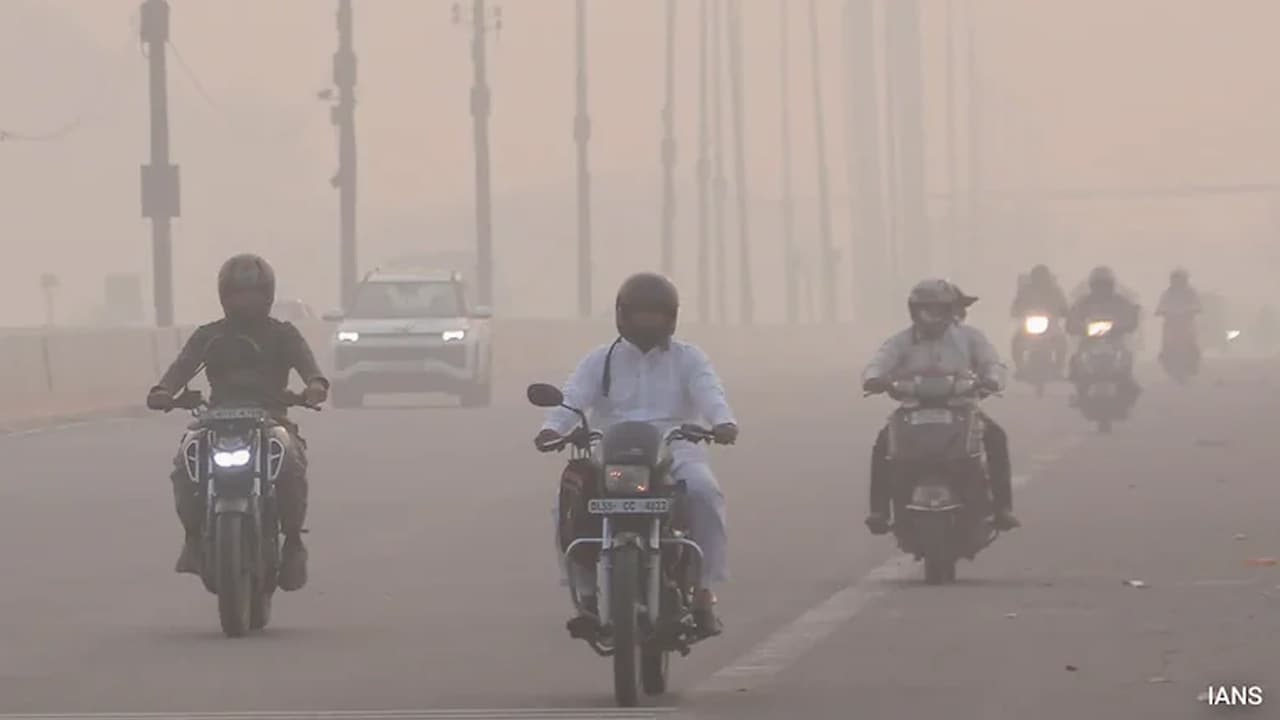

Opinion | Delhi Has Every Pollution Control Policy - Except One That Works
Monday November 09, 2026Every November, Delhi performs the same ritual. We check the AQI before stepping outdoors, children are kept indoors, masks reappear, schools consider shutting, construction is restricted, and emergency meetings are convened. Politicians blame the weather, neighbouring states, farmers, or firecrackers. And then, as the season changes, the urgency d...
दीवाली की चौखट पर दिल्ली में सांसों का संकट: 30 साल की स्टडी ने हरियाली को लेकर क्या बताया?
Thursday November 05, 2026अध्ययन में हरियाली की मात्रा के साथ उसके फैलाव और आपसी जुड़ाव को भी महत्वपूर्ण पाया गया. जिन इलाकों में हरियाली ज्यादा बिखरी हुई थी, वहां सतही तापमान अधिक रहा. इसके विपरीत, बड़े और आपस में जुड़े हरित क्षेत्रों में तापमान कम पाया गया.
Opinion: Why Delhi's Smog Can't Be Fixed From SpaceDavid Fickling, Bloomberg
Monday October 19, 2026The clearest sign that Delhi is on a path to cleaner air would be a decline in the amount of paddy grown nearby, and therefore the acreage liable to be burned each year.
Don't Normalise Air Purifiers As Delhi Chokes | The Reason Why
Thursday December 11, 2025More than 90 cities in the world's top 100 polluting list are in India. With every passing year, the AQI is rising, reaching 'hazardous' levels.
Blog | Well Done, Delhi. You've Turned Lung Sacrifice Into A Badge Of HonourSaikat Kumar Bose
Monday November 10, 2025Till some years back, Delhiites would ask angry questions to those in power about the capitals annual tryst with toxic air. This has changed. Those in the driving seat dont see the need to answer now.