- Home/
- Empowering Lives With Stitches Of Hope: Usha Silai Schools In Tiruppur
Empowering Lives With Stitches Of Hope: Usha Silai Schools In Tiruppur
Team NDTV | Updated: January 24, 2025 13:35 IST
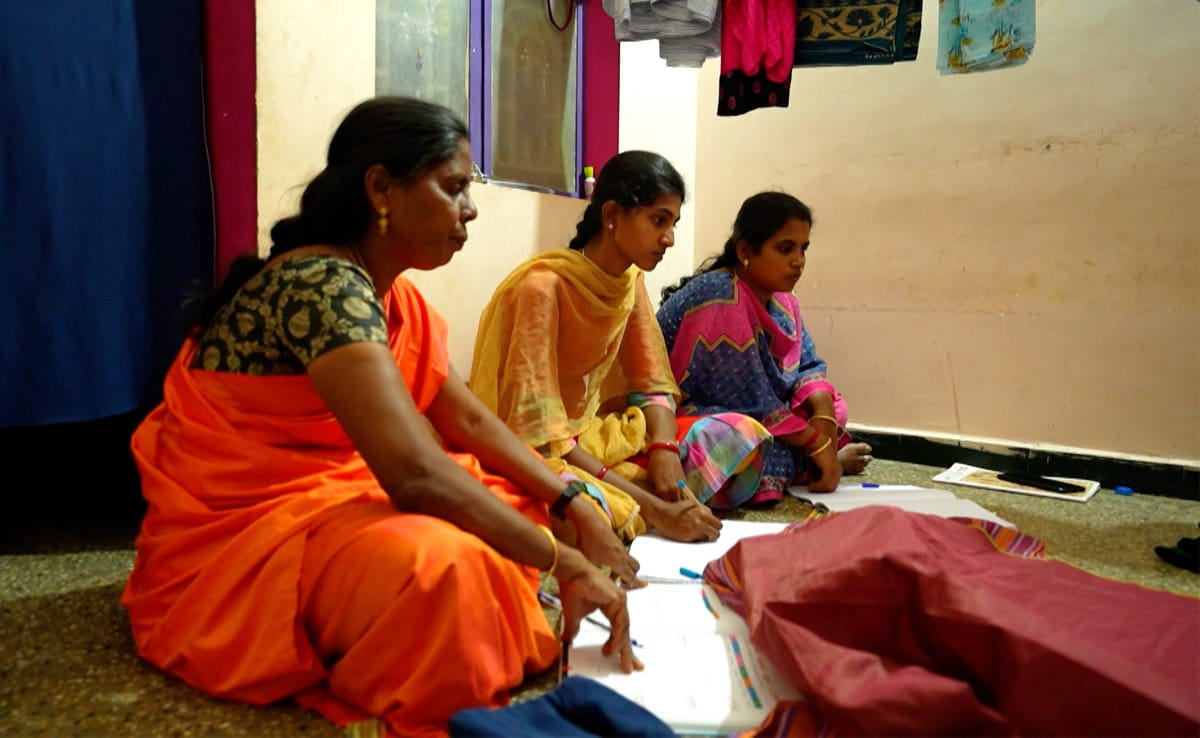
Through Native Medicare Charitable Trust, women like Arzoo and Dharini joined Usha Silai School programme
Inclusivity means creating environments and providing opportunities for people who might otherwise be excluded or marginalised. The Usha Silai Schools embody this ethos, transforming lives in India's rural and marginalised communities. These schools go beyond teaching sewing; they equip women with skills to earn a livelihood. It's a story of hope, empowerment, and inclusivity. The Silai Schools are not just a centre of facility, but also of community and acceptance.
Breaking Stigmas for HIV-Positive Women
Women living with HIV often face violence, discrimination, and societal stigma, compounded by their gender, which becomes a barrier to opportunities and social inclusion. For Usha International Ltd., empowering marginalized women has been central to the Silai School program. Vadivelan Perumal, Regional Manager South, Usha Social Services, Usha International Ltd said,
We aim to reach out to marginalised women, particularly from the rural backgrounds. Our focus also include women who are economically or otherwise marginalized. This includes widows, separated women, single parents, disabled, and HIV positive women, as they often face significant societal discrimination. For instance, HIV-positive women struggle hard to secure job opportunities because they are marginalized and discriminated by both their families and communities. We skill them with sewing training and provide the opportunity to earn for their livelihood by running Usha Silai School from their home itself. Once they start earning, they become financially independent and their self-confidence improves.
Also Read: Threading Hope: Sakuben Ahir's Journey From Challenges To Empowerment
Women like Arzoo and Dharini (names changed) from Tiruppur, Tamil Nadu, are examples of this transformative impact. Arzoo's Story of Resilience Arzoo lost her husband to HIV 15 years ago, who unknowingly passed the infection to her. With a child to raise, she had no time to dwell on the dark turn her life had taken. The Native Medicare Charitable Trust (NMCT) had put her on medication, and they were the ones who introduced her to the Usha Silai School programme. Arzoo (name changed), Silai School women entrepreneur, Tiruppur, Tamil Nadu said,
In 2001, when I conceived, I experienced bleeding and went for a medical examination. The tests revealed that I was HIV-positive, and I had to terminate my pregnancy. I have been taking HIV medicine for the past 23 years, and I'm still HIV-positive. My husband and I both used to take medicine. But to purchase the medicine we had to travel to Chennai, and one time my husband couldn't go to Chennai to buy the medicine, so he stopped taking his medicine, and he died in 2010. After his demise I struggled a lot, I was mentally disturbed and struggled a lot in social life. Society treated me like an outcast. Someone informed me that Usha was providing training and encouraged me to participate. That's how I came here.
The impact of this inclusivity goes beyond individual lives. These women become role models, breaking stereotypes and fostering understanding in their communities. Dharini's Journey to Independence Dharini (name changed) was diagnosed with HIV during her second pregnancy. She too was infected by her husband whom she lost 14 years ago. Dharini (name changed) faced immense fear and discrimination. Dharini (name changed), Silai School entrepreneur, Tiruppur, Tamil Nadu said,
In 2011, after my husband's death, I came to know that I was HIV-positive. I received counselling and I've been taking medicines for the past 12 years. My younger daughter is also HIV-positive.
Her children became her motivation to rebuild her life. Through Native Medicare Charitable Trust (NMCT) and Usha Silai School, she learned stitching and now trains other women in her community, earning a stable income to support her family. Dharini (name changed) said,
Initially, I was scared about how society would accept me. But I decided not to lose hope, no matter what. My elder daughter has been my biggest motivation. I was even afraid to visit doctors. I was afraid of discrimination. But after counselling, I felt better. Self-motivation led me to live. At NMCT, they usually give training in candle and soap making. Later, I learned about that Usha Silai School programme, which provided training in sewing and stitching, and after the training they would give us a sewimg machine. I thought this will be useful for me, so decided to join. I had no prior knowledge of stitching, but they taught me everything from assembling the machine to stitching an entire piece of cloth. Now, I am teaching three students and earning Rs. 7,000 per month. This income is enough for our needs, and we no longer need to depend on anyone.
Also Read:From Village Struggles To Lakme Fashion Week Stardom: Sunita's Inspiring Journey
For women like Arzoo and Dharini (name changed), accessible and compassionate healthcare is vital. Healthcare providers must prioritise understanding and respect to empower HIV-positive women. E. Prabusankar, Director of Partnership & Alliance, Native Medicare Charitable Trust (NMCT) said,
For the past 25 years, NMCT has been supporting people living with HIV. Women affected by HIV face significant challenges, including discrimination from their families, communities, and society. In many cases, even their family members refuse to accept them after learning about their condition. We work to motivate these women by raising awareness about HIV prevention and providing care and support. Through the Usha Silai School project, we empower them with tailoring skills, enabling them to earn a livelihood. This not only improves their financial independence but also helps them regain dignity and acceptance within their families.
At Usha Silai Schools, inclusivity is not just a policy—it's a practice. Every woman participant is viewed from the same lens provided with equal opportunities, and empowered to rebuild their lives.
Published: January 09, 2025 15:03 IST
also read
Important To Implement Environmental Rules To Sustain Gains Of Lockdown: Union Environment Minister Prakash Javadekar
PTIMumbai Based Green Champion Is Striving To Make The City The Cycling Capital By 2030
Reported by Ambika Singh KahmaDr Naresh Trehan On The Learnings From The Coronavirus Pandemic And How Technology Can Help Save The Environment
Written by Aastha Ahuja, Edited by Sonia Bhaskar
 Written by Sneha Mordani | Wednesday November 25, 2026
One person dies every 2nd day in Delhi due to Lung Cancer reveals data from an RTI query. Top Delhi Chest Surgeon says the number of a gross underestimate.
- Written by Debosmita Ghosh | Wednesday November 25, 2026
6,581 lung cancer cases were reported at AIIMS, Ram Manohar Lohia (RML) Hospital and the Delhi State Cancer Institute (DSCI) between January 1, 2020, and July 31, 2026. Safdarjung Hospital did not provide its total number of cases but reported 393 lung cancer deaths.
- Written by Shreya Goswami | Wednesday November 25, 2026
Air pollution may increase the risk of Alzheimer's disease and dementia by disrupting the brain's immune cells, a new study finds. With Indian cities facing high PM2.5 levels, researchers' findings raise fresh concerns about the long-term neurological effects of polluted air.
- Written by Amit Chaturvedi | Wednesday November 25, 2026
The sources of pollution identified by the study include vehicular traffic, construction, and commercial sources. It also said that stubble burning contributes to seasonal deterioration in the air quality in Delhi and areas around it.
- Wednesday November 25, 2026 , New Delhi
Air quality in Delhi remained in the poor category, with four monitoring stations recording 'very poor' readings.


................................ Advertisement ................................

Opinion | Delhi Has Every Pollution Control Policy - Except One That Works
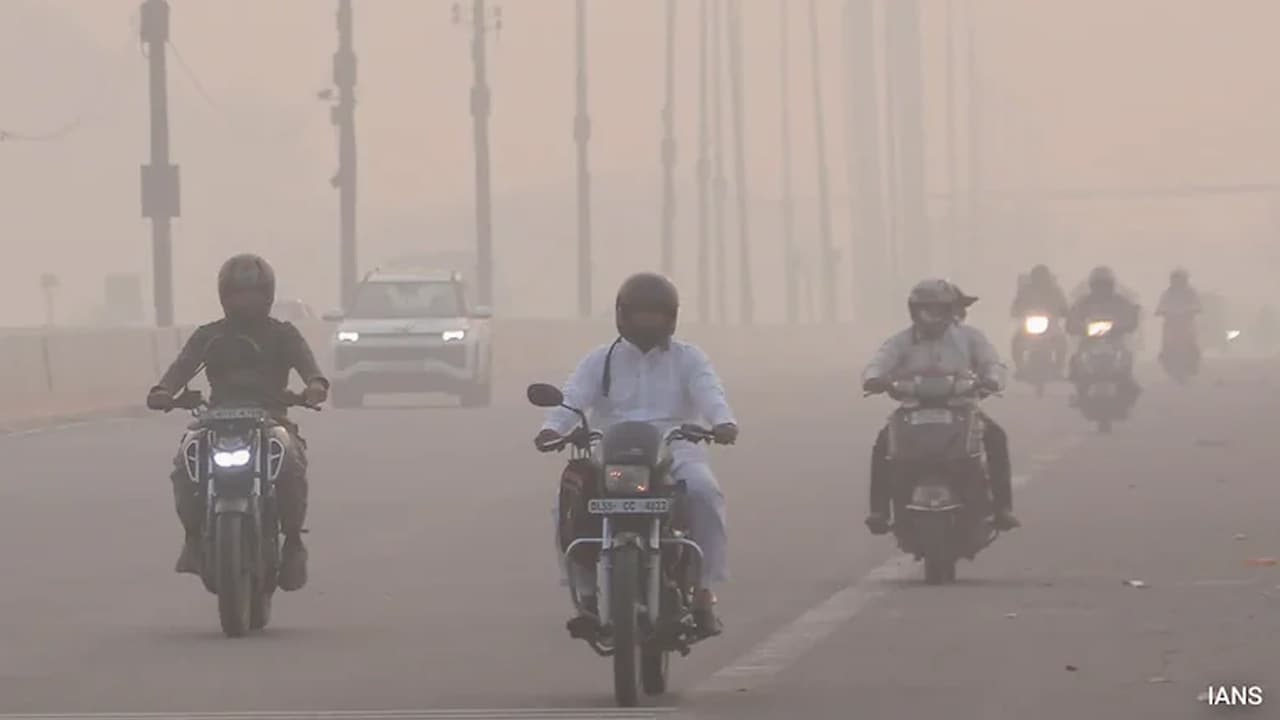
Monday November 09, 2026Every November, Delhi performs the same ritual. We check the AQI before stepping outdoors, children are kept indoors, masks reappear, schools consider shutting, construction is restricted, and emergency meetings are convened. Politicians blame the weather, neighbouring states, farmers, or firecrackers. And then, as the season changes, the urgency d...
दीवाली की चौखट पर दिल्ली में सांसों का संकट: 30 साल की स्टडी ने हरियाली को लेकर क्या बताया?
Thursday November 05, 2026अध्ययन में हरियाली की मात्रा के साथ उसके फैलाव और आपसी जुड़ाव को भी महत्वपूर्ण पाया गया. जिन इलाकों में हरियाली ज्यादा बिखरी हुई थी, वहां सतही तापमान अधिक रहा. इसके विपरीत, बड़े और आपस में जुड़े हरित क्षेत्रों में तापमान कम पाया गया.
Opinion: Why Delhi's Smog Can't Be Fixed From SpaceDavid Fickling, Bloomberg
Monday October 19, 2026The clearest sign that Delhi is on a path to cleaner air would be a decline in the amount of paddy grown nearby, and therefore the acreage liable to be burned each year.
Don't Normalise Air Purifiers As Delhi Chokes | The Reason Why
Thursday December 11, 2025More than 90 cities in the world's top 100 polluting list are in India. With every passing year, the AQI is rising, reaching 'hazardous' levels.
Blog | Well Done, Delhi. You've Turned Lung Sacrifice Into A Badge Of HonourSaikat Kumar Bose
Monday November 10, 2025Till some years back, Delhiites would ask angry questions to those in power about the capitals annual tryst with toxic air. This has changed. Those in the driving seat dont see the need to answer now.