- Home/
- Usha And NEEPCO Are Empowering Women Through Skill Enhancement And Employment Prospects
Usha And NEEPCO Are Empowering Women Through Skill Enhancement And Employment Prospects
Team NDTV | Updated: January 03, 2024 16:28 IST
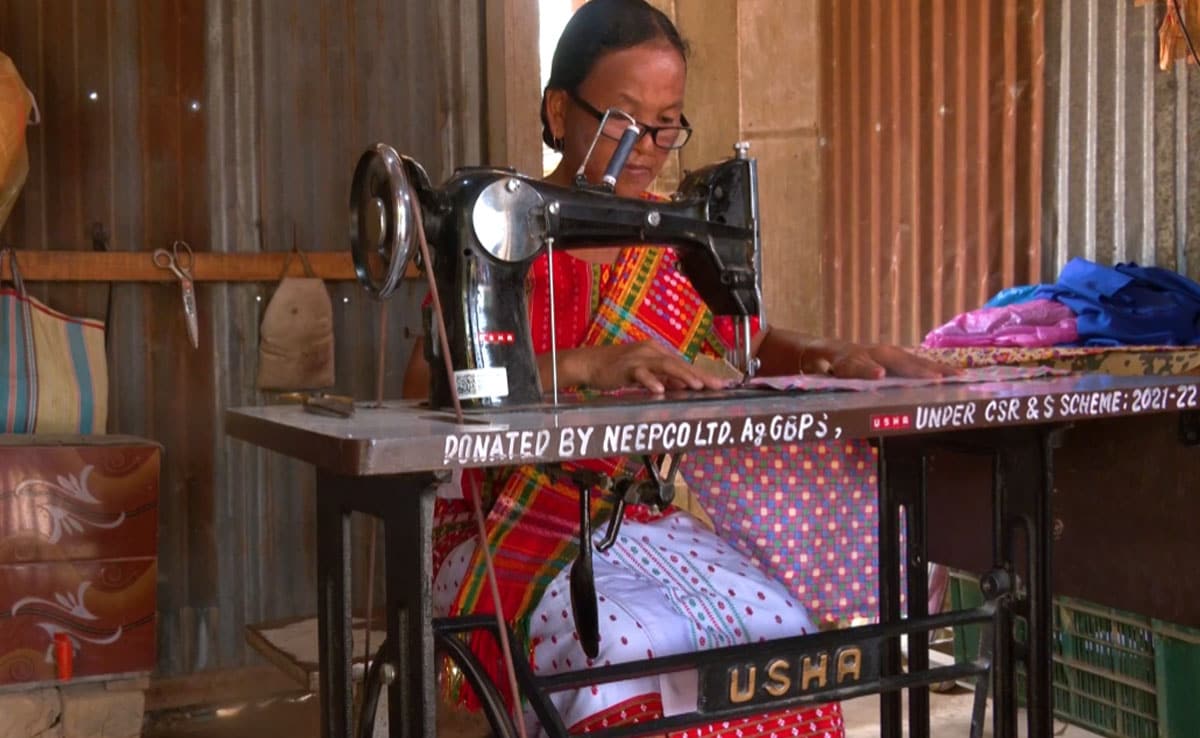
The Usha Silai School programme is a social project aimed at empowering women in rural regions by teaching them how to sew. Recognising the potential for socio-economic transformation through skill development, Usha has joined hands with various government bodies over the years to establish Usha Silai Schools in rural areas. The collaboration between Usha International and government bodies underscores a shared commitment to fostering grassroots development and promoting inclusive growth. By facilitating access to vocational training in remote regions, this collaboration not only equips individuals with sewing and entrepreneurial skills but also contributes to the larger goal of women's empowerment and community development.
Also Read: Meet Balamani, Usha Super Achiever Bringing Transformative Change In Telangana's Jadcherla
Kalpana Debbarma lives in Desharampara village of West Tripura. Before her marriage, Kalpana had a passion for clothing and used to sell ready-made garments. She was also interested in designing. At the age of 22, she married a tailor, and it was then that she expressed a desire to learn the art of sewing. Recalling the tale, Kalpana said,
When I got married, I was given a sewing machine. My husband already knew how to sew. He taught me some sewing and it became a source of income for us.
But, Kalpana's husband earned a mere Rs. 5,000 a month, which wasn't sufficient to run a household. Around that time, Usha along with North Eastern Electric Power Corporation (NEEPCO) was running a nine-day training programme to teach women how to sew. Usha and NEEPCO equipped Kalpana with a valuable skill that allowed her to pursue her hobby while also effectively managing her household.
Kalpana Debbarma explained,
At the training provided by Usha and NEEPCO, I learned to sew properly. We were taught how to design different things like dresses and kurta. After coming back from the training, I started making and selling different products. This improved our income and helped me provide my children with a good education.
Today, Kalpana and her husband share the finances and take care of the household expenses together.
Also Read: This Silai School Teacher Is Helping Women In Odisha Become Financially Independent
The success of the silai schools stems from the pivotal role played by the trainers. These trainers undergo rigorous training to acquire essential sewing and embroidery skills and knowledge. Their main role is to teach diverse sewing techniques and skills, encompassing stitching, embroidery, and tailoring, to the women within the community. In addition to practical skills, the trainers also educate the women on theoretical aspects of sewing, such as understanding the fabric and its qualities, measurement, pattern making, and garment construction. Their first and only priority is to ensure that their students gain a thorough understanding of the subject.
The Usha Silai School offers flexible and customised training curriculum to different government entities, as well as corporates and public sector undertakings (PSUs) under their corporate social responsibility (CSR).
Virendra Vegad, Trainer at the Usha Silai School explained, Despite them not being educated, we have to teach women how to calculate, multiply and divide during the cutting. We improvise to teach them. This will help them change their lives.
Also Read: 37-Year-Old Anita Bal Is Stitching A Story Of Self-Sufficiency With Usha Silai School
The North Eastern Electric Power Corporation Limited (NEEPCO), Usha's partner in this remarkable endeavor, is a state-owned enterprise engaged in the production and dissemination of electricity in the Northeastern region of India. By establishing a comprehensive partnership, NEEPCO and Usha have leveraged their strengths to foster sustainable energy and empower women through skill enhancement and valuable employment prospects.
Nanda Basumatary, Head of Power Station at NEEPCO, Tripura said,
We decided to partner with Usha because, with skill or knowledge of sewing, the local ladies in the area, who are underprivileged, are becoming self-reliant. In the future, they can impart their knowledge to their nearest neighbours or relatives. Accordingly, the economic growth in and around the village or locality would be developed.
Usha and NEEPCO firmly believe that empowering the women of rural India will not only enable them to support their households, but it will make them role models for other women in their community. And for the women, not only will they receive valuable training from Usha Silai School and NEEPCO, but they will also be provided a complete kit with which to start their business.
Kalpana and lakhs of other women like her can now take care of their household while also running a business due to Usha and a public sector enterprise like NEEPCO.
Also Read: Empowering Women Through Skill And Tradition: The Usha Silai Initiative In Karauli
Published: January 05, 2024 16:28 IST
also read
Important To Implement Environmental Rules To Sustain Gains Of Lockdown: Union Environment Minister Prakash Javadekar
PTIMumbai Based Green Champion Is Striving To Make The City The Cycling Capital By 2030
Reported by Ambika Singh KahmaDr Naresh Trehan On The Learnings From The Coronavirus Pandemic And How Technology Can Help Save The Environment
Written by Aastha Ahuja, Edited by Sonia Bhaskar
 Written by Sneha Mordani | Wednesday November 25, 2026
One person dies every 2nd day in Delhi due to Lung Cancer reveals data from an RTI query. Top Delhi Chest Surgeon says the number of a gross underestimate.
- Written by Debosmita Ghosh | Wednesday November 25, 2026
6,581 lung cancer cases were reported at AIIMS, Ram Manohar Lohia (RML) Hospital and the Delhi State Cancer Institute (DSCI) between January 1, 2020, and July 31, 2026. Safdarjung Hospital did not provide its total number of cases but reported 393 lung cancer deaths.
- Written by Shreya Goswami | Wednesday November 25, 2026
Air pollution may increase the risk of Alzheimer's disease and dementia by disrupting the brain's immune cells, a new study finds. With Indian cities facing high PM2.5 levels, researchers' findings raise fresh concerns about the long-term neurological effects of polluted air.
- Written by Amit Chaturvedi | Wednesday November 25, 2026
The sources of pollution identified by the study include vehicular traffic, construction, and commercial sources. It also said that stubble burning contributes to seasonal deterioration in the air quality in Delhi and areas around it.
- Wednesday November 25, 2026 , New Delhi
Air quality in Delhi remained in the poor category, with four monitoring stations recording 'very poor' readings.



................................ Advertisement ................................





Opinion | Delhi Has Every Pollution Control Policy - Except One That Works
Monday November 09, 2026Every November, Delhi performs the same ritual. We check the AQI before stepping outdoors, children are kept indoors, masks reappear, schools consider shutting, construction is restricted, and emergency meetings are convened. Politicians blame the weather, neighbouring states, farmers, or firecrackers. And then, as the season changes, the urgency d...
दीवाली की चौखट पर दिल्ली में सांसों का संकट: 30 साल की स्टडी ने हरियाली को लेकर क्या बताया?
Thursday November 05, 2026अध्ययन में हरियाली की मात्रा के साथ उसके फैलाव और आपसी जुड़ाव को भी महत्वपूर्ण पाया गया. जिन इलाकों में हरियाली ज्यादा बिखरी हुई थी, वहां सतही तापमान अधिक रहा. इसके विपरीत, बड़े और आपस में जुड़े हरित क्षेत्रों में तापमान कम पाया गया.
Opinion: Why Delhi's Smog Can't Be Fixed From SpaceDavid Fickling, Bloomberg
Monday October 19, 2026The clearest sign that Delhi is on a path to cleaner air would be a decline in the amount of paddy grown nearby, and therefore the acreage liable to be burned each year.
Don't Normalise Air Purifiers As Delhi Chokes | The Reason Why
Thursday December 11, 2025More than 90 cities in the world's top 100 polluting list are in India. With every passing year, the AQI is rising, reaching 'hazardous' levels.
Blog | Well Done, Delhi. You've Turned Lung Sacrifice Into A Badge Of HonourSaikat Kumar Bose
Monday November 10, 2025Till some years back, Delhiites would ask angry questions to those in power about the capitals annual tryst with toxic air. This has changed. Those in the driving seat dont see the need to answer now.