


- Home/
- USHA Silai School Helping Nithari Village Put Its Dark Past To Rest
USHA Silai School Helping Nithari Village Put Its Dark Past To Rest

Delhi:
Located in Noida, the western part of Uttar Pradesh, is a village named Nithari which has been living in the shadows of Noida serial murders since 2006. The horrific crime and its sensational revelation shook the entire country and filled the men and women of the village with a constant fear of stepping out of their houses.
"Children were lost during the Nithari murders" said Manisha, a resident of the village. The agony of the past haunts the present, as Manisha gathers her thoughts to talk about the killings that left more than 19 children dead in the house of businessman Moninder Singh Pandher, where he lived with his servant and accomplice in the crime.
Also Read: Life After Silai School: Women In Nagaland Are Now Sewing Their Own Destinies
"Mothers feared for their children following the disappearances" she said. "They hesitate, till date, in letting their children go out the house or even attend school."
After the case was solved, the women remained in the confines of their homes keeping their children with them at all times, said another resident named Radha.
Similar feelings were echoed by many residents and changing their mindset proved to be a tougher challenge than earlier imagined. Many organisations came forward to help women start a livelihood in the confines of a safe environment, especially for their children. One of such organisation was USHA International.
Also Read: USHA Sewing Schools: The Solution To Andhra Pradesh's Migration Problem?
USHA International's programme - the USHA Silai School that has been helping underprivileged women all over the country and even internationally to build a sustainable livelihood for themselves and their families, came to Nithari as a light at the end of the tunnel.
The area of Nithari is that of migrant laborers and in most houses women are required to step out of the house and hold low-grade jobs to sustain their family said Padmani Kumar, assistant director of the Joint Women's Programme (JWP) organisation.
The organisation has been working towards empowering women of similar villages where opportunities are less and trust among people is very low.
Also Read: Silai School Initiative Extends Support To Men From Tamil Nadu
We thought if we could provide protection to these women in their work atmospheres or learning centers and also set up creches for their children, then they could be taught valuable skills for their betterment said Jyotsna Chatterjee, director, JWP.
Teaching new skills might not have been an option in the village had there not been enough resources to establish a safe ecosystem.
USHA International came in to help when we needed it the most, she said. They helped in setting up silai centers and providing the resources needed to begin sewing classes.
"I didn't want to work in someone's house" said Sheela, a Nithari resident. "It was my dream to study and have a respectable job." Her dream became a reality when she enrolled herself for the USHA Silai School programme.
Today, Sheela earns nearly Rs. 6000 per month from conducting sewing classes, a skill she learnt at the learning centers with equipment provided by Usha Silai School at the completion of the programme.
I received a lot of guidance from JWP and USHA (International), she said gratefully.
Sheela has been working with JWP for the past decade and has been not only teaching sewing, but is also helping out at the creche in order to give back to the society and help more women like her get free from the shackles of daily wage laborers.
The main thing is to empower women, said Krishna Sriram, executive director, USHA International. We believe if a women is trained well and is earning then she is more than capable of evolving her life and sustaining her family.
His words are a true reflection of the progress seen at every place where USHA Silai School has touched lives of the underpriviledged.
The training being provided at Nithari is helping the village to rise out of the shadows of its dark past. The school has emerged as a ray of hope that is empowering families to rebuild their lives.
Also Read: Silai School Initiative Takes Its Mission Of Changing Lives To West Bengal
Published: June 12, 2018 10:37 IST
also read
Important To Implement Environmental Rules To Sustain Gains Of Lockdown: Union Environment Minister Prakash Javadekar
PTIMumbai Based Green Champion Is Striving To Make The City The Cycling Capital By 2030
Reported by Ambika Singh KahmaDr Naresh Trehan On The Learnings From The Coronavirus Pandemic And How Technology Can Help Save The Environment
Written by Aastha Ahuja, Edited by Sonia Bhaskar
 Written by Sneha Mordani | Wednesday November 25, 2026
One person dies every 2nd day in Delhi due to Lung Cancer reveals data from an RTI query. Top Delhi Chest Surgeon says the number of a gross underestimate.
- Written by Debosmita Ghosh | Wednesday November 25, 2026
6,581 lung cancer cases were reported at AIIMS, Ram Manohar Lohia (RML) Hospital and the Delhi State Cancer Institute (DSCI) between January 1, 2020, and July 31, 2026. Safdarjung Hospital did not provide its total number of cases but reported 393 lung cancer deaths.
- Written by Shreya Goswami | Wednesday November 25, 2026
Air pollution may increase the risk of Alzheimer's disease and dementia by disrupting the brain's immune cells, a new study finds. With Indian cities facing high PM2.5 levels, researchers' findings raise fresh concerns about the long-term neurological effects of polluted air.
- Written by Amit Chaturvedi | Wednesday November 25, 2026
The sources of pollution identified by the study include vehicular traffic, construction, and commercial sources. It also said that stubble burning contributes to seasonal deterioration in the air quality in Delhi and areas around it.
- Wednesday November 25, 2026 , New Delhi
Air quality in Delhi remained in the poor category, with four monitoring stations recording 'very poor' readings.


................................ Advertisement ................................


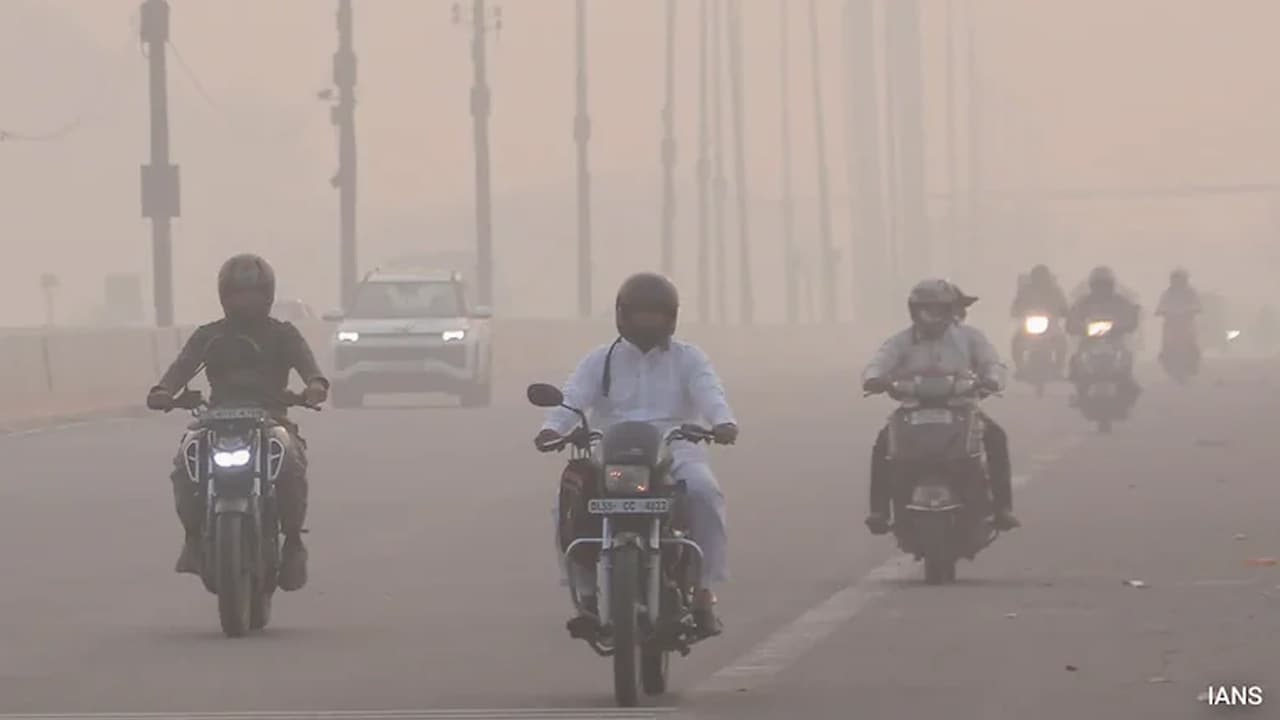

Opinion | Delhi Has Every Pollution Control Policy - Except One That Works
Monday November 09, 2026Every November, Delhi performs the same ritual. We check the AQI before stepping outdoors, children are kept indoors, masks reappear, schools consider shutting, construction is restricted, and emergency meetings are convened. Politicians blame the weather, neighbouring states, farmers, or firecrackers. And then, as the season changes, the urgency d...
दीवाली की चौखट पर दिल्ली में सांसों का संकट: 30 साल की स्टडी ने हरियाली को लेकर क्या बताया?
Thursday November 05, 2026अध्ययन में हरियाली की मात्रा के साथ उसके फैलाव और आपसी जुड़ाव को भी महत्वपूर्ण पाया गया. जिन इलाकों में हरियाली ज्यादा बिखरी हुई थी, वहां सतही तापमान अधिक रहा. इसके विपरीत, बड़े और आपस में जुड़े हरित क्षेत्रों में तापमान कम पाया गया.
Opinion: Why Delhi's Smog Can't Be Fixed From SpaceDavid Fickling, Bloomberg
Monday October 19, 2026The clearest sign that Delhi is on a path to cleaner air would be a decline in the amount of paddy grown nearby, and therefore the acreage liable to be burned each year.
Don't Normalise Air Purifiers As Delhi Chokes | The Reason Why
Thursday December 11, 2025More than 90 cities in the world's top 100 polluting list are in India. With every passing year, the AQI is rising, reaching 'hazardous' levels.
Blog | Well Done, Delhi. You've Turned Lung Sacrifice Into A Badge Of HonourSaikat Kumar Bose
Monday November 10, 2025Till some years back, Delhiites would ask angry questions to those in power about the capitals annual tryst with toxic air. This has changed. Those in the driving seat dont see the need to answer now.



Comments
