


- Home/
- Follow The Journey Of Silai Fashion Label: Women In Kolkata And Puducherry Get To Work With Their Fashion Designer Mentors
Follow The Journey Of Silai Fashion Label: Women In Kolkata And Puducherry Get To Work With Their Fashion Designer Mentors

Delhi: 'My name is Sayantan Sarkar and I am working with USHA's Silai team of Dakhin Bangla (South Bengal),' says the designer who is also the owner of his own fashion brand named Sayantan Sarkar - Design Studio. Sayantan is one of the four designers donning the role of creative influencers for the 'Silai' fashion label project. Taking inspiration from the suburbs of Bengal, Sayantan looked to present the traditional with a contemporary flair, in the fashion line he was creating with the women from the Silai school.
Most designs are inspired by the (USHA Silai School) women who work here, he said. It includes individual characteristics of each of them, aim is to show that despite living in far flung interiors of the country, they are still aware of what's fashionable and what's not.
He guided the women from the southern cluster of the state to design and sew garments that reflect the culture of Kolkata. As part of the production process, Sayantan travelled extensively through the city with the women in his team. This tour was to encourage them to draw inspiration from the character of the place. He hoped that walking through various streets and markets, will encourage the women to think out of the box when working out the patterns and textures of the garments.
We saw places with a certain type of flowers that became the floral prints we used and other inspirations came from the pictures we clicked of the ponds and the trees he said. So, it is completely about the stories of these women and the ambience they live and work in.
Similar technique was used by Sreejith Jeevan, designer and owner of ROUKA and mentor to the women from the Puducherry cluster.
"It first began with evaluating what the women were doing and the products that they were making to understand the skill set they had," said Sreejith who was determined to break the mould in which these women were working in and encourage them to try their hands at newer designs.
The skills they had were of basic sewing, so our aim was to provide finishing to their existing techniques, in order to introduce them to the market that USHA's Silai label was to launch in.He further adds, since, these women were only used to creating simple garments, my job was to give them a new inspiration, Sreejith said. So, why not hold a design workshop?, he wondered.
Sreejith's design workshop taught the women new techniques like patch-work, print development and new cutting models for clothes like chudidaars and trousers.
As the two designers worked their way to understanding their team's skills, training them in areas they lacked and preparing the women to create something they had never done before, the overall collection started to fall in place. Both clusters stuck to their regions' ethos to which the women of Silai School contributed passionately and ended up with a fashion collection that was both modern and a glimpse into the journey of the lives of these women.
Usha International has been expanding its network of Silai Schools across India and overseas to Nepal and Sri Lanka for the past seven years. However, this year, the goal was to do more than just provide sewing training to the underprivileged women around and outside the country.
Our (Usha International) chairman, Krishna Shriram, thought that the idea of providing sewing training and enhancing the skills of these women was great but we could do more to boost their creativity said Priya Somaiya, executive director of USHA Social Services. Since a lot of fashion events take place in India, we thought this could be the best platform to showcase the talents of these women. This led us to conceptualise the idea of the fashion label 'Silai'.
79 participants from Usha Silai across the country, started this unique journey of redefining their skill and creating a fashion label. Only 33 of them managed to make it to the next stage of the shortlisting process and reach the most crucial stage of the journey - the production of the final garments. Following another round of assessment process, the women were divided into four clusters based on four specific regions of India.
We have seen the work that USHA International has been doing at the grass-root level all these years and are glad to be partnering with them to launch their new label said Jaspreet Singh Chandok, Vice President and Head of Fashion at IMG Reliance.
It's a dream run for these Silai school women. From back and beyond corners of India, where they had their own tailoring shops or silai schools, to taking centrestage at a prestigious event like Lakme Fashion Week, it is what fairy tales are made of.
Published: February 26, 2018 12:08 IST
also read
Important To Implement Environmental Rules To Sustain Gains Of Lockdown: Union Environment Minister Prakash Javadekar
PTIMumbai Based Green Champion Is Striving To Make The City The Cycling Capital By 2030
Reported by Ambika Singh KahmaDr Naresh Trehan On The Learnings From The Coronavirus Pandemic And How Technology Can Help Save The Environment
Written by Aastha Ahuja, Edited by Sonia Bhaskar
 Written by Sneha Mordani | Wednesday November 25, 2026
One person dies every 2nd day in Delhi due to Lung Cancer reveals data from an RTI query. Top Delhi Chest Surgeon says the number of a gross underestimate.
- Written by Debosmita Ghosh | Wednesday November 25, 2026
6,581 lung cancer cases were reported at AIIMS, Ram Manohar Lohia (RML) Hospital and the Delhi State Cancer Institute (DSCI) between January 1, 2020, and July 31, 2026. Safdarjung Hospital did not provide its total number of cases but reported 393 lung cancer deaths.
- Written by Shreya Goswami | Wednesday November 25, 2026
Air pollution may increase the risk of Alzheimer's disease and dementia by disrupting the brain's immune cells, a new study finds. With Indian cities facing high PM2.5 levels, researchers' findings raise fresh concerns about the long-term neurological effects of polluted air.
- Written by Amit Chaturvedi | Wednesday November 25, 2026
The sources of pollution identified by the study include vehicular traffic, construction, and commercial sources. It also said that stubble burning contributes to seasonal deterioration in the air quality in Delhi and areas around it.
- Wednesday November 25, 2026 , New Delhi
Air quality in Delhi remained in the poor category, with four monitoring stations recording 'very poor' readings.


................................ Advertisement ................................

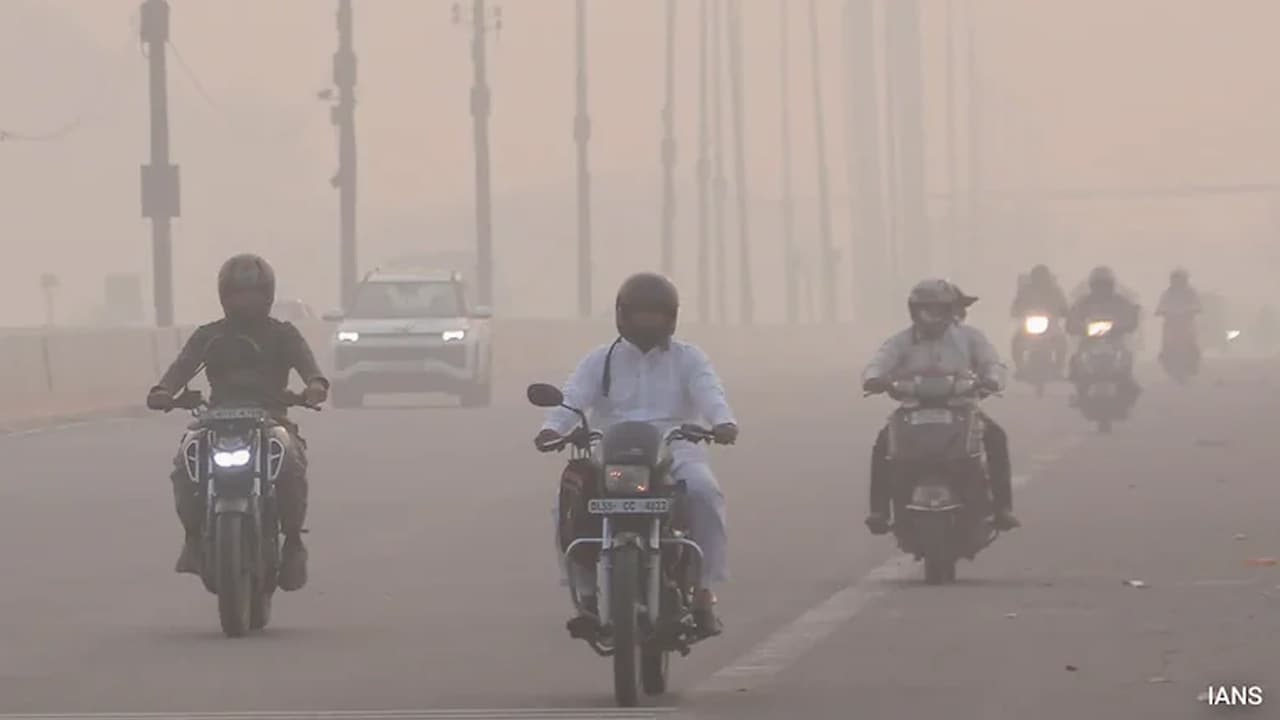

Opinion | Delhi Has Every Pollution Control Policy - Except One That Works
Monday November 09, 2026Every November, Delhi performs the same ritual. We check the AQI before stepping outdoors, children are kept indoors, masks reappear, schools consider shutting, construction is restricted, and emergency meetings are convened. Politicians blame the weather, neighbouring states, farmers, or firecrackers. And then, as the season changes, the urgency d...
दीवाली की चौखट पर दिल्ली में सांसों का संकट: 30 साल की स्टडी ने हरियाली को लेकर क्या बताया?
Thursday November 05, 2026अध्ययन में हरियाली की मात्रा के साथ उसके फैलाव और आपसी जुड़ाव को भी महत्वपूर्ण पाया गया. जिन इलाकों में हरियाली ज्यादा बिखरी हुई थी, वहां सतही तापमान अधिक रहा. इसके विपरीत, बड़े और आपस में जुड़े हरित क्षेत्रों में तापमान कम पाया गया.
Opinion: Why Delhi's Smog Can't Be Fixed From SpaceDavid Fickling, Bloomberg
Monday October 19, 2026The clearest sign that Delhi is on a path to cleaner air would be a decline in the amount of paddy grown nearby, and therefore the acreage liable to be burned each year.
Don't Normalise Air Purifiers As Delhi Chokes | The Reason Why
Thursday December 11, 2025More than 90 cities in the world's top 100 polluting list are in India. With every passing year, the AQI is rising, reaching 'hazardous' levels.
Blog | Well Done, Delhi. You've Turned Lung Sacrifice Into A Badge Of HonourSaikat Kumar Bose
Monday November 10, 2025Till some years back, Delhiites would ask angry questions to those in power about the capitals annual tryst with toxic air. This has changed. Those in the driving seat dont see the need to answer now.



Comments
