- Home/
- Budget 2026: A Win For Tim Cook In India's Response To Donald Trump's Tariffs
Budget 2026: A Win For Tim Cook In India's Response To Donald Trump's Tariffs
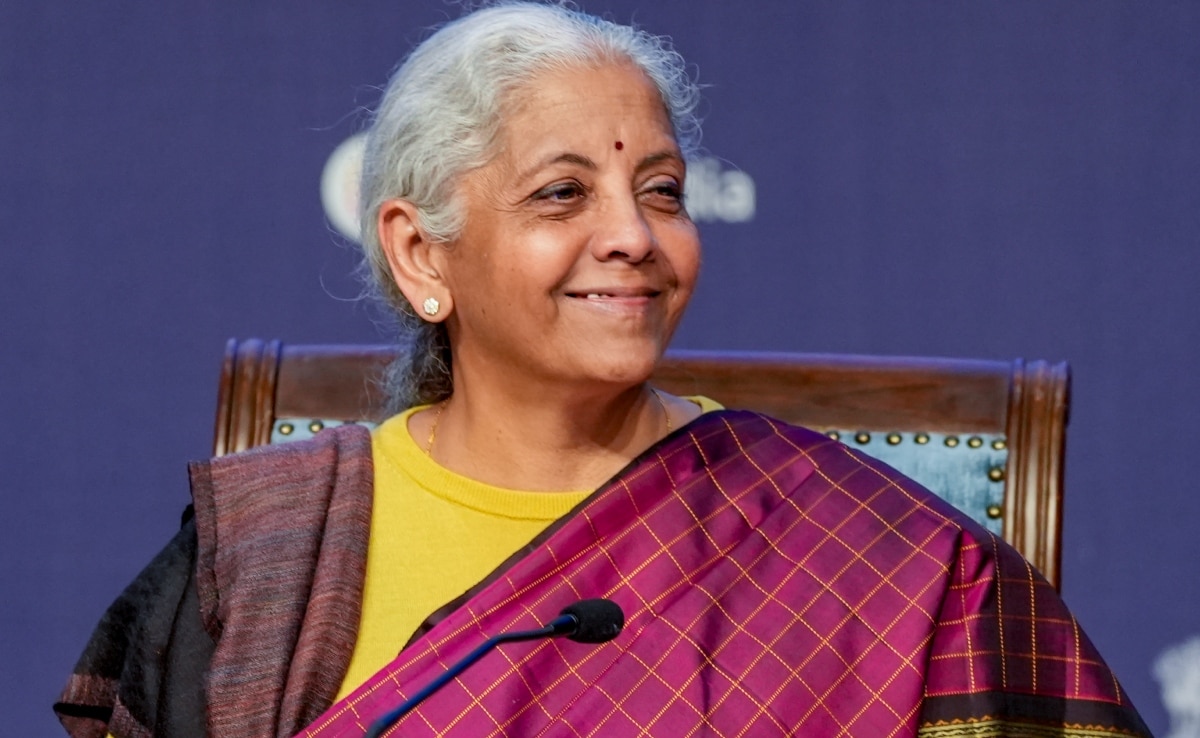
Budget 2026 delivered a tax breakthrough for Apple and similar foreign manufacturers, while rolling out targeted support for Indian exporters hurt by sustained U.S. tariffs introduced under Donald Trump.
The twin moves aim to boost high-end electronics manufacturing and protect India's labour-intensive sectors, particularly seafood, textiles, and leather, from global trade volatility.
The government said foreign companies can now freely provide machinery to their Indian contract manufacturers operating in bonded customs zones, without creating a tax liability in India. The exemption applies until the 2030-31 tax year and is designed to promote electronics manufacturing for export.
"To promote manufacturing of electronic goods for a contract manufacturer," the Budget said, "any income arising on account of providing capital goods, equipment or tooling to a contract manufacturer, being a company resident in India, is eligible for exemption."
Companies like Apple had lobbied for this change, arguing that ownership of production machinery risked triggering income tax on Indian sales. As a result, local contract manufacturers such as Foxconn and Tata had previously borne the equipment cost.
"This exemption removes a key deal-breaking risk for electronics manufacturing in India," Shankey Agrawal, partner at BMR Legal, was quoted in a Reuters report. "The result is faster scale-up and greater confidence for global electronics players to manufacture in India."
The policy applies only to customs-bonded areas, zones technically outside India's customs jurisdiction. Any sales within India from these facilities will still attract import duties, maintaining the export-first focus.
The move comes amid Apple's growing footprint in India. Counterpoint Research says iPhone's market share in India has doubled to 8% since 2022, while India's share of global iPhone production has quadrupled to 25%.
A cushion from Trump's tantrums
But beyond electronics, the Budget offers key relief to labour-intensive industries facing fallout from Trump-era tariffs, which remain in place, up to 50% on certain categories.
For seafood exporters, Sitharaman increased the cap on duty-free import of specified inputs from 1% to 3% of the previous year's export turnover, calculated on a Free on Board (FOB) basis, the value of goods at the port of departure, excluding shipping and insurance.
"I propose to increase the limit for duty-free imports of specified inputs used for processing sea foods for export from the current one per cent to three per cent of the FOB value of the previous year's export turnover," Sitharaman said.
Footwear and leather exporters also received upstream support. "I also propose to allow duty-free imports of specified inputs, which is currently available for exports of leather or synthetic footwear, to exports of shoe uppers as well."
To ease compliance burdens, the government extended the export window for garments and leather products from 6 months to 1 year.
India's textile industry, responsible for 12% of exports and employing millions, received further support through the Textile Expansion and Employment Scheme, which offers capital assistance for machinery, testing and certification upgrades. A new National Fibre Scheme aims to reduce dependence on imports of natural and synthetic fibres like silk, wool, jute and man-made materials.
To prevent closures in export-dependent Special Economic Zones (SEZs), Sitharaman announced a one-time relaxation allowing limited sales to India's domestic market at concessional duties. "I propose...to facilitate sales by eligible manufacturing units in SEZs to the DTA (Domestic Tariff Area) at concessional rates of duty," she said. Between FY21 and FY25, 466 SEZ units shut down across seven zones.
The Budget also lowered input costs in high-priority sectors such as clean energy, defence, and logistics. Customs duty exemptions were extended to capital goods used for manufacturing lithium-ion battery cells, battery energy storage systems, solar glass, and equipment for processing critical minerals.
"It is proposed to exempt basic customs duty on raw materials imported for the manufacture of parts of aircraft to be used in maintenance, repair or overhaul requirements by units in the defence sector," Sitharaman said.
For nuclear power, duty exemptions for project-related imports are extended through 2035 and now cover all plant sizes.
To address longstanding trade logistics challenges, the Budget allocated Rs 10,000 crore for domestic container manufacturing, aiming to reduce India's dependence on Chinese suppliers and insulate exporters from global shipping disruptions.
................................ Advertisement ................................

Opinion: China Has Helped India's Cause With TrumpMihir Sharma, Bloomberg
Thursday June 29, 2017Very little was expected in India from Prime Minister Narendra Modi's visit to the U.S., and for good reason: Modi had gone out of his way to cultivate a personal relationship with Barack Obama, including famously pouring out a cup of tea for him and the cameras when Obama visited India.
Opinion: Modi's US Speech Was Letter Perfect, Ticked Off Every BoxAshok Malik
Friday June 10, 2016Without taking recourse to the old wailing sheet and cribbing to everyone about Islamabad, Modi has devised a mechanism to shape the debate to India's advantage.
Opinion: Modi Ignored Advice To Make Obama Squirm. It Has Paid Off.Jyoti Malhotra
Saturday June 04, 2016The visit to the US in the coming week, in fact, brings Obama's relationship with both Modi and India full circle.
Blogs: कादम्बिनी के कीबोर्ड से : क्या परमाणु करार पर पीछे हटे हम?
Sunday February 08, 2015असल में परमाणु रिएक्टरों में हादसे की सूरत में जो हर्जाना होगा, वह रिएक्टर चलाने वाले को यानि ऑपरेटर को देना होगा। कानून में यह प्रावधान है कि अगर ऑपरेटर चाहे तो वह सामान और ईंधन आपूर्ति करने वाले पर हर्जाने के लिए दावा कर सकता है। लेकिन यहां पर समझने वाली बात यह है कि ऑपरेटर कौन होगा।
Opinion: Mani-Talk: Modi is Turning Us into America's New PakistanMani Shankar Aiyar
Thursday February 12, 2015In "Cold War II", battlefield could be India, writes Mani Shankar Aiyar.
Opinion: Obama Had Pointed Message for Modi 2.0Shashi Tharoor
Wednesday January 28, 2015Clear warning that PM will fail if he reverts to Modi 1.0, writes Shashi Tharoor.
Opinion: What Pakistan Makes of Obama-Modi ChemistryMehr Tarar
Tuesday January 27, 2015Acceptance of Modi's goal-oriented leadership, writes Mehr Tarar.