- Home/
- Opinion | Why Trump's Deals With South Korea And Japan Should Be A Warning For India
Opinion | Why Trump's Deals With South Korea And Japan Should Be A Warning For India

Vivek Mishra, Abhishek Sharma
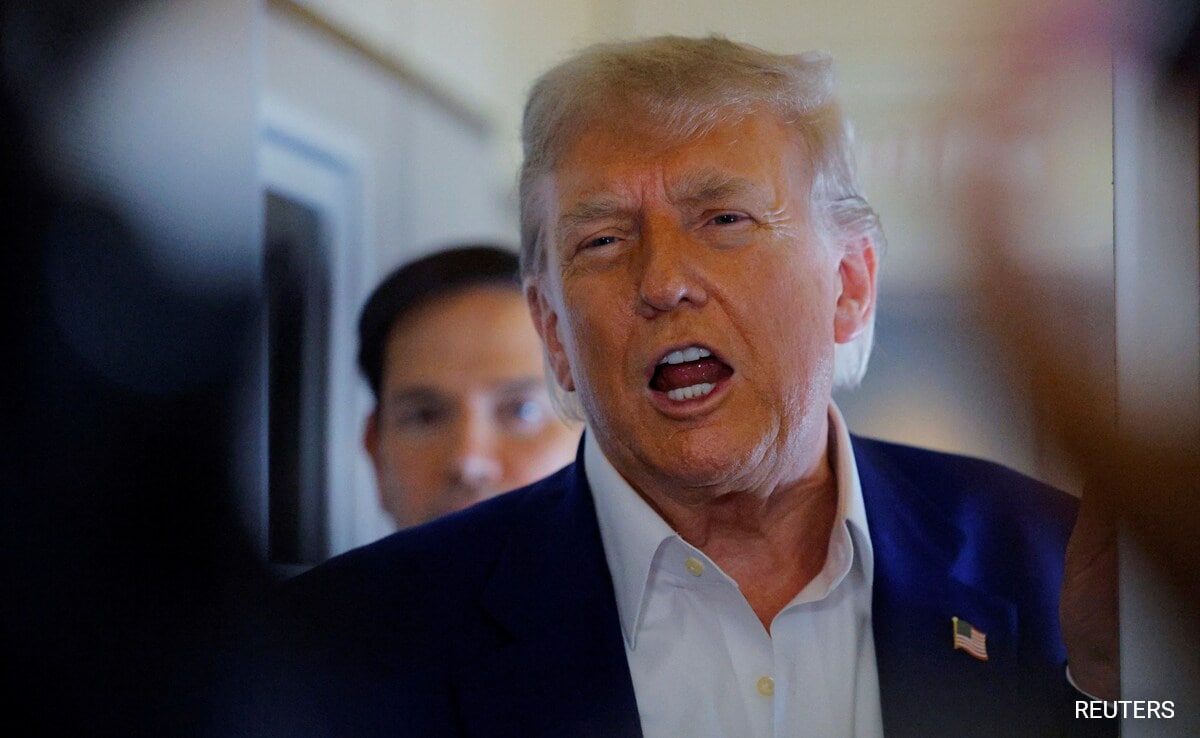
On February 2, 2026, President Donald Trump and Prime Minister Narendra Modi announced the finalisation of a framework for an interim agreement between the US and India, ending months of economic uncertainty. However, on February 20, the US Supreme Court struck down most of Trump's tariffs, ruling that he exceeded his tariff authority in using a law reserved for national emergency. India and the US deferred their trade talks following the order, with India saying that it is studying its implications. As for the US Supreme Court ruling, uncertainty still hangs over the question of tariffs, because soon after the order, Trump announced that he would soon sign an order to increase global tariffs to 15%, the maximum allowed under a never-used trade law. As of now, global tariffs of 10% have been in force since 12.01 am on Tuesday.
As the world waits for clarity, it may be important to focus on the challenges that could arise if a deal is indeed finalised between India and the US. Based on the current broad outline, foremost among the challenges New Delhi could face is the possibility of changing goalposts and pressure tactics. Trump's dealings with South Korea and Japan have become cautionary tales highlighting the difficulty of negotiating with Trump's America.
Trump's America Is Unreliable
The US's trade deals and its engagements with South Korea and Japan offer a window into the kinds of challenges India could run into. Three trends are noteworthy: expansive use of tariffs, strategic miscommunication and divergences, and shifting goalposts.
As part of the trade deal, South Korea and Japan pledged USD 350 billion and USD 500 billion in investments in the US, respectively, in exchange for a reduction in tariffs on their exports. Nonetheless, despite the deal, their economic relations with the US remain on edge due to the looming uncertainty over tariffs, their expansiveness and the arbitrariness of their application. While much of this can be attributed to President Trump's impulsive personality, an amorphous definition of the US' national security and leaning towards business interests over the administration, these are equally consequential.
How Trump Arm-Twisted S. Korea
Increasingly under Trump, tariffs have now become a toolkit of coercion to achieve political objectives beyond trade. This has emerged as the first challenge for the US's allies. Economic ties are no longer isolated from other aspects of bilateral relations. Jamieson Greer, the US Trade Representative, cited South Korea's non-adherence to its digital services commitment as another reason for the tariff increase, indirectly hinting at the investigation against Coupang, a US technology company operating in South Korea. In the case of the India-US trade agreement, one of the biggest impediments is India's import of Russian oil. Section 4 of the Executive Order signed by Trump on February 6 this year establishes a monitoring mechanism as a pressure point.
The second challenge is related to strategic communication and divergences. In the case of South Korea, there has been significant misunderstanding, despite numerous meetings at the highest level, including with foreign and industry ministers, and even the Prime Minister. For instance, Trump's characterisation of South Korea's delay in passing the trade agreement through the national assembly as "not living up to its deal" underscores a lack of understanding of both South Korea's political system and the details of the US-South Korea MoU, which does not mention any clear implementation timelines for the deal.
Japan Still Confused
While South Korea has faced increased tariffs, Japan has been spared. However, despite close engagement with Japan, confusion persists regarding the agreement's details, particularly about processes, procedures and decision-making. Howard Lutnick, the US Commerce Secretary, has said that the US [read Donald Trump] can "pick and choose" which projects to select, irrespective of the merits of the project, directly contradicting Ryosei Akazawa, Lutnick's counterpart, who stressed the importance of profitability and the screening process. While mechanisms exist for Japan to turn down projects or delay them, the consequences could be severe: penalties and auto or reciprocal tariffs.
The third pertains to shifting goalposts. The Trump administration has often deviated from or changed the terms of agreements it had previously made with its allies. For instance, the deal with South Korea promised "no less favourable" terms than those offered by its adversaries (Taiwan) for semiconductor chips, particularly memory. However, the administration has changed the trade terms, after sealing a deal with Taiwan, exempting it from additional semiconductor tariffs quotas. The new deal links MFN (most favoured nation) status to company-specific investment in US manufacturing, effectively creating new conditions for countries like South Korea, thereby violating the earlier agreement. Following this deal, the administration announced 25% tariffs on chips, putting the South Korean memory chip companies in a difficult position. This new status quo signals the US's growing expectation of increased investment from South Korea even in the chip sector. Such a proposition ignores existing investments already made by South Korean companies such as SK Hynix and Samsung Electronics, which amount to roughly USD 40 billion. Additionally, there is a risk of a second tranche of tariff announcements on semiconductor imports and derivative products.
In each of the trade agreements with Korea and Japan, two observations cannot be ignored. Trump has the final authority over decisions, including reneging on the deal, and the agreements are not legally binding. Violating them has serious repercussions for the other party, but not for the US, given its predominant economic position.
New Delhi Must Know What It's Dealing With
Drawing from these three critical challenges, New Delhi must understand that it is dealing with a mercurial president and a volatile administration. In this context, it must take steps, keeping its economic interests at the centre, ensuring that in exchange for more liberalised policies, which facilitate greater imports and even investments, it receives preferential treatment over its competitors in critical sectors, such as pharmaceuticals and textiles. India must not fall into the trap of abstract assurances; it should demand specific concessions as it moves forward. In the context of the interim trade deal, New Delhi's choice of words such as "intends" when it comes to the "additional products" clause on the USD 500 billion trade promise shows that it understands Trump's playbook. That same understanding should underpin any future talks about a deal.
Based on Korea and Japan's experience, New Delhi can explore various mechanisms to ensure that the deal - if finalised - is honoured by the US. Constituting a joint ministerial committee to oversee the implementation of the agreement may be one such step. Additionally, New Delhi has some political leverage that it can utilise. South Korea and Japan do not enjoy direct political contact with the US President in the manner that India does through Sergio Gor, the newly appointed US Ambassador to India. It must make the most out of this comparative advantage. Additionally, like Japan (critical minerals and infrastructure), South Korea (shipbuilding), and even Taiwan (semiconductors), India can identify specific sectors where it has a potential upper hand and can contribute to bolstering US industrial manufacturing, such as pharmaceuticals, in exchange for sectoral concessions.
From Trump's lens, allies, partners, and friends alike will have to prove their loyalty at different intervals, depending on what upsets Trump. Washington will likely try to enforce certain decisions that may resonate beyond the obvious sectors, namely, energy and agriculture. How Delhi navigates this landscape amidst persistent attempts by the US to upset the apple cart remains to be seen.
(Vivek Mishra is Deputy Director with the Strategic Studies Programme at the Observer Research Foundation. Abhishek Sharma is a Junior Fellow with the Strategic Studies Programme at the Observer Research Foundation.)
Disclaimer: These are the personal opinions of the author
Vivek Mishra, Abhishek Sharma
................................ Advertisement ................................

Opinion: China Has Helped India's Cause With TrumpMihir Sharma, Bloomberg
Thursday June 29, 2017Very little was expected in India from Prime Minister Narendra Modi's visit to the U.S., and for good reason: Modi had gone out of his way to cultivate a personal relationship with Barack Obama, including famously pouring out a cup of tea for him and the cameras when Obama visited India.
Opinion: Modi's US Speech Was Letter Perfect, Ticked Off Every BoxAshok Malik
Friday June 10, 2016Without taking recourse to the old wailing sheet and cribbing to everyone about Islamabad, Modi has devised a mechanism to shape the debate to India's advantage.
Opinion: Modi Ignored Advice To Make Obama Squirm. It Has Paid Off.Jyoti Malhotra
Saturday June 04, 2016The visit to the US in the coming week, in fact, brings Obama's relationship with both Modi and India full circle.
Blogs: कादम्बिनी के कीबोर्ड से : क्या परमाणु करार पर पीछे हटे हम?
Sunday February 08, 2015असल में परमाणु रिएक्टरों में हादसे की सूरत में जो हर्जाना होगा, वह रिएक्टर चलाने वाले को यानि ऑपरेटर को देना होगा। कानून में यह प्रावधान है कि अगर ऑपरेटर चाहे तो वह सामान और ईंधन आपूर्ति करने वाले पर हर्जाने के लिए दावा कर सकता है। लेकिन यहां पर समझने वाली बात यह है कि ऑपरेटर कौन होगा।
Opinion: Mani-Talk: Modi is Turning Us into America's New PakistanMani Shankar Aiyar
Thursday February 12, 2015In "Cold War II", battlefield could be India, writes Mani Shankar Aiyar.
Opinion: Obama Had Pointed Message for Modi 2.0Shashi Tharoor
Wednesday January 28, 2015Clear warning that PM will fail if he reverts to Modi 1.0, writes Shashi Tharoor.
Opinion: What Pakistan Makes of Obama-Modi ChemistryMehr Tarar
Tuesday January 27, 2015Acceptance of Modi's goal-oriented leadership, writes Mehr Tarar.