- Home/
- How Donald Trump's Iran Deal Differs From Barack Obama's 2015 Agreement
How Donald Trump's Iran Deal Differs From Barack Obama's 2015 Agreement
Highlights
- President Donald Trump claims his Iran deal is better than Barack Obama's 2015 agreement
- Trump's deal is a brief framework, unlike Obama's detailed 160-page JCPOA
- Obama's deal had strict nuclear limits; Trump's is a general negotiation path
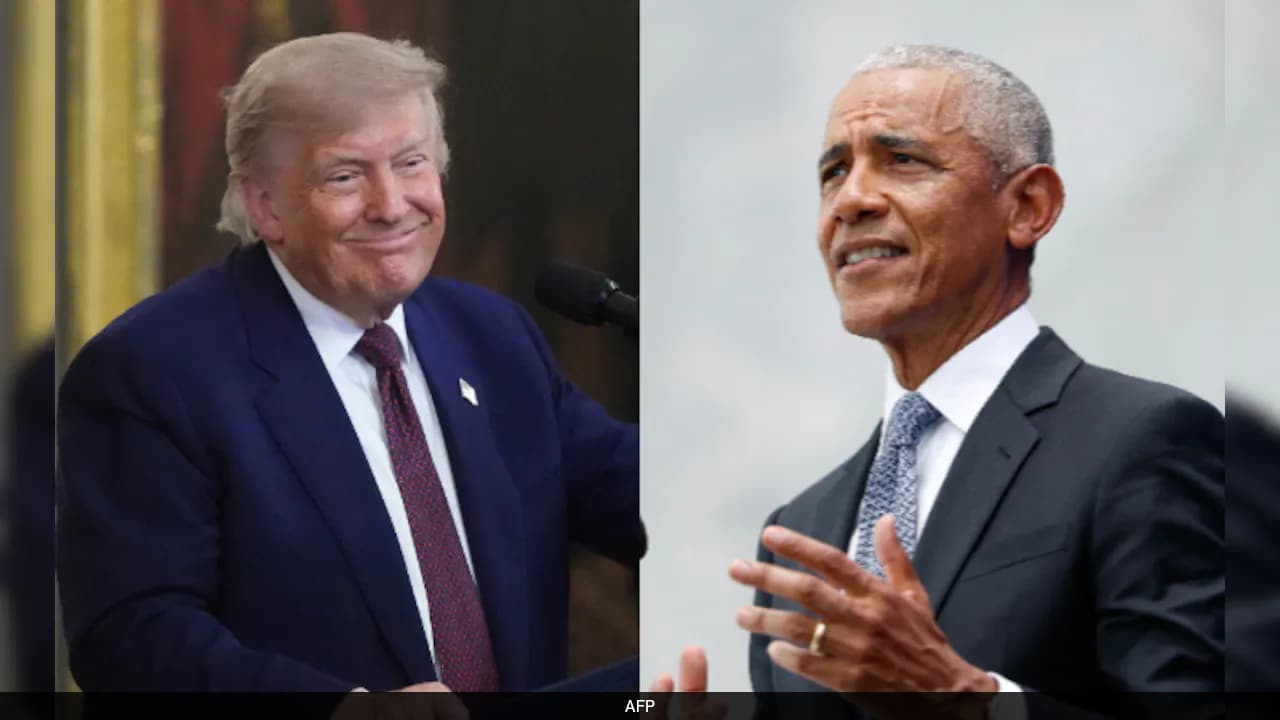
President Donald Trump has insisted that the deal he has reached with Iran is superior to the one that President Barack Obama sealed in 2015, while Trump's critics say at this point he has gotten much less and given up much more to Tehran.
Here is how the two agreements compare:
WHAT EACH DEAL IS - AND ISN'T
They are very different. The "memorandum of understanding" that Trump signed with Iran is not a final agreement but a one-and-a-half-page, 14-point framework negotiated on and off over a period of weeks.
It has launched a 60-day negotiation period to seek a full settlement of the nearly four-month war, with many hurdles yet to overcome on issues that include Iran's nuclear program, sanctions relief and the future of the Strait of Hormuz.
Obama's pact was a finished, detailed document titled the Joint Comprehensive Plan of Action (JCPOA) that extended to more than 160 pages. It was narrowly focused on restricting Iran's nuclear activities, with strict benchmarks. Trump, who condemned the Obama-era deal as "horrible", scrapped it in 2018.
Trump's approach has been bilateral, between the U.S. and Iran. Obama brought China, France, Germany, Russia, Britain and the European Union into negotiations that lasted about two years.
NUCLEAR PROGRAMME
Both deals involve a written commitment by Iran never to seek a nuclear weapon. Trump - who declared the nuclear threat his main reason for going to war - has insisted, incorrectly, that Tehran had never done so before.
Obama's deal placed tight limits on Iran's efforts to produce weapons-grade uranium, aimed at extending the "breakout" time it would need to produce a bomb. The U.S. government said Tehran had complied until Trump withdrew from the JCPOA.
Trump's interim deal outlines only a general path toward curbing Iran's nuclear activities, with no specific commitments from Tehran other than to discuss nuclear issues in the 60-day window.
It suggests Iran's willingness to resolve a dispute over its near-bomb-grade uranium stockpile, including the possibility of "down blending" onsite under supervision by the International Atomic Energy Agency, the U.N. nuclear watchdog, but leaves that decision for a final deal.
The JCPOA involved extensive international inspection, but the MOU does not call for any future reinstatement of that process.
SANCTIONS AND FROZEN ASSETS
Both deals involve sanctions relief and unfreezing of assets - which Iran is now even more anxious to receive to boost its crippled economy -- but in very different ways.
Obama eased some sanctions early on, but only after a comprehensive settlement was signed, and then phased in further relief based on verified steps by Iran.
Trump's memorandum front-loads initial relief, including immediate U.S. waivers for Iran to export oil, while leaving a final package to be negotiated later.
It also opens the door to releasing billions of dollars in frozen funds and is unclear about when that might happen.
Another provision calls for the U.S. and Middle East allies to set up a $300 billion fund for Iran for economic development, but is vague about the conditions and timetable.
This has drawn criticism from Iran hawks within Trump's own Republican Party that he is making too many concessions.
Trump has berated Obama for years over the Democratic president's return to Tehran of $1.7 billion in proceeds from arms sales frozen since 1981.
But Trump, who has made clear his disdain for any comparison between his deal and Obama's, now stands to provide Iran with many times more funds.
STRAIT OF HORMUZ
The JCPOA dealt only with nuclear issues, a deliberate choice by the Obama administration, which calculated that bundling in other regional concerns would make a final deal impossible.
The MOU, however, is the diplomatic starting point for permanently ending a war that Trump launched with Israel on February 28 and which has sent shockwaves across the world economy.
As a result, one of its main thrusts is an agreement to reopen the Strait of Hormuz, a critical oil-shipping channel which Iran effectively closed. Iran has insisted it retain a management role over the strait that it lacked pre-war, and that could be a sticking point in negotiations.
(Except for the headline, this story has not been edited by NDTV staff and is published from a syndicated feed.)
................................ Advertisement ................................

Opinion: China Has Helped India's Cause With TrumpMihir Sharma, Bloomberg
Thursday June 29, 2017Very little was expected in India from Prime Minister Narendra Modi's visit to the U.S., and for good reason: Modi had gone out of his way to cultivate a personal relationship with Barack Obama, including famously pouring out a cup of tea for him and the cameras when Obama visited India.
Opinion: Modi's US Speech Was Letter Perfect, Ticked Off Every BoxAshok Malik
Friday June 10, 2016Without taking recourse to the old wailing sheet and cribbing to everyone about Islamabad, Modi has devised a mechanism to shape the debate to India's advantage.
Opinion: Modi Ignored Advice To Make Obama Squirm. It Has Paid Off.Jyoti Malhotra
Saturday June 04, 2016The visit to the US in the coming week, in fact, brings Obama's relationship with both Modi and India full circle.
Blogs: कादम्बिनी के कीबोर्ड से : क्या परमाणु करार पर पीछे हटे हम?
Sunday February 08, 2015असल में परमाणु रिएक्टरों में हादसे की सूरत में जो हर्जाना होगा, वह रिएक्टर चलाने वाले को यानि ऑपरेटर को देना होगा। कानून में यह प्रावधान है कि अगर ऑपरेटर चाहे तो वह सामान और ईंधन आपूर्ति करने वाले पर हर्जाने के लिए दावा कर सकता है। लेकिन यहां पर समझने वाली बात यह है कि ऑपरेटर कौन होगा।
Opinion: Mani-Talk: Modi is Turning Us into America's New PakistanMani Shankar Aiyar
Thursday February 12, 2015In "Cold War II", battlefield could be India, writes Mani Shankar Aiyar.
Opinion: Obama Had Pointed Message for Modi 2.0Shashi Tharoor
Wednesday January 28, 2015Clear warning that PM will fail if he reverts to Modi 1.0, writes Shashi Tharoor.
Opinion: What Pakistan Makes of Obama-Modi ChemistryMehr Tarar
Tuesday January 27, 2015Acceptance of Modi's goal-oriented leadership, writes Mehr Tarar.