- Home/
- The Hashemites: Inside The Royal Family That Has Ruled Jordan For Over 100 Years
The Hashemites: Inside The Royal Family That Has Ruled Jordan For Over 100 Years
Prime Minister Narendra Modi reached Jordan's Amman on December 15. The visit carries added diplomatic weight, as it is the first full-scale bilateral engagement between the two countries in 37 years and coincides with the 75th anniversary of the establishment of diplomatic ties between India and Jordan.
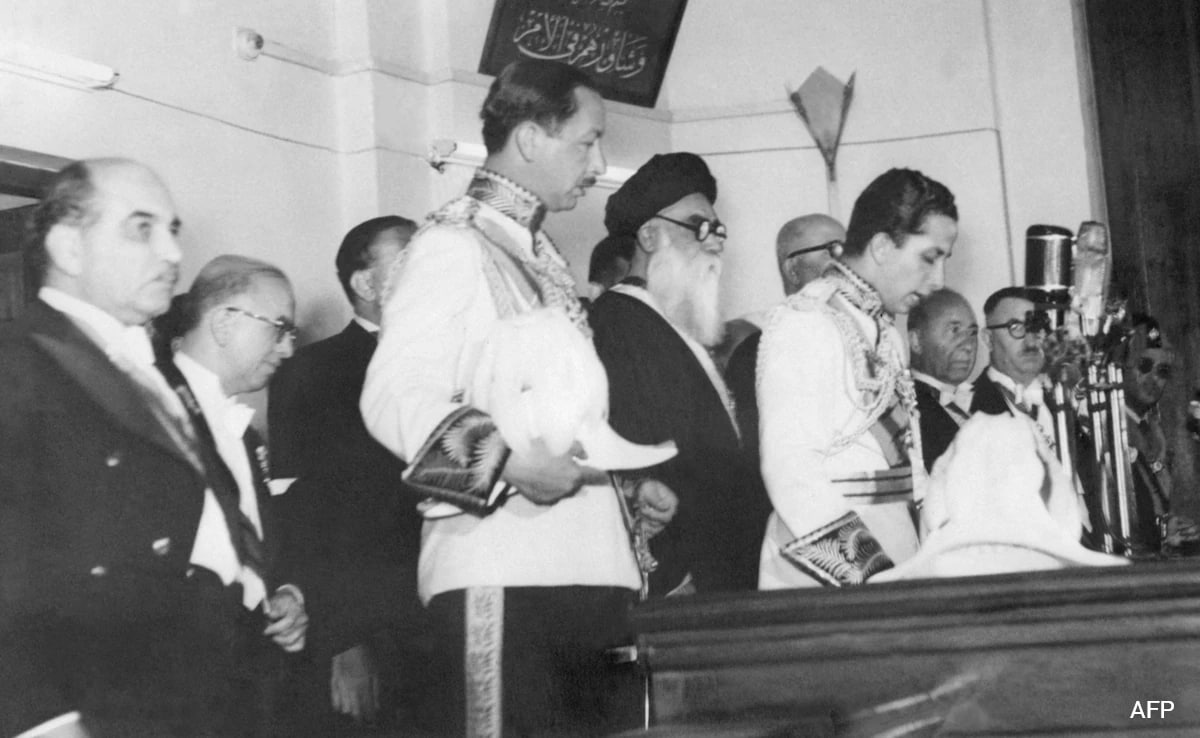
Set against this backdrop, the visit also draws attention to Jordan's Hashemite monarchy, which has played a central role in shaping the kingdom's political stability and foreign relations for more than a century.
The Hashemites And The Making Of Modern Jordan
The Hashemite royal family is inseparable from Jordan's national story. Since the founding of the modern state in 1921, the monarchy has shaped the country's political institutions, identity, and regional role. To understand Jordan today, one must first understand the Hashemites, a dynasty rooted in both history and faith.
Lineage Traced To The Prophet
The Hashemites, also known as Bani Hashem, trace their ancestry to the Quraysh tribe of Mecca, descendants of the Prophet Ismail, son of the Prophet Ibrahim (Abraham). The tribe settled in Mecca in the second century CE, rising to prominence when Qusayy bin Kilab assumed leadership of the city around 480 CE.
The dynasty takes its name from Hashem, Qusayy's grandson and the great-grandfather of the Prophet Muhammad (PBUH). Through the Prophet's daughter Fatima and her husband Ali bin Abi Talib, the fourth caliph of Islam, the Hashemites are direct descendants of the Prophet.
Sharifs, Sayyids And Royal Lineage
Ali and Fatima's sons, Al-Hassan and Al-Hussein, founded two branches of descent. Hassan's lineage is known as the Sharifs (nobles), while Hussein's descendants are called Sayyids (lords). Jordan's royal family descends from the Sharifian line, reinforcing its religious and historical legitimacy.
Centuries Of Rule In Mecca
Sharifian families ruled the Hijaz region between the 10th and 13th centuries. King Hussein's branch governed Mecca from 1201 until 1925, recognising Ottoman sovereignty from 1517. This legacy gives the Hashemites over a millennium of political rule and nearly two thousand years of recorded presence in Islam's holiest city.
From Arab Revolt To Independence
During the Great Arab Revolt of 1916, Sharif Hussein bin Ali led the uprising against Ottoman rule. His sons later assumed leadership across the Arab world. Abdullah became ruler of Transjordan, while Faisal briefly ruled Syria and later Iraq. The Emirate of Transjordan was established on April 11, 1921, and gained full independence from Britain in 1946, becoming the Hashemite Kingdom of Jordan.
Building The Jordanian State
King Abdullah I laid the foundations of modern Jordan, introducing constitutional governance, holding elections, and gradually securing independence through diplomacy. He was assassinated in 1951 at Al-Aqsa Mosque in Jerusalem.
After a brief reign by King Talal, King Hussein ascended the throne in 1952 at the age of 17. His long rule brought stability during decades of regional conflict. Upon his death in 1999, his son King Abdullah II assumed the throne. He was already a major-general in the Jordanian army when he succeeded his ailing father at the age of 37.
Internal Rift Within The Royal Family
In 2021, tensions surfaced within the royal family. Prince Hamzah, the younger half-brother of King Abdullah II and a former crown prince himself, openly criticised the country's leadership. He later said he had been placed under house arrest as part of a wider clampdown on dissent. In a video shared with the BBC, Prince Hamzah accused Jordan's leadership of corruption, incompetence and sustained harassment, highlighting rare public divisions within the Hashemite monarchy.
The Monarchy's Political Role Today
In February this year, King Abdullah II firmly rejected US President Donald Trump's proposal to resettle Palestinians in Jordan. After King Abdullah's meeting Trump at the White House, the Jordanian royal court said in a post on X that “King Abdullah II stresses the need to put a stop to (Israeli) settlement expansion, expressing rejection of any attempts to annex land and displace the Palestinians.”
For many Jordanians the Hashemites remain the guarantors of continuity in an otherwise turbulent region.
................................ Advertisement ................................

Opinion: China Has Helped India's Cause With TrumpMihir Sharma, Bloomberg
Thursday June 29, 2017Very little was expected in India from Prime Minister Narendra Modi's visit to the U.S., and for good reason: Modi had gone out of his way to cultivate a personal relationship with Barack Obama, including famously pouring out a cup of tea for him and the cameras when Obama visited India.
Opinion: Modi's US Speech Was Letter Perfect, Ticked Off Every BoxAshok Malik
Friday June 10, 2016Without taking recourse to the old wailing sheet and cribbing to everyone about Islamabad, Modi has devised a mechanism to shape the debate to India's advantage.
Opinion: Modi Ignored Advice To Make Obama Squirm. It Has Paid Off.Jyoti Malhotra
Saturday June 04, 2016The visit to the US in the coming week, in fact, brings Obama's relationship with both Modi and India full circle.
Blogs: कादम्बिनी के कीबोर्ड से : क्या परमाणु करार पर पीछे हटे हम?
Sunday February 08, 2015असल में परमाणु रिएक्टरों में हादसे की सूरत में जो हर्जाना होगा, वह रिएक्टर चलाने वाले को यानि ऑपरेटर को देना होगा। कानून में यह प्रावधान है कि अगर ऑपरेटर चाहे तो वह सामान और ईंधन आपूर्ति करने वाले पर हर्जाने के लिए दावा कर सकता है। लेकिन यहां पर समझने वाली बात यह है कि ऑपरेटर कौन होगा।
Opinion: Mani-Talk: Modi is Turning Us into America's New PakistanMani Shankar Aiyar
Thursday February 12, 2015In "Cold War II", battlefield could be India, writes Mani Shankar Aiyar.
Opinion: Obama Had Pointed Message for Modi 2.0Shashi Tharoor
Wednesday January 28, 2015Clear warning that PM will fail if he reverts to Modi 1.0, writes Shashi Tharoor.
Opinion: What Pakistan Makes of Obama-Modi ChemistryMehr Tarar
Tuesday January 27, 2015Acceptance of Modi's goal-oriented leadership, writes Mehr Tarar.