




- Home/
- "Incompatible With A Liveable Planet": Climate Toll Of US-Israel War On Iran
"Incompatible With A Liveable Planet": Climate Toll Of US-Israel War On Iran
Edited by NDTV News Desk | Updated: March 22, 2026 17:52 IST
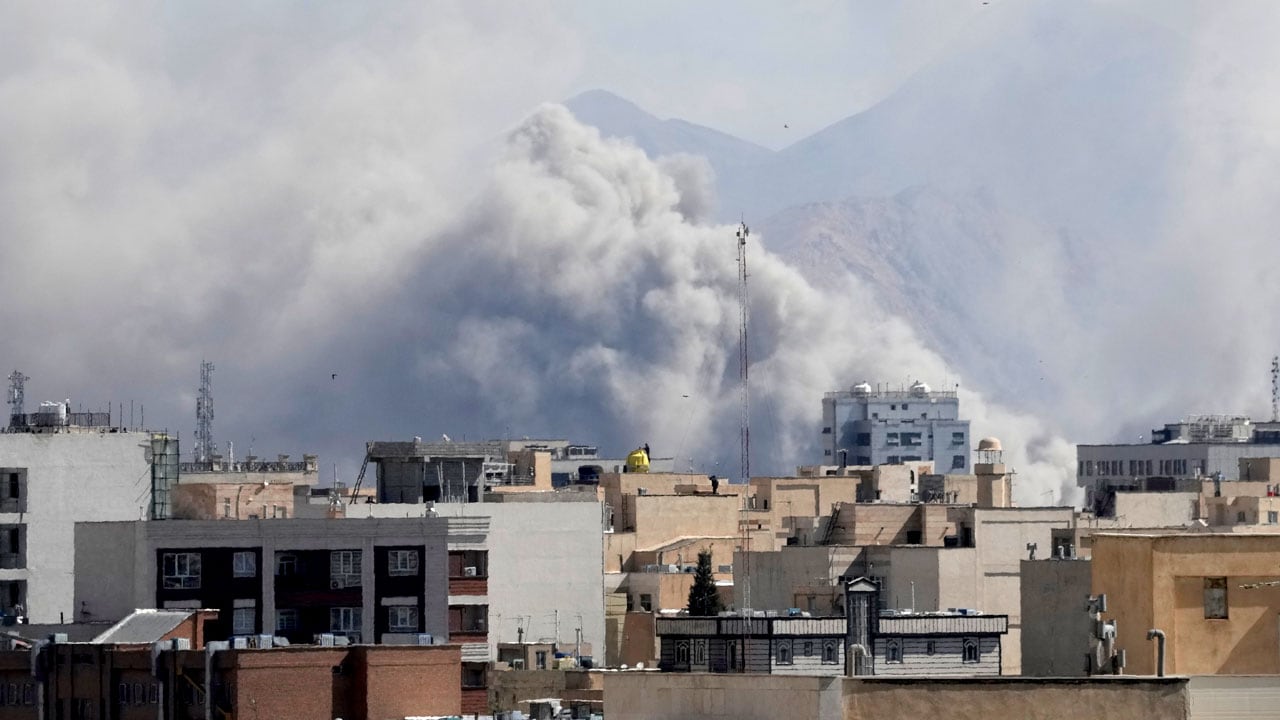
Deploying fighter jets, and naval fleets around the clock increases greenhouse gas emissions.
Highlights
- US-Israeli war on Iran released 5 million tonnes of greenhouse gases in two weeks
- Destruction of 20,000 civilian buildings caused 2.4 million tonnes of CO2 emissions
- Oil facility attacks destroyed up to 5.9 million barrels, adding 1.88 million tCO2e
The US and Israel's war on Iran has released five million tonnes of greenhouse gas emissions in the last two weeks, a climate-focused analysis has found. The attacks are depleting the global carbon budget faster than 84 countries combined, the environmental assessment of the war shows.
The destruction of civilian buildings is the biggest source of emissions. About 20,000 buildings have been damaged by US-Israeli strikes in Iran, the Iranian Red Crescent reported. It released an estimated 2.4 million tonnes of CO2 equivalent (tCO2e).
Experts say that deploying stealth bombers, fighter jets, and naval fleets around the clock significantly increases greenhouse gas emissions. "The US Navy also has a significant fleet which will be operating remotely for some time," Benjamin Neimark of Queen Mary University of London, told AFP earlier. “That is a significant number of US troops that need to be fed, housed, and working around the clock. These floating cities all need energy.”
US-Israeli attacks on oil facilities in Tehran and other parts of Iran, which caused toxic acid rain and exposed millions to pollution, are also a major source of emissions. Between 2.5 and 5.9 million barrels of oil were destroyed, releasing an estimated 1.88 million tCO2e.
Fuel consumed to power US heavy bombers flying from bases as far as the west of England is the second-largest contributor. The analysis estimates that between 150 million and 270 million litres of fuel were used by aircraft, vessels, and vehicles in the first 14 days, producing 529,000 tCO2e.
The analysis also accounted for the carbon embedded in destroyed military equipment.
The US lost four aircraft, while Iran lost 28 aircraft, 21 naval vessels, and around 300 missile launchers, contributing 172,000 tCO2e. Missiles and drones used by all parties added roughly 55,000 tCO2e.
The first two weeks of the war produced 5,055,016 tCO2e, equivalent to the annual emissions of a medium-size, fossil fuel-intensive economy such as Kuwait, Iceland, or the combined total of the 84 lowest-emitting countries.
"Every missile strike is another downpayment on a hotter, more unstable planet, and none of it makes anyone safer," Patrick Bigger, research director at the Climate and Community Institute and co-author of the analysis, told The Guardian.
“Every refinery fire and tanker strike is a reminder that fossil‑fuelled geopolitics is incompatible with a livable planet.”
Israel's ongoing war on Palestine has also generated an estimated 33 million tonnes of CO2e, as per research published on One Earth. The study assessed emissions from active bombing, military strikes, construction of defensive structures, and post-war rebuilding.
Published: March 22, 2026 17:14 IST

