




- Home/
- LeapForWord: Breaking Barriers For Regional Language Schools In India
LeapForWord: Breaking Barriers For Regional Language Schools In India
Team NDTV | Updated: February 02, 2026 16:11 IST
New Delhi:
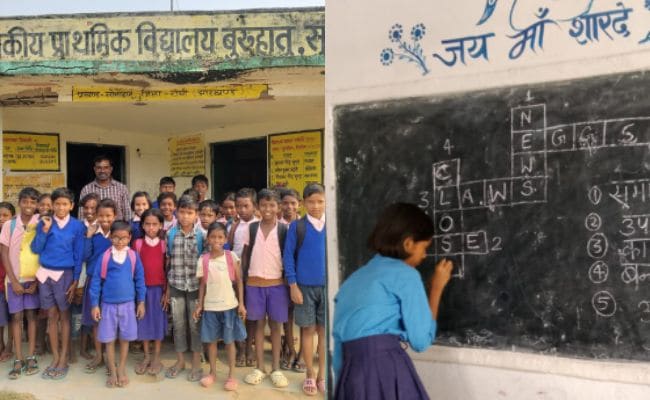
LeapForWord, a non-profit based in Mumbai, aims to solve the problem of English illiteracy in regional language schools across the country. Founded by Pranil Naik, the movement combines innovation, technology, and grassroots action to make sure that every child, regardless of their background, gets equal access to English learning. It is breaking the barriers of language by unlocking new opportunities and empowering a large number of children from regional-language schools to dream bigger in life.
LeapForWord: Vision And Purpose
In India, millions of children attend government schools in regional languages. For most of them, English remains a subject and not the skill. To pursue higher education in India - engineering, medicine, law, accountancy - fluency in the language is needed. This is where LeapForWord exists as it bridges the gap between aspiration and opportunity. Proficiency in English often decides who gets access to higher education, professional courses, and better jobs. This is where the barrier limits millions of children passing out from government-run regional schools. To change this, LeapForWord is trying to make English learning simple, accessible, and effective, by utilising the child's own mother tongue as the foundation. According to the official website, the NGO's vision is to provide a platform to children from under-served communities so that they can get access higher education opportunities of their choice - something they are unable to do right now due to poor English capabilities.
It looks forward to solve the chronic legacy problem of English illiteracy through development of effective, easy-to-use and economical teaching/learning products for both teachers and students from regional language schools across the country. LeapForWord works with the primary motive of “equal access to English learning opportunities.”
How Does It Work?
Instead of looking at English as a language, LeapForWord looks at it like a subject, like Mathematics, Science and others. Much like these subjects, the organisation, through various tools and programs, tries to make children learn English in their mother tongue. That hypothesis began the journey of multiple iterations, leading to development of an algorithm that maps English to major Indian languages. Kickstarting initially as a community project, it soon scaled across Maharashtra and later to other parts of India. LeapForWord currently operates in 12 states and in six Indian languages, reaching thousands of classrooms and countless young minds. LeapForWord develops tools, programs, and teacher support systems that go on to enable regional schools to deliver English learning effectively. Among these include: English Literacy Program (ELP): This four-level program is meant for students of Grade 2 to Grade 8. The structured, replicable model has been adopted across different cities. Its impact is not just limited to students, but even witnessed in teachers. The Jharkhand government, in partnership with LeapForWord has even organised a state-level Foundational Literacy and Numeracy (FLN) Championship for govt school students.
Word Power Championship: A one-of-its-kind English competition for regional-language school students. Teacher Entrepreneur Project: Empowering teachers from various institutions to become community leaders in literacy.
Founder's Vision
Pranit Naik, founder of LeapForWord, worked in a few other organisation before beginning his journey with the NGO. He believes that technology and innovation can break the language barrier that divides children in India. After five years of teaching, he started LeapForWord in 2006, with the help of some batch-mates.
Published: February 02, 2026 16:03 IST
also read
Global Emissions Cut During COVID Lockdown May Not Last Long, Warn Scientists
ANIImportant To Implement Environmental Rules To Sustain Gains Of Lockdown: Union Environment Minister Prakash Javadekar
PTIMumbai Based Green Champion Is Striving To Make The City The Cycling Capital By 2030
Reported by Ambika Singh Kahma
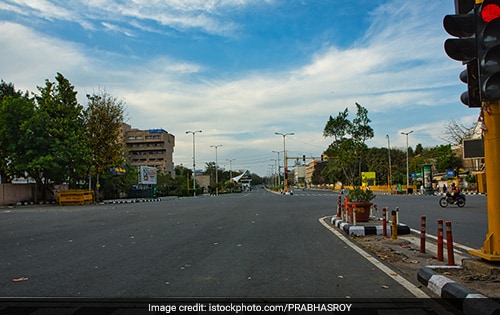
Since the lockdown began, nature has been given a rest and it has never looked more beautiful.
Our air is cleaner than it has been for years, our skies are blue and clear. We need to maintain this change.
NDTV and Hero Cycles have joined hands and initiated a campaign #TheCycleOfChange with a motive to keep these environmental gains from slipping away once the lockdown is lifted.
The campaign aims to provide a platform to discuss life after lockdown, as the lockdown may lift, but the virus will stay with each one of us for a long time. So, how do we best work with our lockdown habits, which are becoming the new normal?
How do we keep these environmental gains from slipping away completely?