


- Home/
- Breathing Issues, Irritation In Eyes: Delhi Complains As Air Quality Dips
Breathing Issues, Irritation In Eyes: Delhi Complains As Air Quality Dips
Asian News International | Updated: October 21, 2025 12:59 IST
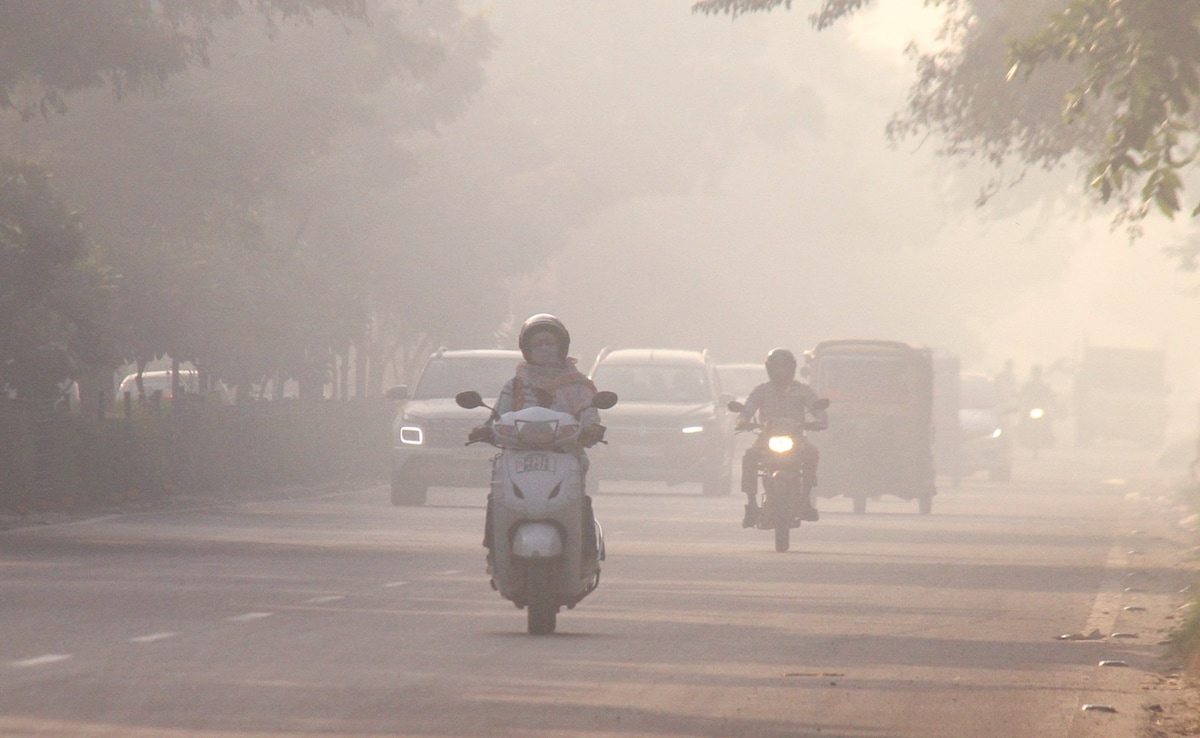
The overall Air Quality Index (AQI) in Delhi stood at 359 as of 10 am today.
New Delhi :
Residents of Delhi have complained about breathing difficulties and irritation in eyes following the rise in air pollution post Diwali celebrations.
Speaking to ANI, Sagar, a resident of the national capital, held people accountable for the dip in air quality.
He said, "Pollution hasn't just been increasing today; it's been increasing for years. Everyone blames politicians, but the people themselves are like this. People aren't improving themselves. You'll get firecrackers, but it's up to you whether to burst them or not. Then they'll complain that the government isn't doing anything... There are problems in breathing, irritation in eyes."
Ashish Ranjan, a local who came to Kartavya Path for running, also complained about the breathing difficulties. He said, "There are difficulties in breathing during running time. I cannot breather properly."
Another resident of the city, said, "It is the responsibility of everyone. If every individual takes responsibility, then the AQI level can be controlled. Nothing will happen just by the thinking of the government and agencies. As a society, we should take this responsibility and keep things under control. There were clear orders to use green crackers, and if we can adhere to these rules, then we would be doing a good service to the society."
Local Surender Gupta, said, "Last year, the pollution was less. Yesterday, when I came for morning walk, there were difficulties in breathing, but today, it problem has increased."
A day after Diwali, the national capital city New Delhi woke up to thick and heavy layer of smog as the air quality deteriorated to the 'Very Poor' category on Tuesday morning, with most of the monitoring stations marked in the 'Red Zone' of pollution.
According to the Central Pollution Control Board (CPCB), the overall Air Quality Index (AQI) in Delhi stood at 359 as of 10 am today.
As per the CPCB, Bawana recorded AQI of 432 as of 10 am, Jahangirpuri had an AQI of 405, Ashok Vihar had an AQI of 408 and Wazirpur with an AQI 408 remains the worst hit areas with air quality falling under 'Severe' category.
During the 'very poor' air quality, residents might face breathing difficulties and one can develop respiratory illness on prolonged exposure.
The 'severe' air quality affects healthy people and seriously impacts those with existing diseases, as per the CPCB.
An AQI between 0-50 is considered good, 51-100 is satisfactory, 101-200 is moderate, 201-300 is poor, 301-400 is very poor and 401-500 is severe.
Ahead of Diwali, the Supreme Court had relaxed its earlier blanket prohibition on fireworks in the national capital and permitted the sale and use of green fireworks with some conditions.
The Commission for Air Quality Management (CAQM) had imposed Stage 2 of the Graded Response Action Plan (GRAP) in the National Capital Region with immediate effect on Sunday.
(Except for the headline, this story has not been edited by NDTV staff and is published from a syndicated feed.)
Published: October 21, 2025 11:10 IST
also read
'Couldn't Run 1 km': Delhi Residents Struggle As Air Quality Worsens
Reported by Anushka Kumari, Edited by Nikita SharmaOpinion | Delhi Has Every Pollution Control Policy - Except One That Works
Bhavreen KandhariJust 30 km From Delhi, Air In This UP Town Is Among Most Polluted In World
Reported by Kumar Kunal
 Written by Sambhav Kumar | Monday November 09, 2026
Exercising during high air pollution requires precautions like reducing intensity and choosing well-ventilated indoor spaces with good air filtration.
- Reported by Anushka Kumari, Edited by Nikita Sharma | Monday November 09, 2026 , New Delhi
At the Akshardham flyover, the Akshardham Temple was barely visible behind a thick blanket of haze.
- Written by Varsha Vats | Monday November 09, 2026
Taking immediate steps to limit your exposure to fine particulate matter is the most effective way to protect your lungs and heart.
- Monday November 09, 2026
Every November, Delhi performs the same ritual. We check the AQI before stepping outdoors, children are kept indoors, masks reappear, schools consider shutting, construction is restricted, and emergency meetings are convened. Politicians blame the weather, neighbouring states, farmers, or firecrackers. And then, as the season changes, the urgency d...
- Written by Urvashi Prasad | Monday November 09, 2026
Lung cancer is rising in young non-smokers, especially women, linked to air pollution rather than tobacco use in India.



................................ Advertisement ................................


Opinion | Delhi Has Every Pollution Control Policy - Except One That Works
Monday November 09, 2026Every November, Delhi performs the same ritual. We check the AQI before stepping outdoors, children are kept indoors, masks reappear, schools consider shutting, construction is restricted, and emergency meetings are convened. Politicians blame the weather, neighbouring states, farmers, or firecrackers. And then, as the season changes, the urgency d...
दीवाली की चौखट पर दिल्ली में सांसों का संकट: 30 साल की स्टडी ने हरियाली को लेकर क्या बताया?
Thursday November 05, 2026अध्ययन में हरियाली की मात्रा के साथ उसके फैलाव और आपसी जुड़ाव को भी महत्वपूर्ण पाया गया. जिन इलाकों में हरियाली ज्यादा बिखरी हुई थी, वहां सतही तापमान अधिक रहा. इसके विपरीत, बड़े और आपस में जुड़े हरित क्षेत्रों में तापमान कम पाया गया.
Opinion: Why Delhi's Smog Can't Be Fixed From SpaceDavid Fickling, Bloomberg
Monday October 19, 2026The clearest sign that Delhi is on a path to cleaner air would be a decline in the amount of paddy grown nearby, and therefore the acreage liable to be burned each year.
Don't Normalise Air Purifiers As Delhi Chokes | The Reason Why
Thursday December 11, 2025More than 90 cities in the world's top 100 polluting list are in India. With every passing year, the AQI is rising, reaching 'hazardous' levels.
Blog | Well Done, Delhi. You've Turned Lung Sacrifice Into A Badge Of HonourSaikat Kumar Bose
Monday November 10, 2025Till some years back, Delhiites would ask angry questions to those in power about the capitals annual tryst with toxic air. This has changed. Those in the driving seat dont see the need to answer now.



