


- Home/
- Artificial Intelligence Boom To Trigger Thousands Of Deaths, $20 Billion In Health Costs Annually: Study
Artificial Intelligence Boom To Trigger Thousands Of Deaths, $20 Billion In Health Costs Annually: Study
Edited by Nikhil Pandey | Updated: December 10, 2024 14:47 IST

The study reveals AI's toxic air pollution footprint and toll on peoples health.
With the exponential rise of AI in many professional sectors, there has been a boom in gadgets powered by AI. This revolution in technology will definitely make life easier with much advancement; however, there is a new environmental footprint as well. There are significant concerns related to increased air pollution through the emissions of power plants and diesel backup generators, which are a requirement for maintaining steady electricity supplies for the increasing network of data centres and computer processing centers. These facilities are critical for AI operations and contribute increasingly to the level of air pollution; hence, sustainable solutions to innovation need to be developed to maintain environmental responsibility.
As per a release by the University of California, this air pollution is expected to result in as many as 1,300 premature deaths a year by 2030 in the United States. Total public health costs from cancers, asthma, other diseases, and missed work and school days are approaching an estimated $20 billion a year.
Such are the findings of a study by UC Riverside and Caltech scientists published online this week. Yet, these human and financial costs appear overlooked by the tech industry.
"If you look at those sustainability reports by tech companies, they only focus on carbon emissions, and some of them include water as well, but there's absolutely no mention of unhealthful air pollutants, and these pollutants are already creating a public health burden," said Shaolei Ren, a UCR associate professor of electrical and computer engineering and a corresponding author of the study.
The authors, including Caltech professor and computer scientist Adam Wierman, recommend that standards and methods be adopted that require tech companies to report the air pollution caused by their power consumption and backup generators.
They further recommend that communities hit hardest by air pollution from data processing centre electricity production be properly compensated by the tech companies for the health burden.
The authors also found that air pollution stemming from AI disproportionately affects certain low-income communities, partly because of their proximity to power plants or backup generators at the data processing centers. Additionally, the pollution drifts across county and state lines, creating health impacts on communities far and wide, Ren said.
"The data centres pay local property taxes to the county where they operate," Ren said. "But this health impact is not just limited to a small community. Actually, it travels across the whole country, so those other places are not compensated at all."
Published: December 10, 2024 14:46 IST
also read
Pakistan's Own Agency Busts Its 'Diwali Firework' Pollution Theory As AQI Crosses 600
Edited by Sanstuti NathAir Pollution Is As Big A Public Health Emergency As COVID: Former WHO Chief
Reported by Vedika Sud Sachdeva, Edited by Aastha Ahuja'Pollution Subsides': Yogi Adityanath Defends Bursting Of Crackers On Diwali
Edited by Debanish Achom
 Delhi AQI: Is Toxic Air Making You Tired? Impact Of Air Pollution On Energy, Sleep And ConcentrationWritten by Debosmita Ghosh | Wednesday November 11, 2026
Fine particles such as PM2.5 can enter deep into the lungs and lead to inflammation and oxidative stress in the body. Prolonged exposure may also affect the cardiovascular system and overall physical health.
- Written by Niharika Raj | Wednesday November 11, 2026
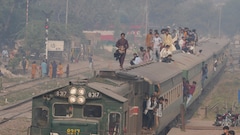
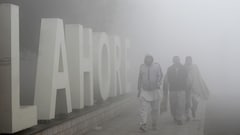
A Pakistani air quality body has found no evidence linking Lahore's post-Diwali smog to fireworks in India, pointing instead to thousands of crop-residue fires in Pakistan's own Punjab.
- Written by Sambhav Kumar | Wednesday November 11, 2026
Morning chest heaviness should not automatically be attributed to air pollution. Persistent or worsening symptoms warrant medical evaluation, particularly if accompanied by coughing, wheezing or breathlessness.
- Edited by Sanstuti Nath | Wednesday November 11, 2026 , Islamabad
The Pakistan report said the available evidence did not support attributing Lahore's poor air quality after Diwali to fireworks across the border.
- Written by Sneha Mordani , Edited by Sambhav Kumar | Wednesday November 11, 2026
India should retain the AQI for public advisories but must publish uncapped PM2.5 and PM10 concentrations alongside it. An index may have a ceiling. Pollution does not.


................................ Advertisement ................................


Opinion | Delhi Has Every Pollution Control Policy - Except One That Works
Monday November 09, 2026Every November, Delhi performs the same ritual. We check the AQI before stepping outdoors, children are kept indoors, masks reappear, schools consider shutting, construction is restricted, and emergency meetings are convened. Politicians blame the weather, neighbouring states, farmers, or firecrackers. And then, as the season changes, the urgency d...
दीवाली की चौखट पर दिल्ली में सांसों का संकट: 30 साल की स्टडी ने हरियाली को लेकर क्या बताया?
Thursday November 05, 2026अध्ययन में हरियाली की मात्रा के साथ उसके फैलाव और आपसी जुड़ाव को भी महत्वपूर्ण पाया गया. जिन इलाकों में हरियाली ज्यादा बिखरी हुई थी, वहां सतही तापमान अधिक रहा. इसके विपरीत, बड़े और आपस में जुड़े हरित क्षेत्रों में तापमान कम पाया गया.
Opinion: Why Delhi's Smog Can't Be Fixed From SpaceDavid Fickling, Bloomberg
Monday October 19, 2026The clearest sign that Delhi is on a path to cleaner air would be a decline in the amount of paddy grown nearby, and therefore the acreage liable to be burned each year.
Don't Normalise Air Purifiers As Delhi Chokes | The Reason Why
Thursday December 11, 2025More than 90 cities in the world's top 100 polluting list are in India. With every passing year, the AQI is rising, reaching 'hazardous' levels.
Blog | Well Done, Delhi. You've Turned Lung Sacrifice Into A Badge Of HonourSaikat Kumar Bose
Monday November 10, 2025Till some years back, Delhiites would ask angry questions to those in power about the capitals annual tryst with toxic air. This has changed. Those in the driving seat dont see the need to answer now.



